
Boston Explained
Stories behind Boston’s slang, landmarks, quirks and history.
 Featured
The mythology of the BU Bridge
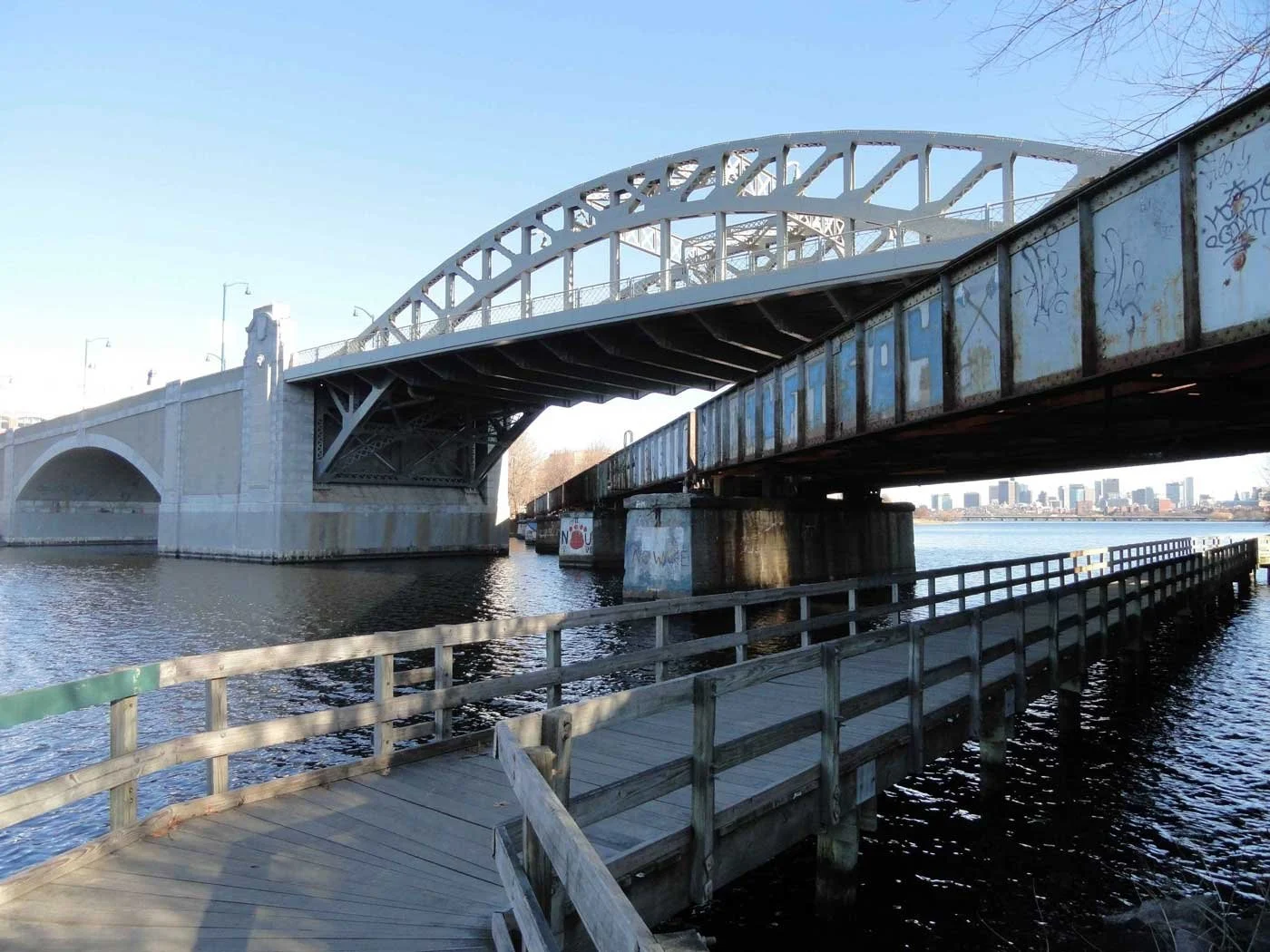
A boat under a train under a car under a plane. That is the BU Bridge story, and the arrangement really is possible. The trouble starts when someone adds “the only place in the world.” Boston has been taking a little too much credit. The road bridge crosses the Charles River above the Grand Junction railroad bridge. Boats can pass below the railway, and an aircraft can pass above the lot. It is an appealing piece of local trivia because you can see most of the explanation from the riverbank. You do not need an engineering degree. You do need to leave the word “only” out of it. The BU Bridge has competition Boston University itself has corrected the claim. In a 2005 explanation of the four-layer story, BU pointed to Portland, Oregon’s Steel Bridge, which also gets credit for accommodating the same combination. That does not make the Boston version imaginary. It makes the boast too large. There is a difference between a place where four kinds of transportation could line up and a place where nobody else can do it. Nor is this a scheduled attraction. The story describes a possible arrangement, not a performance that occurs every afternoon. Standing there until a train, boat, car and plane arrive together is a fairly demanding way to spend your walk. Two bridges do the work The key is that the road and railroad use separate crossings. Look at the lower steel structure and you can follow the railway beneath the higher roadway. The bridges meet at an angle rather than forming two perfectly aligned decks. That distinction matters if you are trying to understand a photograph. The train is not traveling inside the road bridge. It has its own route over the Charles. The water provides another path below, while the air above supplies the least exclusive part of the claim. The railway and road each need their own clearance above the water. In a side view, their separate structures are easier to distinguish than when you are crossing on top. Look along the lower bridge first, then follow the higher road across it. Students got the bridge renamed The crossing opened as the Cottage Farm Bridge in 1928. Its university name came later, after BU students pushed for the change. According to the university’s account of the renaming ceremony, students at the Boston University News helped build support, and state senator John E. Powers sponsored the legislation. The bill passed without a dissenting vote. On May 7, 1949, the new name received a formal ceremony and parade. BU president Daniel L. Marsh unveiled a commemorative plaque, and a motorcade made the ceremonial crossing. The original 1928 opening had been promoted for a different reason: linking traffic between the North and South Shores. The nearby baseball reference then was Braves Field. The Boston connection did not begin with the trivia question or the university name. The bridge has changed for cyclists tooThe view from the river is only one way to understand the crossing. For people riding over it, the allocation of space on the deck matters much more than a possible aircraft overhead.BU’s January 2012 report on the renovation described newly added bike lanes and trials of different traffic configurations. The earlier bridge had four lanes for cars and no dedicated bike lanes. The project also addressed pedestrian approaches.Keeping traffic moving during that construction produced long delays. The work concerned the ordinary problem of making a heavily used bridge safer and more useful, rather than preserving a perfect arrangement for a trivia question.For a look at how much larger those compromises can become, our Big Dig history follows another Boston effort to fit roads around an existing city. At the BU Bridge, the arrangement is easier to see: two crossings, one river, and no promise that the plane will cooperate.
Latest stories
-

Order a milkshake in Boston and you might be missing the ice cream
Order a milkshake in Boston at a shop that still keeps the old distinction and you can get exactly what you asked for: milk and flavoring, beaten until it foams. No ice cream. The thicker drink, the one visitors usually mean, is a frappe. Not every counter still bothers. Plenty of menus now use milkshake the way the rest of the country does. The shops that list both drinks are not offering two sizes of the same thing. Those are the last places where a milkshake in Boston and a frappe are different orders. What goes into a milkshake in Boston The traditional local milkshake is milk plus a flavoring, often chocolate syrup, shaken or blended until air gets into it. A frappe adds ice cream. Yankee’s account of the two drinks is useful on a point people skip: the milkshake is not a glass of chocolate milk. Stirring syrup into milk mixes the ingredients. Blending them is what makes it a fountain order. If a menu lists both, look at the prices before treating the cheaper one as a deal. You may be comparing a milk drink with one that has scoops in it. Say “frap” The regional drink is one syllable, rhyming with map. The American Heritage Dictionary records that pronunciation and treats the noun as regional usage, mapping it to Rhode Island and southeastern Massachusetts. Shops in Boston still put it on the board. That entry is a different word from “frappé,” two syllables, which the same dictionary defines as a frozen fruit dessert or a drink poured over shaved ice. The spelling overlap is how visitors end up performing French at a Jamaica Plain counter. A shop owner paid for the lesson Vincent Petryk, who later opened JP Licks, learned the difference as a newcomer from Philadelphia. Boston.com reported that he ordered a milkshake at Bailey’s in the 1970s, saw that it cost half as much as the frappe, and then asked where the ice cream was. Bailey’s is gone. The mix-up is not. The same report found “frappe” in late-nineteenth-century Boston Globe pages attached to chilled and partly frozen drinks, including alcoholic ones, long before it settled on the ice-cream version. Recipes a few years later included cafe frappes and pineapple frappes, sometimes with a scoop of ice cream already in the mix. Boston University food scholars told the paper that regional names for ordinary foods were common before national food media flattened the vocabulary. Megan Elias, who directs BU’s gastronomy program, pointed to a 1920s overlap: Prohibition pushed people toward new places to sit, and electric equipment made ice cream cheaper to produce in volume. Soda fountains did well in that gap. The scholars also said the exact reason this particular word stuck here is not established. There is no inventor to toast and no afternoon when Boston renamed the milkshake. The term showed up in more than one drink, attached itself to the ice-cream one, and stayed. The word is still on the menu JP Licks still lists a regular frappe, an extra-thick frappe, and an espresso frappe, separate from smoothies, frozen coffee, ice-cream sodas, and floats. Extra-thick is a texture, not a citizenship test. In 2023, Mark Parrish, president of Crescent Ridge Dairy in Sharon, told Boston.com his shop still served the ice-cream-free milkshake next to the frappe and asked customers which they wanted. He also said tourists, students, and younger customers increasingly ask for a milkshake. Other counters have given up and will put ice cream in whatever you called it. Rhode Island complicates the map again. In parts of that state, and into southeastern Massachusetts, the ice-cream drink is a cabinet. Same general idea. Different word. This is the same class of local vocabulary as why Bostonians say “wicked.” Get the word wrong and you can still have a conversation. Get this one wrong and you may drink a glass of flavored milk. If the menu says milkshake and you want ice cream in it, ask. You do not need to win the regional argument first. -
Why North Station and South Station have no direct train
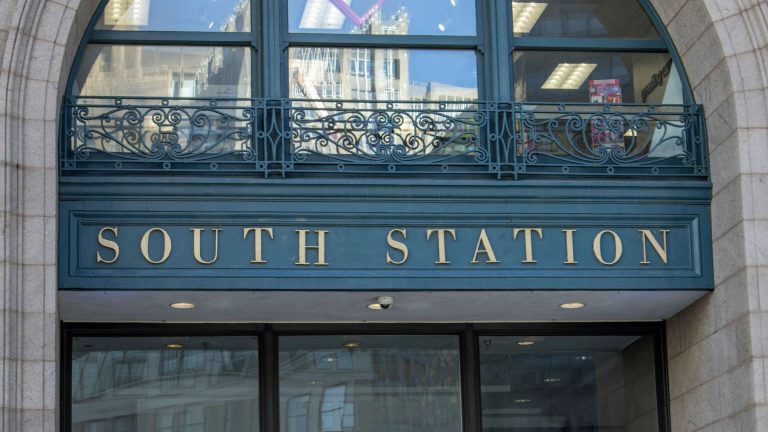
Take the Downeaster into Boston and you get off at North Station. Take Amtrak toward New York and you leave from South Station or Back Bay. Getting between North Station and South Station is your problem. Boston made changing trains mean leaving the railway. The names sound like two stops on one line. They are separate terminals for separate networks. A train from Maine does not keep going through downtown toward Rhode Island. The split is older than the Big Dig and older than Amtrak. Nineteenth-century railroads came into Boston from different directions and built their own depots. The two big stations gathered those companies under two roofs. They never joined the northern and southern tracks. North Station, Boston Before North Station and South Station On the north side, several railroads crossed the Charles and piled up around Causeway Street. The Boston & Maine kept its own depot a few blocks south at Haymarket Square. Amtrak’s history of North Station says the Boston & Maine financed the original union station, which opened in 1893. It replaced a cluster of northern terminals. It did not create a through route across the city. That is the distinction that still matters. One roof made it easier to change among trains from the north. It did not connect those tracks to the railroads arriving from the south and west. The geography is blunt. Northern tracks ended at the edge of downtown, on the Charles. The station sat at the end of those tracks. A passenger who needed to keep going had to get off. South Station, Boston South Station solved a different problem South Station opened on New Year’s Day 1899, according to Amtrak’s station history. Five railroad companies formed the Boston Terminal Company and replaced a set of southern and western depots with one arrival hall. Planners even built a two-track loop under the main concourse for electric commuter service that never ran. Amtrak’s account describes a steam-train trial that filled the underground rooms with smoke. The unused level later became a bowling alley. It is now office and storage space. Boston could reuse a failed rail basement. Connecting its two principal terminals was the harder job. South Station was never designed as the south end of one downtown station. Like North Station, it was a collection point. The gap survived both projects. People have been drawing a tunnel for a century The idea of joining the terminals is much older than the Big Dig. The North South Rail Link campaign’s collection of early plans includes a 1914 proposal for an underground connection with a new boulevard on top. Those drawings show how long the problem has been obvious. They are not evidence that the tunnel exists. A map from 1914 and a train you can board are different things, especially with a suitcase. Passengers could once ride between the terminals on the Atlantic Avenue Elevated. That moved people along the waterfront. It did not let a mainline train run through Boston. Transferring riders and joining the tracks are two different fixes. What the tickets actually say Amtrak’s North Station page is plain: only the Downeaster uses North Station. Boston’s other Amtrak trains use South Station and Back Bay. Amtrak does not provide connecting transportation between North Station and South Station. The two are about a mile apart. Read the station name on both reservations before you treat them as a connection. Leave time to exit one building, cross downtown, and find the next train. Weather, luggage, and mobility all change how sensible a walk is. The subway does not solve it with one ride. North Station is on the Green and Orange Lines. South Station is on the Red Line. You can transfer. You cannot stay on the same train. A booking that says Boston has not settled this. North Station and South Station are in the same city. Your ticket does not fill the space between them. -
What the colors of the Zakim Bridge lights mean
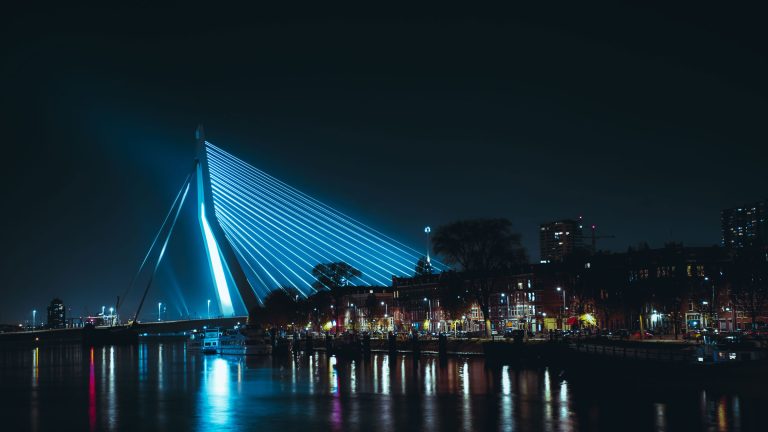
Green on the Zakim does not automatically mean the Celtics. Purple does not have one permanent meaning either. The Zakim Bridge lights change for holidays, memorials, and awareness campaigns, and the same color can stand for several unrelated things in a single year. MassDOT publishes a dated lighting calendar. Match the night to the entry, check that the Zakim is one of the bridges listed, and you have a better answer than guessing from the color alone. That last part matters. The state schedules several bridges on the same page. An entry for the Longfellow or the Braga is not automatically an entry for the Zakim. Where to check the Zakim Bridge lights The MassDOT bridge lighting schedule lists the occasion, color, date, and participating bridges. Use the current year, especially if the photo you are looking at has been reposted without a date. The 2026 calendar is a useful demonstration of why a universal color key would fail. Green has already been used for St. Patrick’s Day, Boston Legacy Football Club, and Living Donation Week. Blue has appeared for World Parkinson’s Day and for the twenty-fifth anniversary of September 11. Those are not competing theories. They are different nights. A blue bridge photographed in April cannot explain a blue bridge photographed in September. Two September nights this year make the point. On September 11 the Zakim was blue. On September 13 it was green, and that night the Zakim was the only bridge on the list. Same week. Different colors. Different reasons. Multi-color displays can be easier to tell apart, though the date still matters. The schedule names combinations as well as single colors. Read the full line before attaching a meaning to a picture, particularly when the occasion is a memorial or a health campaign. Who gets to decide MassDOT’s bridge lighting policy, dated November 14, 2023, says special displays express the agency’s official views. The bridges are not a public billboard and not an open platform for anyone’s message. A change needs approval from the department’s Office of the General Counsel and the transportation secretary’s concurrence. The policy covers state and federal holidays, other national observances, and public commemorations and celebrations at the national, state, or local level. The calendar can still move after that approval. A screenshot is useful evidence of an earlier plan. The live page is the better place to check what is scheduled now. The Zakim is one of several state bridges with programmable lights. The policy also names the Longfellow, Fore River, Kenneth F. Burns, and Braga bridges. Matching colors across the state can be one coordinated observance, not a coincidence. Why blue looks familiar Blue is also the bridge’s ordinary night look. Color Kinetics, which worked with MassDOT on the LED system, describes the design as blue-lit towers with the cables picked out in white. The company cites architect Miguel Rosales, who wanted a formal entrance to Boston. The LED system was unveiled in December 2012. It replaced older metal halide lights that had been on the bridge since it opened in 2002 and had grown dim. The new fixtures can hold the familiar blue or shift for a listed occasion. The lighting is not a new coat of paint. It is a programmed change. Blue by itself is therefore not enough to identify a tribute. Check whether a special blue display was on the calendar for that night before assigning it a meaning. Read the date before the symbolism For an old photograph, establish the date before looking up the color. For a night you have not seen yet, check the calendar again close to the date. If the page has no matching entry for the Zakim, leave the occasion unconfirmed rather than borrowing one from another month or another bridge. The fastest route to the answer is the least dramatic: date, bridge name, calendar line. Boston has other lights with a code, including the weather beacon on the old Hancock. This one usually comes with a schedule. -
Weird, Boston squares are almost never squares
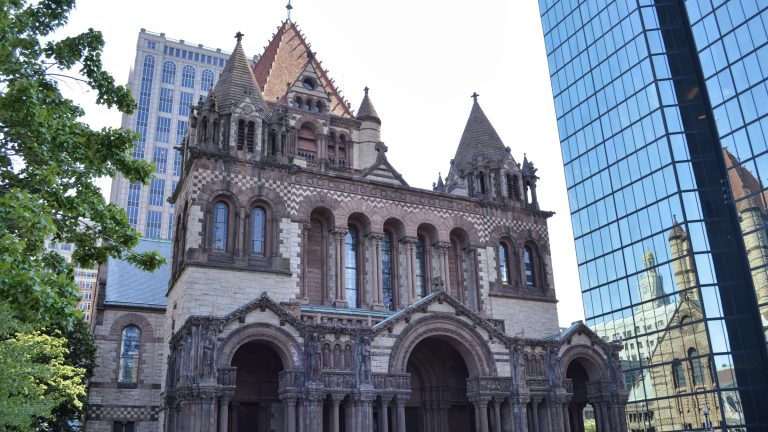
Copley Square used to be triangular. Kenmore Square is a pile-up of roads. A small intersection with a memorial sign can be a square too. Boston squares have a lot in common. A reliable shape is not one of those things. The name usually tells you what a place does. People meet there, roads come together there, businesses cluster there, or someone is remembered there. It does not promise four equal sides. If you expect every square to look like an enclosed plaza, you will keep looking for a plaza that was never part of the plan. Some squares also name more than the space in the middle. Tell someone you are meeting in Kenmore and you have named a destination. You have not told them where to stand. Boston squares are places before they’re shapes The city’s Complete Streets guidelines treat streets as public space for people walking, biking, taking transit, and driving. Squares make those competing jobs obvious. Someone wants to cross. Someone wants a bus. Someone wants to sit down without being in either person’s way. A square can be a destination and a route through somewhere else. That is why Boston squares do not always come with a lawn. The meeting point may be the intersection itself, with useful places on the edges. The histories of individual squares are more useful than one origin story for all of them. Copley and Kenmore got to their present forms by different routes. So did a lot of Boston’s streets. Copley really was a triangle According to the city’s landmark report for the Boston Public Library, Copley Square began as a triangular lot at Huntington Avenue, Dartmouth Street, and Boylston Street. Boston bought that parcel in 1883. It bought a second triangle two years later. Huntington Avenue ran between them. The road stayed there until 1968, so the awkward geometry was not a drafting error that lasted a season. Sasaki, which won a 1960s design competition, describes that first park as a shift from a grassy triangle bordered by traffic to a civic plaza next to Trinity Church. A later redesign brought the space level with the sidewalks. A renovation the city marked as complete in 2026 added accessible paths, shaded seating, and work on the fountain. The name survived all of it. A square can keep its identity while the ground plan changes. Kenmore grew around movement Boston University’s history of Kenmore Square describes a commercial crossroads shaped by transport and hotels. Beacon Street and Commonwealth Avenue meet there. Trolleys and nearby railroads brought people who needed a place to stay. The area was called Governor’s Square before the Kenmore name stuck. The Hotel Kenmore supplied the later name. Hotels, automobile businesses, and the crowds heading to Fenway defined the place, not a formal garden or an enclosed court. That history is a useful check on the idea that every square began as a sitting room someone designed on purpose. Kenmore’s job was getting people somewhere. The identity followed the traffic. Some squares are memorials Boston’s Hero Squares program is even blunter about shape. A Hero Square is a square or intersection dedicated to a service member killed in action. The city says the first one, Dewey Square at South Station, was named in 1898. More than 1,200 have been dedicated since. You do not need a park, a fountain, or four surrounding buildings. Families can apply. Veterans Services works with Transportation and Public Works on the placards. There is a searchable database. The gold star on the sign is reserved for those killed in action. Next time you pass a square that seems to consist of a sign and a crosswalk, read the name. You may be at a memorial, not at a failed attempt to build a plaza.
More stories
-
The Harvard Bridge is measured in Smoots, plus or minus an ear
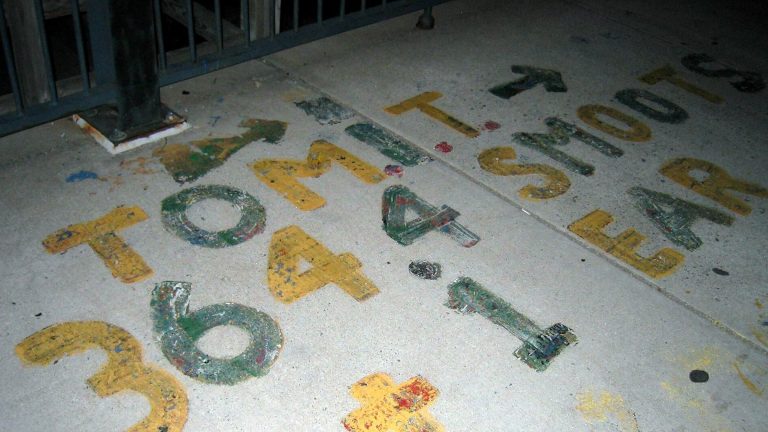
Oliver Smoot was 5 feet 7 inches, and Lambda Chi Alpha had a use for that. The house sat on the Boston side of the Harvard Bridge. Campus was in Cambridge. Tom O'Connor, the pledgemaster, was tired of walking Massachusetts Avenue across the Charles with no idea how much bridge he had left. He picked Smoot because he was the shortest pledge, which meant more time on the pavement, and because the name already sounded like a unit, the way ampere and watt do. He told MIT Technology Review the story that way. They took him out on a Thursday night in October 1958. Seven freshmen. The sensible plan was to lay him down a few times, chalk those lengths, and finish with a string. A sophomore from the house came by, thought it was funny, and stayed to watch. That ended the string. Smoot did the whole crossing, Boston to Cambridge. He later put it at about an hour and a half, and that is the figure he gives prospective students when he says you have no way of knowing what an hour and a half of work will turn into. One sweater and a police van What he actually remembers is the cold. One sweater. Gloves. Windbreakers on everybody. In the middle of the bridge the wind mattered more than the temperature. He said so to MIT in 2008. He started by pushing himself up between marks. Then he could not do a push-up. His brothers carried him for a long stretch of what was left. A police van went past, made a U-turn, and came back toward them. False alarm. They got the last marks down. Plus or minus an ear The number they kept is 364.4 Smoots, plus or minus an ear. One Smoot is his height that night. Round it to 364 and you have sanded off the fraction they bothered to write down. The ear is the part they refused to fake. They knew the count was not exact, so they added plus or minus, and they wrote the e in ear as an epsilon, the error mark from a problem set. He has called that the cute part. Later versions dropped the epsilon. Plenty of them dropped the minus sign, too. Nobody measured the ear. In 2008 he said it was the same size it had been on the bridge. Each length got a painted line. Every 10 Smoots got a number. Those are the Harvard Bridge Smoots, and they beat waving at the river if you are trying to say where something happened. When the bridge was rebuilt in the 1980s, Cambridge police asked to keep the paint. Officers were using the numbers in crash reports. MIT wrote that up in 1999. The contractor scored the new sidewalk every Smoot instead of every six feet. The paint still wears off, and the house has kept going back, aside from a two-year gap during COVID. On a night with light rain in October 2023, Lambda Chi Alpha alumni were on the bridge with green, yellow, and purple paint, along with a few Alpha Phi students who had been pulled in by text. One of them was handed a green brush and the faded words Halfway to Hell. The older member told her to paint whichever letters she wanted. Then he got the standards job for real Smoot graduated in 1962, started law school at Georgetown, and got married in 1964. The sidewalk was not on his mind. A reporter from Holiday magazine, long gone now, called to ask about the strange paint the new pledges kept refreshing. That was the phone call that brought it back. His actual job was standards. More than 30 years at the Information Technology Industry Council, a long run of that as executive vice president. He chaired the board of the American National Standards Institute. On January 1, 2003, he started a two-year term as president of the International Organization for Standardization. The group's 2003 annual report mentions the law degree and the 25 years he had already spent on standards. He told Technology Review it certainly was not planned that way. On June 4, 2009, the MIT Class of 1962 unveiled a plaque on the Cambridge end of the bridge. It says 364.4 Smoots, plus or minus one ear. -
How the Irish saved Halloween in Boston
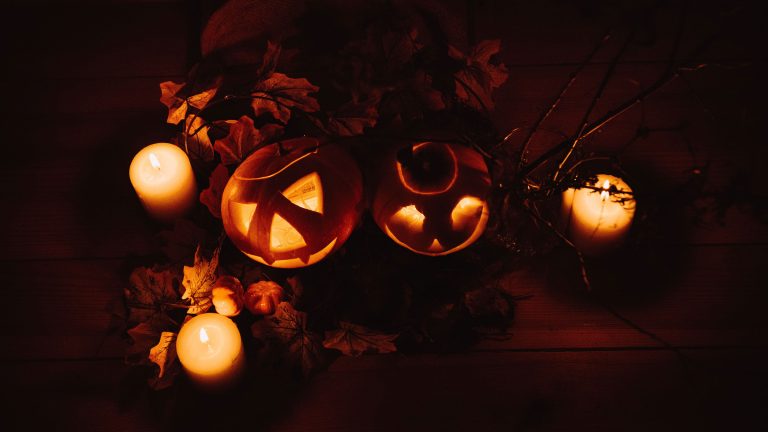
Samhain (pronounced SAH-win or SOW-in) is an ancient Gaelic festival that marks the end of the harvest season and the beginning of winter Halloween customs turned up in other American colonies. Massachusetts sat them out. Anglican and Lutheran churches kept All Saints' Day. Maryland's Catholics did too. In the South, Scotch-Irish settlers, Scots who had lived in northern Ireland, sometimes went out in costume and called it guising. The Puritans who settled here took a dim view of all of it. The Commonwealth Museum's history of the holiday traces the night to Samhain, the Celtic new year on November 1, when the dead of the past year were thought to come back for a verdict. Disguises, and a candle in a hollowed turnip, were supposed to keep the spirits away. In the eighth century, the museum says, Pope Gregory III set All Saints' Day on November 1. The eve became All Hallows Eve. Halloween is that name, worn down. The church would rather you dressed as a saint. What people actually did on October 31 still changed from one place to the next. Artist's depiction of Pope Night in Boston, 1768 Pope Night was a different riot Boston already knew how to wreck an evening in early November. The occasion was Pope Night, November 5. Old North Church traces it to Guy Fawkes Day, the anniversary of the 1605 plot to blow up Parliament. The North End and the South End each built an effigy, the pope and often the devil, and hauled it through the streets. The crowds met and fought for the figures. North End winners burned them on Copp's Hill. South End winners burned them on the Common. Isaiah Thomas, who was in the fights, wrote that broken heads were not infrequent. In 1764 a boy was run over by a cart and killed. Houses along the way were expected to hand over money. Skip the payment and the windows could go. That is still not Halloween. The Commonwealth Museum says the connection to later Halloween pranks is not clear, and that Guy Fawkes Day is a stretch as an origin. Pope Night was an anti-Catholic riot with its own date. In 1775 George Washington ordered the army to stop burning the pope in effigy. The colonies wanted Catholic allies in Canada. Old North treats that order as the end of the holiday in Boston. Traditional Irish halloween Jack-o'-lantern made out of a turnip. Photo by rannṗáirtí anaiṫnid County Cork, then a pumpkin The customs Bostonians now recognize arrived with Irish immigrants in the nineteenth century, after the Great Famine began in 1845. In County Cork, the museum says, people wore costumes on Halloween and announced themselves at a house with cow's horns. Food or a drink from the household was supposed to bring prosperity. The lantern was a turnip with a candle in it. Once those immigrants were here, a pumpkin did the job better. There is more face on a pumpkin than on a turnip, and less of a fight. They did not invent trick-or-treating. One older thread, also in the museum's account, is the medieval soul cake: bread for the poor, prayers for the dead in exchange. The pillowcase version came later. Costumes, a stop at the door, and a lantern were the Irish Halloween traditions that Boston actually got. The Globe caught on in 1884 On October 31, 1884, the Boston Daily Globe ran "Why Thousands Will Think of Erin Tonight." The Commonwealth Museum cites the headline. Halloween historian Lesley Bannatyne quotes the article. It describes Ireland, not a candy route through Boston: a church fast that fell apart when the party started, colcannon sent from the country, and "parties of young men and their sweethearts" going house to house among relatives and friends. The candy holiday was still ahead of that. Newspapers, magazines, and clubs from the Scouts to the Rotary spread Halloween in the twentieth century, the museum says. Trick-or-treaters were being spotted in Wellesley by the 1920s. After the Second World War, the baby boom made it a product. Manufactured costumes and decorations arrived then. -
If you think Bostonians are unfriendly, just ask them for directions
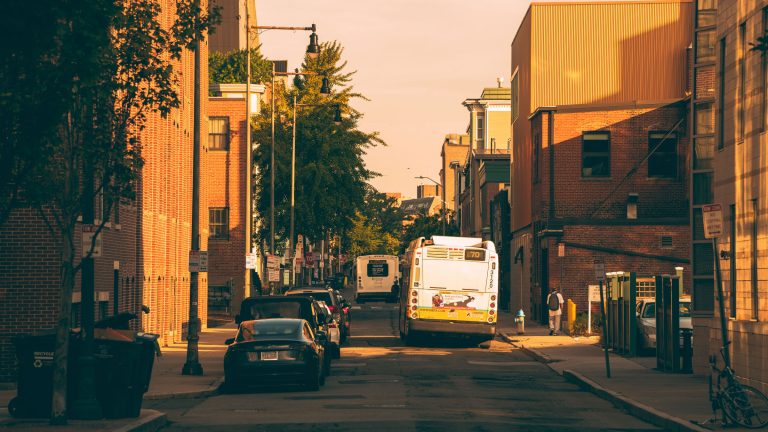
You can walk past the same person three mornings in a row and get nothing, not a nod, not a howaya, and then that same person will stand on a corner walking you from Boylston to Park Street like their train can wait. The unfriendly reputation is not a myth. Lonely Planet tells visitors we will not greet them on the street or start a conversation on the bus, and then says most of us are more than happy to give directions if they ask. Condé Nast Traveler said the same thing years ago: nobody is looking to make friends on the commute, but if you need to get somewhere, almost any stranger will help. Dan Ruben, who ran Boston Green Tourism, told the Daily Free Press that if you ask people here for directions they are as helpful as people anywhere else, they just will not smile at you first. What looks like a cold city is a city that waits to be asked. Howdies are for people you already know. Directions are for anybody who needs them. Nobody says hi first Boston.com asked readers if this is a rude city and a lot of them said yes, then explained that the problem is what other places call friendly. A Chelmsford reader told Boston.com that people here mind their own business and can sound like curt Yankees when you ask a question, while other parts of the country talk louder and stay polite even when they despise you. A Somerville reader called it brusque and then listed airport rides, surgery pickups, and meals when you are sick. An Allston reader used the line a lot of Northeasterners already know, kind but not nice. Newcomers stand there waiting for someone to volunteer a hello and decide the city is closed when it does not arrive. Standing on Boylston looking lost does not count as asking, and hovering over your phone at Arlington does not count either. We assume you know what you are doing, which is the same system as the round: you start, they answer. If you want in, ask a real question. They will talk you all the way there The directions go on so long because the city does. A right turn here does not mean what it means in a grid town. Geoff Boeing mapped street bearings across U.S. cities and found Boston does not organize around one or two compass grids. The Back Bay and South Boston have grids that do not even line up with each other, and everywhere else the streets run in enough directions that a right turn tells you where you are facing for one block and almost nothing about where you are actually going. Boston Magazine already killed the cow-path story Emerson repeated in 1860. The likelier reasons are that the original peninsula was small and hilly, later neighborhoods were filled in as separate grids, and the city annexed whole towns that already had their own street systems: Roxbury in 1868, Dorchester in 1870, Charlestown, West Roxbury, and Brighton in 1873. You are not lost because you are bad at cities. You just walked from one village into another without a sign. That is why a Bostonian will not point and say two blocks west. They will send you toward the Common, the harbor, the Pru, or a Dunkin' they have used as a landmark since before the app, and they will tell you which T, which exit, and which side of the station puts you on the wrong street. They will use the name locals say and then the name on the sign, because those are not always the same thing. Boeing, borrowing from Kevin Lynch, called Boston hard to read as a pattern and easier to hold as landmarks, which is already how people here keep the city in their head. When you ask, you are not interrupting so much as opening that map. Just ask Do not apologize for three sentences and do not tell your life story, and do not grab someone mid-crosswalk. Step out of the flow, pick one person, and ask something specific: how do I get to South Station from here, where is the Green Line, is this the way to the North End. Then let them finish, because they will talk longer than the question requires, not to show off but to keep you off Tremont when you wanted Beacon. If they offer a second route, take the first one they trusted enough to say out loud. This is the icebreaker people look for when they are new and tired of the silent sidewalk. It is one of the few times a Bostonian wants to be stopped. You think you are bothering them. They think you finally asked for something they know how to do, and in a town that treats unsolicited chat like a violation, a real question is almost a favor. If you walk off while they are still talking you were not asking, you were testing whether we are nice, and we will still get you to Park Street either way. -
Bostonians are generous and loyal but it goes both ways
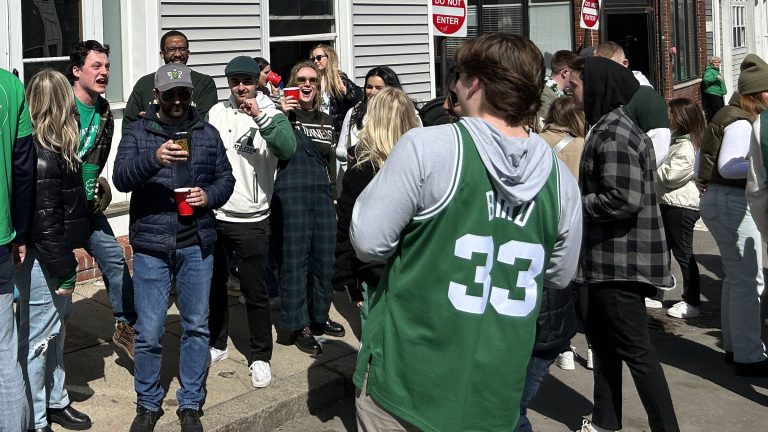
Outsiders might read the generosity as a performance on the way in and coldness on the way out. Wrong. It’s an account. Reciprocity is expected in this town. When you skip your turn you say something about you. The first round The bar is the easiest place to see this. Someone raised here, especially in the neighborhoods, will fight to get the first round. We will argue for the privilege because that’s how we show we like you, but if you don’t buy one back, it’s an insult. What, so you don’t like me? Or worse, you’re a cheap motherfucker. Most of us won’t say that, although some will say the last part, joking/not-joking. Either way, you’re on the outs. Irish pub culture has the same rule written more tightly. The Irish Times describes the round as a system, not an act of generosity. Mess it up and you can damage a reputation or a friendship. Irish Central is blunter: nobody reminds you when it is your turn, and people will talk. Bostonians are the same way with conversation. Only talk about yourself, never ask a question, and show no interest in the other person, and it’s over. We also have strict rules about family and friends. For neighborhood Bostonians, family is always right and the people we have known since kindergarten are family. In the schoolyard we backed them no matter what, and we still do. New friends are judged the same. Pass and you have a friend for life. Galway House is one of the oldest Irish bars in Boston. Photo by 4300streetcar Parish, neighborhood, round This culture is thickest in Irish Catholic working-class neighborhoods of Boston like Jamaica Plain, South Boston, Roslindale, and Dorchester, or JP, Southie, Rozzie, and Dot. People who leave those places tend to take the culture with them, and new people notice even if they can’t name what they are noticing. None of this came from nowhere. Rural Ireland ran on neighbor labor as well as kinship. A meitheal was a working party. Neighbors helped with a harvest or a turf cut, then expected the same help when their own work came due. The Irish Independent describes it as neighbors helping each other in turn, with no wages, on farms of roughly equal size so nobody cleaned up at everyone else’s expense. That is not a romantic clan from a movie. It is a practical rule: you show up, then they show up. Boston gave that rule a parish and a street. Irish Catholic immigrants built churches against real hostility. In Dorchester, a church under construction in Lower Mills burned in 1854, a fire many believed was set by Know-Nothings. St. Gregory’s followed. Later, people from the neighborhood still asked what parish you were from, because the parish was the map. Global Boston notes that Irish Americans left more slowly than some other groups in part because Catholic parishes could not pick up and follow them to the suburbs the way a synagogue could. A study of South Boston’s Irish enclave, drawing on Thomas O’Connor and on residents, put it in plainer language. People identified themselves by parish as much as by Irish county. In South Boston you learned silence and loyalty. Those are not opposite traits. They are the same system seen from two sides. You take care of your own. You do not advertise the terms. Call it clan if you want. The useful word is still the round. Help is supposed to come back and loyalty is supposed to be answered. Conversation is supposed to have a return. People who grew up in it think it’s normal, but people who didn’t think we’re a harsh bunch. They don’t realize our generosity is not charity, it’s membership. If you want in, buy the next drink, ask a question, and show up when it is your turn. If you don’t, you just won’t be asked back. -
Boston’s streets make absolutely no sense
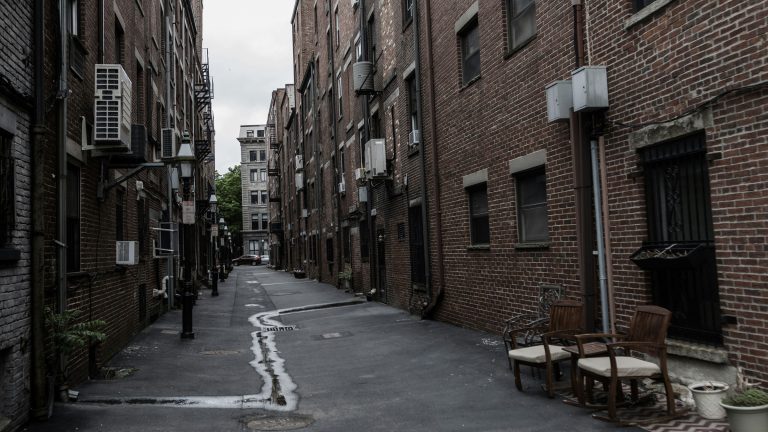
Take a wrong turn in downtown Boston and the city seems to rearrange itself behind you. A street bends without warning, changes its name, feeds into something called a square, and sends you back toward the place you just left. The usual explanation is that Boston paved over cow paths. It is repeated so often that it sounds like established history. The better explanation involves a small peninsula, private property, enormous amounts of fill and several towns that became Boston after laying out streets of their own. Boston’s streets started on a much smaller piece of land When English colonists established Boston in 1630, the Shawmut Peninsula was connected to the mainland by a narrow strip called Boston Neck. The route across it roughly followed present-day Washington Street toward Roxbury. There wasn't much room to leave town. The National Park Service describes the original peninsula as a place of three prominent hills, wetlands and estuaries. This was Massachusett land long before English settlement. Much of the ground that now seems inseparable from downtown Boston was still water. Early streets connected the places colonists needed to reach: houses, meetinghouses, markets, docks and fresh water. Routes fitted around slopes, shorelines and property. What served a small port town did not anticipate delivery trucks or someone trying to make a left turn on the way to a parking garage. The cows had other things to do Cows and sheep really did graze on Boston Common. The city eventually banned grazing there in 1830. That history explains why livestock belongs in the story, but it doesn't establish that wandering cattle determined the street plan. Ralph Waldo Emerson helped the idea stick. As Boston.com recounts in its examination of the cow-path story, he wrote, “we say the cows laid out Boston.” The article's historians point instead to fresh water, property boundaries and the original terrain as practical reasons for the early routes. A path used by animals might also have been used by people. That possibility is a long way from explaining an entire city. The cow story survives because it is easier to remember than the history of somebody else's property line. Boston made more land and gave it different streets Boston spent centuries creating room to grow. Hills were cut down, tidal areas were filled and the shoreline moved outward. The Leventhal Map & Education Center's account of landmaking describes both the physical work and the financial incentive: new ground could become valuable property. The result is particularly easy to see in Back Bay. Its rectangular blocks look different from the older streets downtown because they came from a different process. Planners could set out a street system for land being created, rather than fit roads around an existing waterfront town. Arthur Gilman produced his Back Bay plan in 1856. Filling began the following year and continued for almost four decades, according to the Friends of the Public Garden's history of Commonwealth Avenue Mall. The broad central mall gave the new neighborhood a long, planted space between its roadways. Arlington, Berkeley, Clarendon, Dartmouth, Exeter, Fairfield, Gloucester and Hereford streets even proceed alphabetically. Commonwealth Avenue, Newbury Street and Boylston Street run alongside one another. For a few blocks, Boston gives you a system you can remember. Boston also bought into other towns' street maps Today's city includes communities that developed separately. The city's annexation timeline records Roxbury joining in 1868 and Dorchester in 1870. Charlestown, Brighton and West Roxbury followed in 1874. Hyde Park joined in 1912. Those places already had roads, town centers and property boundaries. Becoming part of Boston did not erase them or require their streets to meet a Back Bay grid. A trip across the city can take you through several different systems without a sign announcing the change. Later traffic rules added another complication. One-way streets and turn restrictions can make a short route on foot a much longer trip behind the wheel. Knowing where a place is and knowing how to drive there are separate accomplishments. To see the difference without dealing with either problem, start on foot in Back Bay. Follow its rectangular blocks, then cross toward Beacon Hill's older, narrower streets. The change in the map is right under your shoes. -
Why Bostonians say “wicked” so much
“Wicked good” is a compliment. “Wicked expensive” is a complaint. The same word does both jobs without any concern for whether the subject deserves praise. In Boston, “wicked” often means very or extremely. It turns up the volume on whatever comes next. Say someone is wicked tired and you mean they are very tired, not that they have become a worse person. The meaning comes from how the word is being used. That is the useful thing to know before attempting a Boston impression. You can pronounce every R and still use the word correctly. You can also drop every R and put “wicked” in a sentence where it sounds like you learned to speak from a souvenir sweatshirt. Why Bostonians say wicked before almost anything In this usage, “wicked” is an intensifier. Merriam-Webster records its adverbial meaning alongside the older adjective meaning morally bad. The two uses can occupy the same language without confusion. A wicked person and a wicked good sandwich are different propositions. Think of “wicked cold,” “wicked funny” or “wicked crowded.” The word strengthens the description. It does not tell you whether to like the thing being described. Someone saying the restaurant was wicked busy might be recommending it, explaining a long wait, or wishing they had stayed home. The placement is more important than putting on an accent. “That was wicked good” has the familiar local construction. “That was wicked,” meaning excellent, is another slang use, but it does a different grammatical job. Adding the word everywhere will not make every sentence sound more Boston. The Puritans do not get automatic credit Boston’s reputation makes an origin story involving stern Puritans tempting. But the fact that an old word existed in England does not prove that seventeenth-century settlers brought this particular local use with them. The language program A Way with Words discusses “wicked” as a New England intensifier. That regional association is useful. It does not supply the name of the first person who said it, or a neat date when everyone in Massachusetts agreed to start. There is no need to invent a founding ceremony. People repeat words they hear in their families and communities, and a familiar expression can feel entirely ordinary to one speaker and immediately regional to another. “Wicked” works perfectly well without a colonial certificate of authenticity. Ordering a frappe does not require dropping an R Other local words need a little more translation. A frappe is a thick milkshake; the familiar New England pronunciation rhymes with “cap.” The spelling can make visitors expect a different word, especially if they are thinking of a coffee drink. For an order, the menu is more useful than a debate over terminology. Ask what is in the drink if the distinction matters. Regional vocabulary is interesting until it becomes the reason you receive something other than the ice cream you wanted. “Bubbler” means a drinking fountain, with a history that reaches beyond Massachusetts. Our bubbler explainer separates the regional word from a frequently repeated manufacturing story. Calling it a water fountain is also a perfectly effective way to ask for water. Vocabulary is not the same as an accent The Boston accent concerns sounds: which R’s a speaker pronounces, what happens between words, and how vowels are formed. Vocabulary concerns the words chosen. They overlap in conversation, but one does not require the other. A person raised here might say “wicked” constantly, occasionally, or never. Another might arrive from elsewhere and pick it up. Neither case is a useful citizenship test. Boston contains more than one way of speaking, and ordinary conversation is less uniform than the movie version. If the word is new to you, listen to what follows it. Good, bad, fast, slow, cheap, expensive: the next word does the describing. “Wicked” just makes sure you heard.