
Boston Explained
Stories behind Boston’s slang, landmarks, quirks and history.
Latest stories
-

Boston’s weather beacon has a special signal for the Red Sox
Boston’s weather beacon has a baseball setting. The red and blue lights on the old John Hancock building were designed to announce a forecast, but a flashing red signal during baseball season has also meant a Red Sox home game was postponed. Apparently rain is not specific enough until it affects Fenway. The beacon sits on the Berkeley Building at 200 Berkeley Street in Back Bay. It is the older Hancock building, not the much taller glass tower at 200 Clarendon Street. If you are looking for the lights on the glass one, you have the wrong Hancock. How to read Boston’s weather beacon The basic weather-beacon code uses two colors and two behaviors. Steady blue means clear weather. Flashing blue means clouds. Steady red means rain, while flashing red is the snow signal. Notice both parts before trying to read it. Blue alone does not supply the whole message, and neither does red. Whether the light holds steady or flashes makes the difference between two forecasts. The familiar rhyme pairs a clear view with steady blue, clouds due with flashing blue, rain ahead with steady red and snow instead with flashing red. You do not need to recite it on the sidewalk. Remembering the colors and the flashing pattern will do. The system gives you a broad category rather than a detailed forecast. It cannot tell you how many inches of snow to expect, what time the rain will start or whether your particular walk home will be dry. That was never information two colors could comfortably carry. The lights arrived after the building The Berkeley Building opened in 1947. Its weather beacon first lit on March 15, 1950, according to Atlas Obscura’s history of the structure. The beacon rises above the office tower, making the signal visible beyond the immediate block. A building that communicated by colored light was a useful idea before everyone carried a screen. Someone who knew the code could glance up and get the message without buying a paper or waiting for a broadcast. The weather service has not been continuous. The beacon went dark during the 1973 energy crisis and returned in 1983. In 2020, steady blue was used as a tribute to hospital workers during the pandemic, temporarily giving a familiar color a different meaning. Those interruptions are a reason to understand the lights as a piece of Boston history, rather than treat every photograph of them as an exact record of the weather. A blue beacon in an old image may be carrying a message other than clear skies. The Red Sox got their own signal The baseball connection extends beyond a rainout. After the Red Sox won the 2004 World Series, the beacon flashed red and blue together. The usual forecast could wait. The combination was repeated for the championships in 2007 and 2013. It is a pleasingly Boston use of an office-building fixture: two colors responsible for clouds and precipitation recruited to announce that the Red Sox had done something worth looking up for. The Curse of the Bambino story explains why 2004 carried so much weight. The championship ended a wait that had lasted since 1918, long before the Berkeley Building or its lights existed. Look for the older Hancock The two Hancock buildings can make directions confusing. The Berkeley Building is the one with the stepped top and beacon. The reflective glass skyscraper is 200 Clarendon, the later tower associated with the same company. The beacon belongs in a wider collection of Boston signs and signals that people recognize without necessarily knowing their original job. A corporate building can become a reference point for people who have never worked inside it. View the lights from a public sidewalk or another open vantage point, and give yourself a few seconds to distinguish steady from flashing. For a game-day decision, check the Red Sox’s announcement directly. The skyline is good at shorthand, but it cannot explain what happens to your ticket. -

Bostonians call drinking fountains ‘bubblahs’
Ask for a bubbler in parts of New England and someone may point you toward a drinking fountain. Ask in Wisconsin and the same thing can happen. Boston does not have this word to itself, even when it pronounces the ending differently. “Bubblah” is a written attempt to capture the local pronunciation of “bubbler.” The object is familiar: a fixture that sends up a stream of water for someone to drink. Its regional name has generated a surprisingly persistent origin story involving a plumbing company and a trademark. A bubbler is a drinking fountain Merriam-Webster identifies “bubbler” as a drinking fountain. The word is not a joke invented for visitors or a different kind of beverage. If someone tells you there is a bubbler down the hall, they are giving you directions to water. The name is descriptive enough. Water rises from a small outlet, making a short bubbling stream. “Drinking fountain” describes its purpose; “bubbler” describes what the water appears to do. Neither name requires a complicated explanation to be useful. That does not mean every Bostonian uses it. A family’s vocabulary, where someone went to school and the people around them all help shape which words feel ordinary. Hearing “water fountain” from a Boston resident is not evidence that they are secretly from somewhere else. The Kohler story needs a correction One popular account claims that Kohler invented the fixture, called it the Bubbler and watched the brand name become a general term. Versions of the story even identify an inventor named Harlan Huckleby. WUWM investigated that account with historian Beth Dippel, who had worked with Kohler’s archivist. The company records did not establish the supposed employee, and the dates in the story did not fit the business’s manufacturing history. Kohler did later make a design called a bubbler. But the word was already in use. That is the important distinction: a company using a name does not establish that it invented the name. Dippel discussed an older attachment on school water containers as one possible explanation. She presented it as a theory. The reporting does not replace one tidy invention story with another proved beyond doubt. Why the final R sometimes disappears The spelling “bubblah” moves the discussion from vocabulary to pronunciation. In the traditional Boston accent, an R after a vowel may disappear before a pause or another consonant. That is the pattern people are trying to represent with the “ah” ending. It does not mean a speaker removes every R from every word. R’s at the beginning of words remain, and an R can connect a word to a following vowel. The same person can sound different when saying a word alone and when using it in a sentence. The word and the accent also travel separately. A speaker can call a fixture a bubbler while pronouncing its R. Another can have a strong local accent and call it a drinking fountain. Treating those choices as inseparable makes a caricature out of ordinary speech. Other words that can trip up a visitor A frappe is another useful example. The dictionary records the thick-milkshake meaning and the pronunciation “frap.” Recognizing the word helps you order; copying the server’s accent adds nothing to the transaction. Then there is “wicked” used to mean very. It changes the strength of a description rather than naming a different object. These are separate features of regional English, not a script that everyone in Boston follows. A bottle-filling station may stand beside a traditional drinking fountain, but the fixtures serve different actions: one fills your container, while the other lets you drink directly from the stream.The next time you hear “bubblah,” you do not need to settle a trademark dispute or demonstrate your local credentials. You just need to find the fountain. -
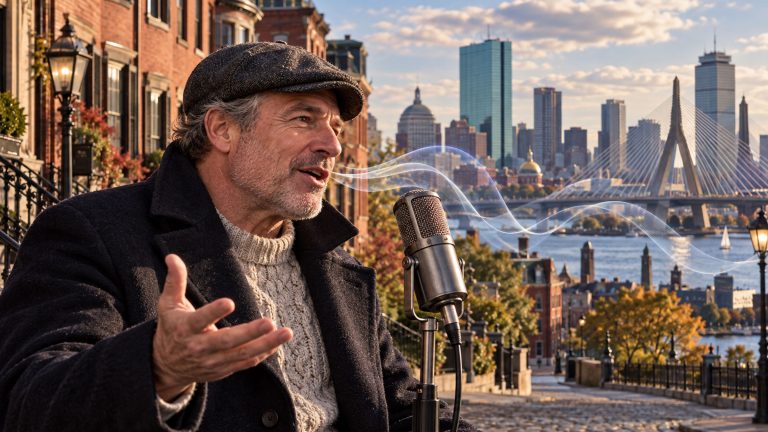
The famous Boston accent and its obsession with the letter R
Say “car,” then say “car engine.” For someone with a traditional Boston accent, the R can disappear in the first version and return in the second. The next sound makes a difference. That detail gets lost in plenty of Boston impressions. Removing every R gets you only so far, and eventually gets you somewhere nobody here is from. The accent has patterns involving consonants, vowels, and the way words meet in a sentence. It also varies considerably among the people who use it. Which R’s does the Boston accent drop? Linguists call the traditional accent non-rhotic. In ordinary terms, speakers often leave out an R after a vowel when another consonant or a pause follows. Think of “park,” “card,” or “car” said on its own. The R at the beginning of “red” stays. So does the one in “bring.” A Boston speaker is not applying a blanket ban to the letter. An R can also return at the end of a word when the next word starts with a vowel sound. In “car engine,” the words connect through the R. This is called linking R, a pattern also found in other non-rhotic English accents. Try saying the phrases naturally rather than giving each word its own pause. The difference is easier to hear in a sentence than in a list of words written with “ah” at the end. And where do the extra R’s come from? Then there is intrusive R: an R sound between words where no R appears in the spelling. “The idea of it” can sound like “the idear of it.” The vowel at the beginning of “of” creates the setting for that extra sound. It does not mean every Boston speaker says “idear” whenever the word appears. The University of York’s explanation of linking and intrusive R describes how one pattern developed from the other. Speakers extended an existing way of joining vowel sounds to words that did not have a written R. The extra consonant helps two vowel sounds meet. It follows a pattern, rather than arriving wherever an actor decides to put it. The vowels matter, too Listen to “cot” and “caught.” For many traditional Boston speakers, those words sound alike. That shared vowel is another important part of the accent, although it receives considerably less attention than “pahk.” Some speakers also use a broad A in words such as “bath” or “half,” bringing the vowel closer to the one in “father.” These features are not a checklist every Bostonian completes. A person can have a recognizable local accent without using all of them. You can hear examples in WBUR’s recordings and explanation of Boston speech, which includes Dartmouth linguist James Stanford discussing the sounds. Listening is more useful than trying to reconstruct an accent from exaggerated spelling. How Boston came to sound this way Boston speech belongs to the broader Eastern New England dialect region. Its history includes the English spoken by early settlers and the region’s continuing connections with England. Boston University linguist Neil Myler points to settlers from East Anglia as an important influence on the region’s R-dropping speech. Stanford also emphasizes the close contact Boston maintained with southeastern England, where non-rhotic pronunciation gained social prestige. That history helps explain the connection, but the accent has continued changing here. The way someone speaks also reflects their family, community, education, and social surroundings. Four centuries of Boston life did not leave the original dialect untouched. “Wicked” and “frappe” are a different part of the story An accent concerns pronunciation. A dialect includes vocabulary and grammar as well. “Wicked,” used to mean very or extremely, is vocabulary. In “wicked cold,” it increases the force of “cold.” It does the same job in “wicked expensive,” with less pleasant financial implications. “Frappe” is another regional word, pronounced “frap” in the familiar local usage. Merriam-Webster records both that pronunciation and the thick-milkshake meaning. Someone can order a frappe, complain that it is wicked expensive, and pronounce every R. Knowing the words and having the accent are separate things. Not everyone raised here sounds the same Research has documented differences across age groups and communities. In a 2010 study of Boston and two New Hampshire towns, linguists Naomi Nagy and Patricia Irwin found that younger speakers pronounced more post-vocalic R’s than older speakers. Education and other social factors also mattered. Those results concern the people in the study, rather than every younger person in Boston. They also measure one feature: someone who pronounces more R’s can retain other local sounds. The accent does not disappear the moment one pronunciation changes. For some people, sounding local is a source of pride. Others have felt pressure to soften their pronunciation to avoid being judged. Both experiences help explain why a city can have such a recognizable accent without all its residents sharing it. Pronouncing the R in “Dorchester” does not cancel out having grown up there. -
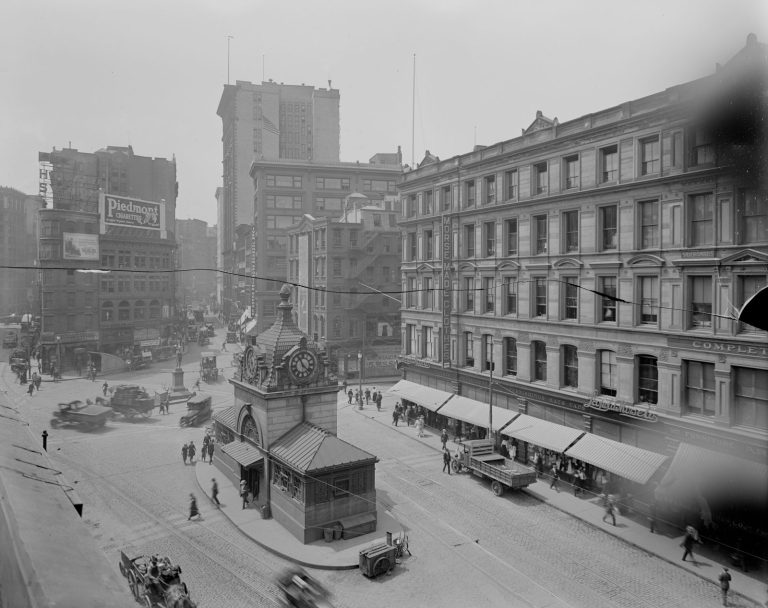
Boston was named after another Boston
Boston was named after Boston. The earlier one is in Lincolnshire, England, where a medieval church tower rises above a port and market town. English settlers carried the name across the Atlantic in 1630. Massachusetts made it rather more famous. The connection is well documented. Historic England describes both the borrowed name and the prominent residents who left the English town to help lead the new settlement. The longer story involves a saint, a minister who arrived after the naming, and a peninsula whose human history did not start when the English showed up. Boston was named after a port town Boston, Lincolnshire, was an important trading port long before the Massachusetts settlement existed. Its position connected the town with North Sea commerce, and its surviving warehouses, markets and church reflect that wealth. St Botolph’s Church is the building most likely to catch your eye. Its tower is known as the Boston Stump, a nickname that undersells a structure visible across the flat surrounding country. The church supplied a religious and civic focal point for the town that gave ours its name. The name Boston is generally traced to Botolph’s town. The Getty Research Institute’s place-name record includes “Botolph’s Town” among its historical names. By the time the name reached Massachusetts, the shorter form had already done the work. John Cotton came later John Cotton is an important part of the connection between the two Bostons. He served as vicar of St Botolph’s before settling in Massachusetts. But the dates matter: the American town was named in 1630, and Cotton arrived in 1633. Boston Borough Council’s account of the transatlantic connection explains how Cotton’s congregation and other local figures linked the English town to New England. It also separates that migration from the earlier story of the Pilgrims. The English Boston has a Pilgrim connection too. In 1607, separatists trying to leave for the Netherlands were betrayed and arrested there. That episode belongs to the history leading toward the Mayflower voyage, not to a single founding trip that created every English settlement in Massachusetts. Putting those events into one neat departure story loses the actual sequence. Plymouth’s 1620 settlement and Boston’s 1630 settlement were different undertakings. Cotton’s later arrival strengthened an existing connection rather than creating the name on his first day. Before Boston there was Shawmut The English name was new. The inhabited place was not. The City of Boston’s archaeological history of the Common describes thousands of years of Massachusett life in Shawmut and emphasizes that the Massachusett people are still here. Archaeologists have found stone tools, pottery and shell deposits near the Frog Pond and Parkman Bandstand. Those objects give a much longer account of life on the peninsula than a founding date printed on a city souvenir. William Blackstone, also spelled Blaxton, was already living on the peninsula when John Winthrop’s settlers arrived. In 1634, he sold land to the colonists that became the Common. The familiar park therefore holds several histories at once: Indigenous use, English settlement and the development of shared public land. A city name is only part of the map Boston’s name is comparatively straightforward once you find the English town. The names inside Boston can be less cooperative. Jamaica Plain’s name, for example, has competing explanations rather than one securely documented answer. For Boston itself, there is no need to invent a secret message or claim the Puritans were asking a saint to protect their new home. A familiar English place name traveled with a community of settlers. Understanding why that name felt familiar requires looking back across the Atlantic; understanding the place it was applied to requires looking much further back here. The next time you hear “the original Boston,” the speaker may mean a Lincolnshire market town with a very large church. Ours was the sequel.
More stories
-
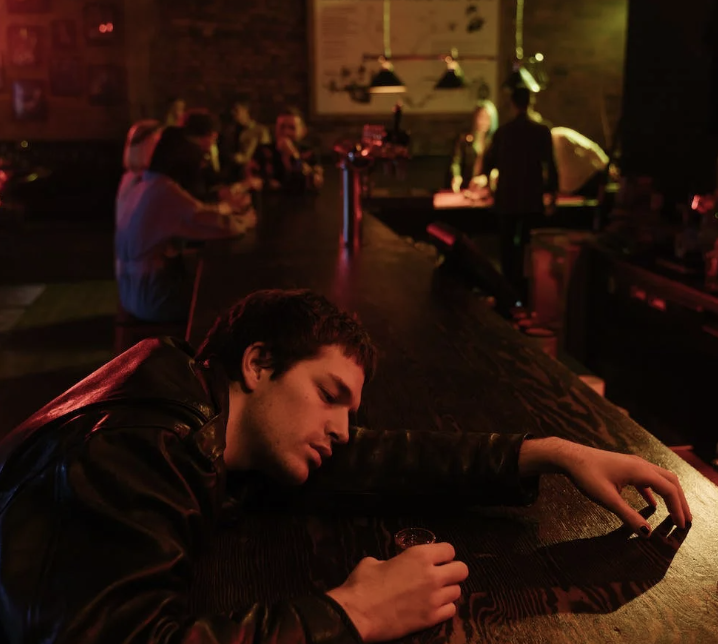
Why happy hour in Boston is still banned
A bar can knock a few dollars off your oysters at five o’clock. Your martini is another matter. Happy hour in Boston is still restricted by a Massachusetts regulation that prohibits temporary drink discounts, free drinks and promotions built around drinking more for less. The rules apply across the state. Cambridge and Somerville cannot offer an escape route, and calling a promotion an industry night does not create one. As of September 19, 2026, the legislature is still considering a change. A Senate vote in favor of happy hour is not the same as permission for your local bartender to start pouring two-for-one margaritas. Why happy hour in Boston disappeared One of the events behind the ban happened outside the Ground Round in Braintree on September 9, 1983. Kathleen “Kathy” Barry, a 20-year-old woman from Weymouth, died after riding on the hood of a car driven by a friend who had been drinking at the restaurant. Some of the driver’s beers had been prizes in a music trivia contest. Reporting based on interviews with Barry’s family and former state officials describes how her death helped turn alcohol promotions into a public-safety issue. Her parents pressed for stronger measures against drunken driving. Massachusetts introduced the restrictions in 1984, during Michael Dukakis’s administration. They targeted the offers that could encourage someone to drink quickly or keep ordering: free rounds, discounted drinks and contests with alcohol as the reward. The ban dates to the same period as many of the clubs in our look at Boston’s bars of the 1980s. The rules have outlasted quite a few of the rooms. An all-day special is not a loophole The key phrase in the regulation is “same calendar week.” A bar cannot offer a drink for less than its regular price during that week. Selling a margarita for $8 all Tuesday and $12 on Wednesday does not get around that restriction merely because the Tuesday price lasted longer than an hour. A reasonably priced drink is allowed. A temporary discount on that drink is what creates the problem. Those are different things when you are comparing menus, even if both might leave you with a smaller bill. The regulation also prohibits charging a selected person or group less than the general public that day, with an exception for private functions not open to the public. Being a restaurant worker, a regular or the person celebrating a birthday does not, by itself, create an exemption. Bottomless brunch has a problem too The restrictions cover unlimited drinks sold for a fixed price during a set period. That rules out the usual public bottomless-mimosa promotion. Increasing the amount of alcohol without a proportionate price increase is prohibited as well, so a bigger pour is not a substitute for a discount. There are limits on service alongside the pricing rules. A licensee cannot deliver more than two drinks to one person at once. Pitchers of beer or mixed drinks must be served to at least two people. Drinking games and contests that award drinks are prohibited. Some provisions make exceptions for private functions. Buying a ticket does not necessarily make an event private; a publicly advertised offer still needs to comply with the rules. Food specials are a different story The regulation’s exceptions expressly allow free food and entertainment, as well as a drink included in a meal package. A discounted appetizer or oyster offer can therefore be legitimate even when its advertised time sounds like happy hour. Read what the offer actually includes. A food discount does not necessarily mean a cheap evening once drinks, tax and tip arrive. And a meal package is not blanket permission for unlimited cocktails alongside a plate of fries. For an evening built around the room and the drinks rather than a promotion, our Boston speakeasies guide is a useful place to start. The latest attempt to change the rules In July 2026, the Senate passed economic-development legislation containing a local-option proposal for discounted drinks. It would allow participating cities and towns to authorize time-limited discounts, subject to conditions including advance notice and a 10 p.m. cutoff. At this article’s September 19 check, the official bill history still showed House and Senate conference committees appointed on July 30 to resolve their differences. The proposal had not become law. Until that changes, a free birthday drink from the bar remains prohibited. Your friends, however, can buy the round. -

5 famous comedians with Boston roots
Steven Wright can make a sentence sound as though he has just noticed a small defect in the universe. Bill Burr sounds more likely to demand a conversation with whoever built it. Both passed through Boston’s comedy world, which is a useful reminder that a local connection does not produce one kind of comedian. These five famous comedians with Boston roots came through different hometowns, clubs and careers. Some studied at Emerson; others grew up nearby. Calling all of them Boston-born would be inaccurate, but the region belongs in the account of how they got started. Steven WrightWright’s delivery is so unhurried that the strangeness of a line can arrive before your brain has caught up. His act relies on deadpan observations and language taking an unexpected turn, rather than a large stage persona demanding attention. He is an Emerson graduate, part of the generation the college associates with clubs such as Ding Ho and the Comedy Connection. His work also extends beyond stand-up. Wright and Dean Parisot won the 1989 Academy Award for live-action short film for The Appointments of Dennis Jennings. That is a useful title to seek out if you know him only through one-liners: the same comic sensibility has room to operate inside a story. Denis LearyLeary grew up in Worcester and developed a lasting Boston connection through Emerson. The college’s comedy history places him among the founders of the Emerson Comedy Workshop. It also distinguishes his MTV appearances from the breakthrough performance of No Cure for Cancer at Edinburgh, rather than treating them as a single television event. For another side of his career, there is Rescue Me, the firefighter series he created with Peter Tolan and starred in. The Television Academy’s interview discusses both that collaboration and the personal connection behind the work. His television career gives the anger and speed associated with his stand-up a longer dramatic setting. Dane CookCook grew up in Arlington and built his act around animated storytelling and physical performance. In a Boston.com interview about Above It All, he discussed his early career as well as the newer special. Watching him after Wright makes the difference in delivery fairly obvious; these are not interchangeable versions of a “Boston comic.” His album Retaliation reached number four on the Billboard 200, a chart position documented in his Laugh Factory biography. The record is a place to start if you want to understand the scale of his midcareer audience, rather than relying on whatever short clip happens to turn up first. Bill BurrBurr also studied at Emerson, but his voice is very much his own: argumentative, quick to question an accepted opinion and willing to keep turning a complaint over. His official site collects specials including Paper Tiger and Live at Red Rocks, alongside the Monday Morning Podcast. The podcast is a useful contrast with a prepared special. One gives you the looser format of an ongoing conversation; the other gives you an act shaped for a particular performance. If you are considering tickets, use the current tour listings on his site. A Boston connection does not mean a Boston date is always available. Louis C.K.C.K. grew up in Newton and became known for stand-up and the television series Louie. His material has often dealt with family life, personal failings and uncomfortable observations. Those subjects account for part of his audience, but they are not a complete account of his public career. In 2017, he admitted to sexual misconduct reported by several women, and FX ended its association with him. Boston.com’s reporting on a later Saugus appearance records that history. His place in the region’s comedy story is real; so is the reason many former fans no longer want to buy a ticket. To hear performers discuss the work rather than just watch the finished act, try Emerson’s American Comedy Archives. Its oral histories include Steven Wright and Bill Burr, with interviews and available transcripts accessible online. The conversation can be as interesting as the punch line, especially when a comedian explains the years of work behind something that sounds spontaneous. -

5 Boston clubs that made the 1980s a very loud decade
The Rat now has a namesake luxury hotel suite. That is quite a promotion for a basement club remembered for its filthy bathrooms. Boston has changed since the 1980s, but the names of its clubs still carry the weight of a particular band, a particular night or a friend who insists you should have been there. These five Boston clubs from the 1980s cover more than one scene. There were punk rooms, dance floors and a much larger space on the Fort Point waterfront. Four belong to the history books. The Paradise still gives you a reason to buy a ticket. The RatThe Rathskeller in Kenmore Square made room for Boston bands before they were a safe commercial bet. The Cars’ Elliot Easton later credited the club with helping the band develop and gain the attention that led to its record deal. Local acts shared that history with visiting bands including the Ramones, Talking Heads and the Police, as WBUR’s account of owner Jim Harold records. The Rat closed in November 1997. Hotel Commonwealth now offers a Rathskeller Suite with music memorabilia, a separate living room and views of Kenmore Square. It is a hotel room, not a surviving piece of the old club that you can wander into for a drink. The upgrade in plumbing was presumably considerable. The ChannelThe Channel opened in 1980 on Necco Street near Fort Point Channel. Its large room could handle bands and crowds that smaller clubs could not, and its bookings ranged across punk, reggae, funk, rock and R&B. Run-D.M.C., James Brown, Black Flag and Roy Orbison all appeared there. That is a considerably wider range than a simple “punk club” label suggests. In WBUR’s retrospective, members of the Del Fuegos recalled learning from the different performers who passed through. The club was both a stop for touring acts and a place where local musicians could see how those acts worked. Its principal live-music years ran through 1991. SpitSpit opened in 1979 beside the Lansdowne Street club then called Boston-Boston. In a Boston magazine interview, operator Patrick Lyons described it as the place for the rock crowd, contrasting its audience with the disco customers next door. It later became Axis. The names can get tangled because several clubs occupied adjoining spaces and changed identities over time. Spit belongs to the earlier part of that sequence. Remembering it separately helps explain why two people can talk about the same stretch of Lansdowne Street and mean quite different nights out. MetroMetro grew out of Boston-Boston, giving the dance audience its own destination alongside Spit. Lyons recalled a distinction that radio listeners would have understood: the Kiss 108 crowd went to Metro, while WBCN listeners went to Spit. Boston nightlife had room for both. Metro later became Avalon. Axis and Avalon eventually closed, and House of Blues opened on the site in 2009. A concert there now does not put you inside the old Metro, but those successive names explain how much nightlife history is packed into a short stretch opposite Fenway Park. View Paradise Rock ClubParadise Rock Club opened in 1977, with Livingston Taylor headlining the first night. The Music Museum of New England documents U2 playing there on its first American tour in 1980, along with a long list of other acts that went on to much larger rooms. Its Commonwealth Avenue address became part of many bands’ Boston history. The Paradise remains an operating concert venue. Use the current calendar for the artist, ticket availability and show details rather than treating its past bookings as a description of what is playing this week. Of these five clubs, it is the one where a new memory still starts at the door. If this sends you looking for a show tonight, start with the Paradise’s calendar and pick the artist before planning the rest of the evening. For cocktails instead, our Boston speakeasy guide covers places you can visit now. The old clubs deserve to be remembered on their own terms, beer-soaked carpet and all. -

4 famous writers to follow through Boston and Concord
Edgar Allan Poe was born in Boston, returned as a young man and did not spend his career being polite about its literary establishment. The city eventually gave him a statue anyway. A few miles beyond Boston, Concord preserves a different literary world: the homes and landscape associated with Emerson, Thoreau and Louisa May Alcott. These four writers offer a useful starting point for a reading list and a day out. Their connections to Boston are different, and the Concord stops deserve their own trip. Choose the book that interests you first. The house tour means more when you know whose desk you are looking at. Edgar Allan PoePoe was born in Boston on January 19, 1809, to parents who worked as actors. He grew up elsewhere, then returned to Boston and published his first book, Tamerlane and Other Poems, in 1827. The National Park Service’s biography also records his enlistment in the Army that year and his assignment to Fort Independence in Boston Harbor. His local history includes military service as well as publishing. Stefanie Rocknak’s Poe Returning to Boston stands at Edgar Allan Poe Square, by Boylston Street and Charles Street South. Installed in 2014, it places the writer near the Common rather than behind a museum admission desk. Read “The Tell-Tale Heart” before you go if you want a short introduction to his work. There is nothing relaxing about that narrator, which is rather the point. Henry David ThoreauThoreau was born in Concord in 1817. He spent two years, two months and two days living in a small house near Walden Pond, an experience that became the basis of Walden. Reducing him to a man who liked being outdoors misses a considerable part of his work: he was also an abolitionist, a social critic and a careful observer of the natural world. The Walden Woods Project provides biographical material and access to resources on his writing, including the essay commonly known as “Civil Disobedience.” Read that alongside Walden for the political arguments as well as the pond. If you plan to visit the area, allow a separate Concord outing; this is not a stop you can add to a downtown Boston walking route. Ralph Waldo EmersonEmerson’s Concord home gives a physical setting to ideas that can feel rather abstract on the page. He and his wife Lidian moved there in 1835. According to the National Park Service, he completed the final draft of Nature there in 1836 and wrote “Self-Reliance” in 1841. I’m a fan of “Self-Reliance” myself. The Ralph Waldo Emerson House offers guided tours seasonally, from late April through October. The house was also a meeting place for writers and thinkers including Thoreau, Margaret Fuller and the Alcotts. One useful detail before you visit: the original contents of Emerson’s study were moved to the Concord Museum, with duplicate pieces taking their place in the house. Louisa May AlcottAt Orchard House in Concord, Alcott wrote Little Women in 1868 at a shelf desk her father built for her. The house connects the fictional March family with the real Alcott household. It also offers something more specific than a reconstructed room: the museum says about eighty percent of the furnishings on display belonged to the family. Book timed admission through Orchard House if the tour is central to your plans. Its gardens and grounds are free to visit, while entering the house is a separate experience. Reading even a few chapters before arriving gives you more to notice, particularly the way family life, work and creative ambition share the same rooms. If you only have an afternoon in Boston, begin with Poe Square rather than trying to squeeze Concord into the same walk. For Concord, choose a house tour time first and leave room between stops. A literary outing should allow enough time to read the exhibit labels without checking your watch after every sentence. -
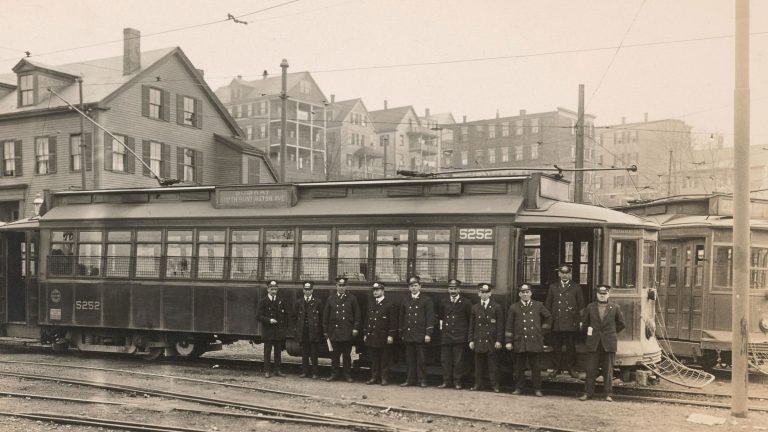
The boozy theory behind Jamaica Plain’s name
Jamaica Plain’s name may owe something to Jamaican rum, but nobody has established who chose it or why. Other theories credit a Massachusett leader or England’s capture of Jamaica from Spain. The rum explanation has enjoyed a long career without producing a receipt. The rum story has company The Caribbean explanation comes in more than one version. One credits Jamaica’s rum and its popularity among local drinkers. Another connects the name to England’s capture of the island from Spain in 1655. In a 2019 GBH interview about the name, historical society president Gretchen Grozier described the rum story against the setting of rural Roxbury, with inns and taverns along the road to Dedham, now Centre Street. The suggestion is that the drink’s association with the area became a nickname. The conquest explanation proposes a different motive: commemorating an English victory. Grozier identified it as a possibility, while emphasizing the weak connection between the military event and the neighborhood’s name. Neither explanation establishes that local sugar refineries named Jamaica Plain. A connection to Caribbean trade and a documented naming decision are different things. The trade itself also deserves more than a cheerful tavern anecdote. Boston College’s Global Boston history of Jamaica Plain connects the wealth of early estate-owning families to international commerce involving enslaved people, rum and other commodities. That economic history is substantial even where the etymology remains uncertain. The “plain” in Jamaica Plain’s name Before Jamaica Plain, there was Pond Plain. The Jamaica Plain Historical Society’s neighborhood guide identifies that earlier name with Jamaica Pond and the surrounding land. At the time, the area belonged to Roxbury. “Plain” described the relatively level ground around the pond and village, rather than promising that every future resident would have a flat walk home. The larger neighborhood includes hills. Boston University’s architectural and community history project describes an agricultural district of hills, farms and orchards in 1800, with wealthy Bostonians establishing estates beside the pond and Stony Brook. The older geographical label helps explain half the name. The difficulty is establishing how “Jamaica” became attached to it. A Massachusett leader is one possible namesake One longstanding explanation connects the name to Kuchamakin, a Massachusett sachem, or leader, whose name appears in several English spellings, including Cutshamekin. In Walter H. Marx’s account of the naming question, published in the Jamaica Plain Gazette in 1992 and preserved by the historical society, Kuchamakin’s association with the pond provides a possible route from a person’s name to a place-name. Under this explanation, English speakers altered his name into “Jamaica.” The different spellings reflect attempts to represent an Indigenous name in English. The explanation concerns a person associated with the area, rather than a literal translation of the modern neighborhood name. Marx also records a story about an Indigenous basket maker named Jamaco who lived beside the pond. Her story belongs among the accounts people have passed down, but the article does not establish it as the naming event. Why Jamaica Plain’s name still has competing explanations The sources do not give us a single person announcing a name and explaining the choice. Instead, they preserve different attempts to make sense of one that was already in use. A historian describing a tradition is useful evidence that the story circulated. It is not the same thing as a record of the original naming. The place itself has also changed. The neighborhood's pond, farmland and country estates belong to an earlier version of an area now connected to the rest of Boston by city streets and transit. Reading an old geographical label against the modern neighborhood can make it sound stranger than it did to the people using it. You can still start with the most visible piece of the explanation: Jamaica Pond. The earlier name Pond Plain located the community beside an actual body of water. Take the gardens and neighborhood walks at their own pace rather than treating the name as a puzzle that has to be solved before you get there. The rum story remains a possibility, and an unusually durable one. Nobody has produced the naming decision that would turn it into the answer. Jamaica Plain has managed to keep the name without agreeing on who deserves the credit. -

5 Boston sports moments worth watching again
Boston sports history gives you plenty of reasons to watch the same few seconds again. A pass that should never have been thrown. A stolen base everyone knew was coming. A hockey player suspended above the ice after scoring the goal that ended a long wait. These five Boston sports moments include championships, a playoff escape and an Olympic win with a strong Boston University connection. They did not all happen in Boston, and they did not all end a championship game. The details make them better, especially when you remember just how close things came to going the other way. Bobby Orr wins the Stanley Cup in 1970On May 10, 1970, Bobby Orr scored in overtime against the St. Louis Blues and gave the Bruins their first Stanley Cup in 29 years. The photograph of him airborne became the image of the moment, but the puck had already done its work before the celebration was captured. Derek Sanderson supplied the pass. His account of playing with Orr is worth reading alongside the familiar picture, which can make a team play look like a solo act. Watch the exchange as well as the finish. The Bruins needed someone to deliver the puck, and Sanderson was in the right place to do it. The BU connection to the Miracle on IceThe United States beat the Soviet Union 4–3 at Lake Placid in 1980, with four former Boston University players on the American team: Mike Eruzione, Jim Craig, Jack O’Callahan and Dave Silk. For Boston fans, that gives an already remarkable Olympic game a very local cast. BU’s recollection of the game is a useful starting point. The Soviet victory was not itself the gold-medal clincher; the Americans still had to beat Finland. Craig’s BU Hall of Fame profile records both wins. That last game deserves to stay in the story. Beating the favored opponent would have meant something rather different without finishing the job. Larry Bird steals the pass and Dennis Johnson finishesIn the 1987 Eastern Conference finals, Bird intercepted an Isiah Thomas pass and fed Dennis Johnson for Boston’s winning layup. The NBA’s account of the play makes the division of labor clear. The replay with the Boston broadcast calls is a good way to revisit it. Watch Johnson as well as Bird: his movement gives the steal somewhere to go. Basketball highlights tend to put one player’s name on a moment, but freezing this one at the interception leaves out the basket. Dennis Johnson belongs in the sentence. The Red Sox come back from three games down in 2004Before the World Series celebration came an American League Championship Series that Boston was losing three games to none. In Game 4 at Fenway, Dave Roberts stole second in the ninth inning, Bill Mueller’s single brought him home to tie it, and David Ortiz later won the game with a home run. The Baseball Hall of Fame’s account follows the comeback through Boston’s Game 7 victory. The Sox became the first MLB team to win a postseason series after trailing 0–3, then swept the Cardinals in the World Series to end an 86-year championship drought. The parade was earned, but Roberts getting to second is the replay to start with. Malcolm Butler intercepts Seattle at the goal lineThe Patriots led Seattle 28–24 late in Super Bowl XLIX when the Seahawks reached the one-yard line. Russell Wilson threw toward Ricardo Lockette, and Malcolm Butler intercepted with 20 seconds remaining. A drive that looked capable of deciding the game did exactly that, just for the other team. The Patriots’ game record preserves the sequence, including Jermaine Kearse’s catch and Marshawn Lynch’s run before the interception. Watch those plays first. Butler’s finish is more startling with Seattle’s progress fresh in your mind. The February 2015 win gave New England its fourth Super Bowl title. For the baseball chapter, our Fenway Park guide gives the ballpark its own attention. For the rest, start the footage a little before the famous play. The score, the clock and the possession matter. Watching only the celebration skips the part where Boston looked as though it might lose.