


Outsiders might read the generosity as a performance on the way in and coldness on the way out. Wrong. It’s an account. Reciprocity is expected in this town. When you skip your turn you say something about you.
The first round
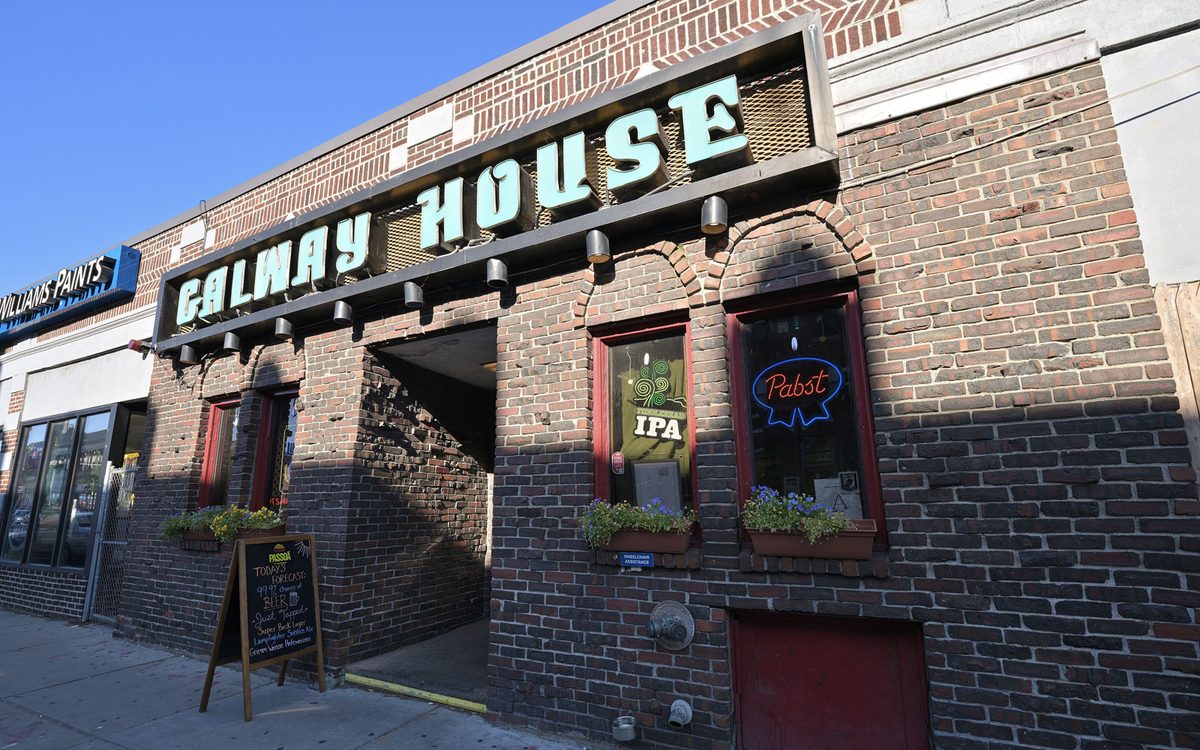
The bar is the easiest place to see this. Someone raised here, especially in the neighborhoods, will fight to get the first round. We will argue for the privilege because that’s how we show we like you, but if you don’t buy one back, it’s an insult. What, so you don’t like me? Or worse, you’re a cheap motherfucker.
Most of us won’t say that, although some will say the last part, joking/not-joking. Either way, you’re on the outs.
Irish pub culture has the same rule written more tightly. The Irish Times describes the round as a system, not an act of generosity. Mess it up and you can damage a reputation or a friendship. Irish Central is blunter: nobody reminds you when it is your turn, and people will talk.
Bostonians are the same way with conversation. Only talk about yourself, never ask a question, and show no interest in the other person, and it’s over.
We also have strict rules about family and friends. For neighborhood Bostonians, family is always right and the people we have known since kindergarten are family. In the schoolyard we backed them no matter what, and we still do. New friends are judged the same. Pass and you have a friend for life.
Parish, neighborhood, round
This culture is thickest in Irish Catholic working-class neighborhoods of Boston like Jamaica Plain, South Boston, Roslindale, and Dorchester, or JP, Southie, Rozzie, and Dot. People who leave those places tend to take the culture with them, and new people notice even if they can’t name what they are noticing.
None of this came from nowhere. Rural Ireland ran on neighbor labor as well as kinship. A meitheal was a working party. Neighbors helped with a harvest or a turf cut, then expected the same help when their own work came due. The Irish Independent describes it as neighbors helping each other in turn, with no wages, on farms of roughly equal size so nobody cleaned up at everyone else’s expense. That is not a romantic clan from a movie. It is a practical rule: you show up, then they show up.
Boston gave that rule a parish and a street. Irish Catholic immigrants built churches against real hostility. In Dorchester, a church under construction in Lower Mills burned in 1854, a fire many believed was set by Know-Nothings. St. Gregory’s followed. Later, people from the neighborhood still asked what parish you were from, because the parish was the map. Global Boston notes that Irish Americans left more slowly than some other groups in part because Catholic parishes could not pick up and follow them to the suburbs the way a synagogue could.
A study of South Boston’s Irish enclave, drawing on Thomas O’Connor and on residents, put it in plainer language. People identified themselves by parish as much as by Irish county. In South Boston you learned silence and loyalty. Those are not opposite traits. They are the same system seen from two sides. You take care of your own. You do not advertise the terms.
Call it clan if you want. The useful word is still the round. Help is supposed to come back and loyalty is supposed to be answered. Conversation is supposed to have a return. People who grew up in it think it’s normal, but people who didn’t think we’re a harsh bunch. They don’t realize our generosity is not charity, it’s membership.
If you want in, buy the next drink, ask a question, and show up when it is your turn. If you don’t, you just won’t be asked back.
Members
Join to keep reading
- Members-only perks, like free and discounted tickets
- Access to members hub
- Priority guest list
- Every guide and article, in full
- Save places, events and guides
- Unlimited searches on The MoveA discovery tool that recommends our favorite spots in Boston.
- 15% off Secret Boston merch
$9.99 a month or $99 a year. Cancel anytime.
Already a member? Sign in
Always free