

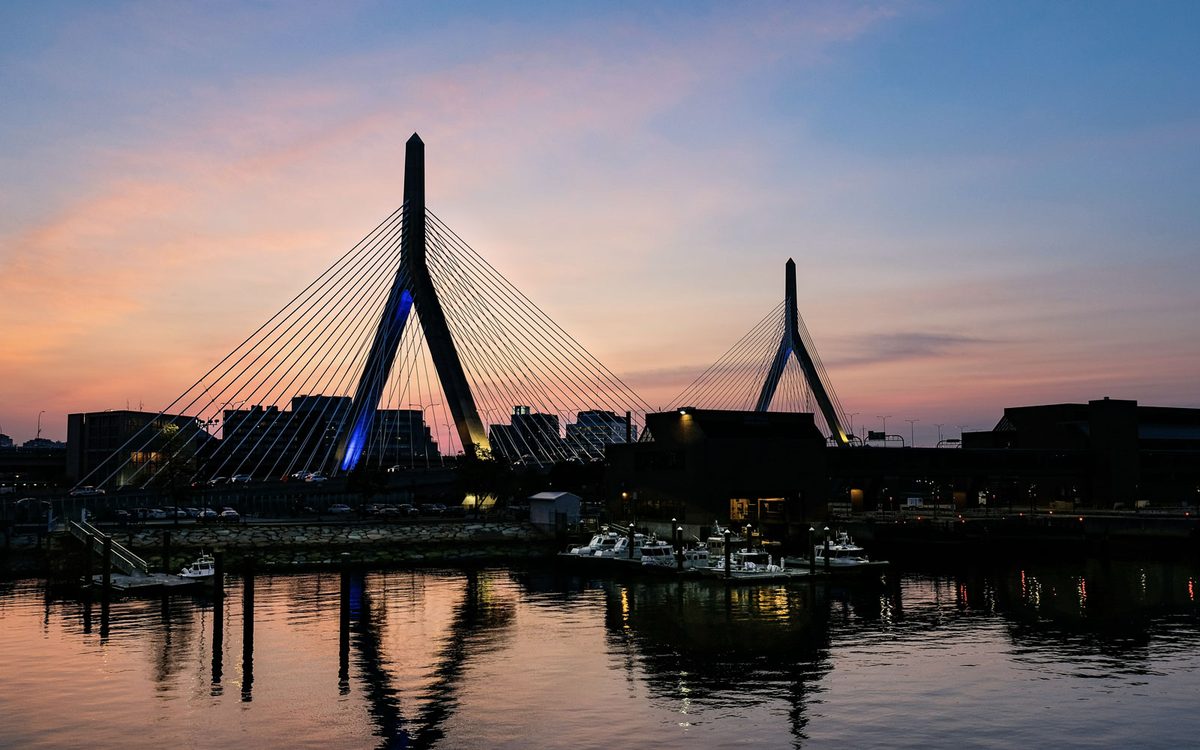
Green on the Zakim does not automatically mean the Celtics. Purple does not have one permanent meaning either. The Zakim Bridge lights change for holidays, memorials, and awareness campaigns, and the same color can stand for several unrelated things in a single year.
MassDOT publishes a dated lighting calendar. Match the night to the entry, check that the Zakim is one of the bridges listed, and you have a better answer than guessing from the color alone.
That last part matters. The state schedules several bridges on the same page. An entry for the Longfellow or the Braga is not automatically an entry for the Zakim.
Where to check the Zakim Bridge lights
The MassDOT bridge lighting schedule lists the occasion, color, date, and participating bridges. Use the current year, especially if the photo you are looking at has been reposted without a date.
The 2026 calendar is a useful demonstration of why a universal color key would fail. Green has already been used for St. Patrick’s Day, Boston Legacy Football Club, and Living Donation Week. Blue has appeared for World Parkinson’s Day and for the twenty-fifth anniversary of September 11. Those are not competing theories. They are different nights. A blue bridge photographed in April cannot explain a blue bridge photographed in September.
Two September nights this year make the point. On September 11 the Zakim was blue. On September 13 it was green, and that night the Zakim was the only bridge on the list. Same week. Different colors. Different reasons.
Multi-color displays can be easier to tell apart, though the date still matters. The schedule names combinations as well as single colors. Read the full line before attaching a meaning to a picture, particularly when the occasion is a memorial or a health campaign.
Who gets to decide
MassDOT’s bridge lighting policy, dated November 14, 2023, says special displays express the agency’s official views. The bridges are not a public billboard and not an open platform for anyone’s message.
A change needs approval from the department’s Office of the General Counsel and the transportation secretary’s concurrence. The policy covers state and federal holidays, other national observances, and public commemorations and celebrations at the national, state, or local level.
The calendar can still move after that approval. A screenshot is useful evidence of an earlier plan. The live page is the better place to check what is scheduled now.
The Zakim is one of several state bridges with programmable lights. The policy also names the Longfellow, Fore River, Kenneth F. Burns, and Braga bridges. Matching colors across the state can be one coordinated observance, not a coincidence.
Why blue looks familiar
Blue is also the bridge’s ordinary night look. Color Kinetics, which worked with MassDOT on the LED system, describes the design as blue-lit towers with the cables picked out in white. The company cites architect Miguel Rosales, who wanted a formal entrance to Boston.
The LED system was unveiled in December 2012. It replaced older metal halide lights that had been on the bridge since it opened in 2002 and had grown dim. The new fixtures can hold the familiar blue or shift for a listed occasion. The lighting is not a new coat of paint. It is a programmed change.
Blue by itself is therefore not enough to identify a tribute. Check whether a special blue display was on the calendar for that night before assigning it a meaning.
Read the date before the symbolism
For an old photograph, establish the date before looking up the color. For a night you have not seen yet, check the calendar again close to the date. If the page has no matching entry for the Zakim, leave the occasion unconfirmed rather than borrowing one from another month or another bridge.
The fastest route to the answer is the least dramatic: date, bridge name, calendar line. Boston has other lights with a code, including the weather beacon on the old Hancock. This one usually comes with a schedule.
Members
Join to keep reading
- Members-only perks, like free and discounted tickets
- Access to members hub
- Priority guest list
- Every guide and article, in full
- Save places, events and guides
- Unlimited searches on The MoveA discovery tool that recommends our favorite spots in Boston.
- 15% off Secret Boston merch
$9.99 a month or $99 a year. Cancel anytime.
Already a member? Sign in
Always free