

For generations, chocolate was part of the air in Lower Mills. Baker’s Chocolate manufactured along the Neponset River until 1965, leaving behind a cluster of factory buildings and memories of a neighborhood that smelled considerably better than most industrial districts.
The business traces its roots to 1765, when chocolate maker John Hannon began working with financial backing from James Baker. What followed was a family enterprise that expanded far beyond Dorchester, with products, packaging and a name that reached kitchens across the country.
The mill buildings still make Lower Mills look like a place built around work. The work just happened to be chocolate.
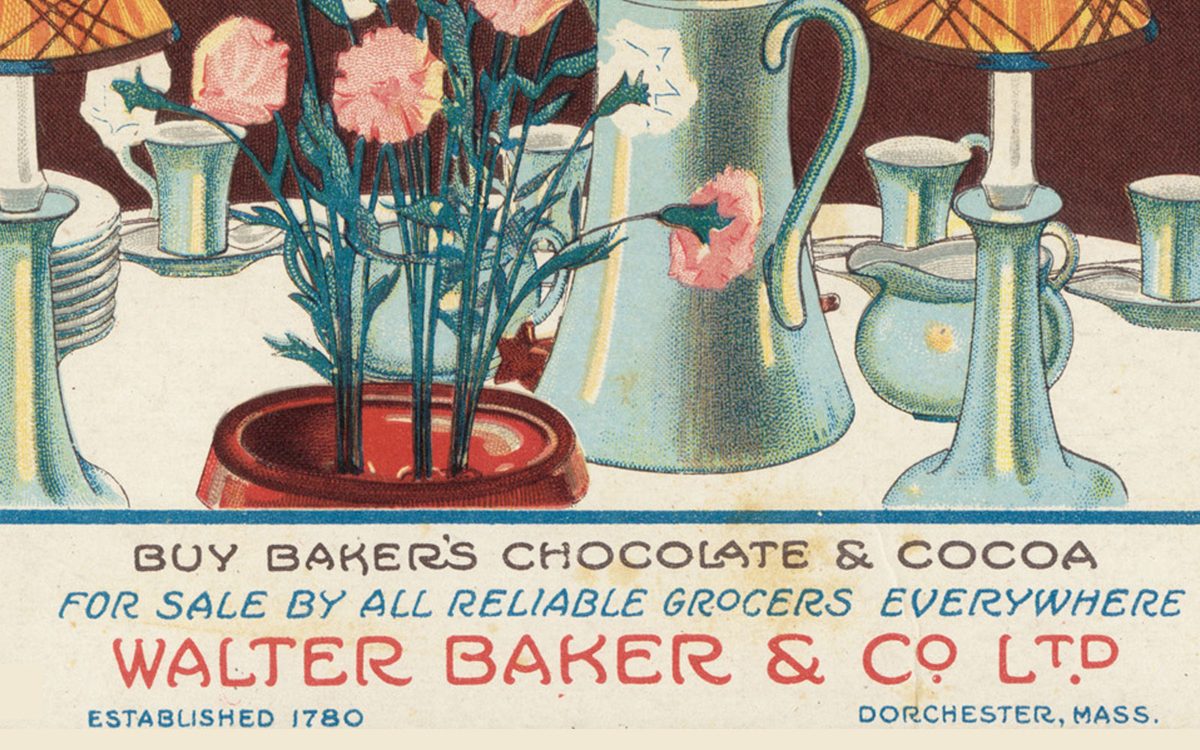
Before Baker’s Chocolate, Boston was already drinking it
Chocolate’s history begins with Indigenous peoples of the Americas, centuries before European colonization. Cacao was prepared as a drink long before it became a baking staple in Massachusetts kitchens. It did not need to visit Europe before becoming American.
Boston’s own chocolate habit also predates Baker’s. In 1670, Dorothy Jones and Jane Barnard received permission from the town’s selectmen to sell coffee and chocolate. Historian James F. Gay documents those licenses, along with chocolate makers working before 1765, in his study of colonial chocolate production.
The Commonwealth Museum records cacao shipments from Jamaica to Boston in 1682. By the eighteenth century, chocolate was an established colonial drink.
Dorchester’s contribution was building an enduring chocolate business. It did not introduce chocolate to the continent, or even to Massachusetts.
A river, a chocolate maker and three generations of Bakers
John Hannon brought chocolate-making knowledge to the venture. James Baker, a Dorchester shopkeeper who had also practiced medicine, supplied financial support. Their early operation used a sawmill powered by the Neponset River at Lower Mills, on the Milton side.
The river supplied energy for grinding cacao. This was a practical manufacturing location, not simply a convenient address near potential customers. The industrial district eventually developed across both the Dorchester and Milton banks.
Early chocolate came in solid cakes that customers scraped or grated to prepare a drink. These were not the ready-to-eat milk chocolate bars now stacked beside supermarket registers. A solid product could still be intended for a cup.
James’s son Edmund later ran the family business, followed by Edmund’s son Walter. According to the Bostonian Society’s history of the company, Walter joined the enterprise in 1818 and took control in 1823.
He expanded its reach through merchants and distributors. By 1840, customers stretched from Halifax to New Orleans. His correspondence covered advertising, packaging and product quality, including how foil-wrapped cocoa sticks would look in shop windows. Selling the chocolate mattered almost as much as making it.
The people and products behind the name
The factory’s growth depended on more than the family whose name appeared on the boxes. In 1834, Mary and Christiana Shields joined the workforce. Other women followed. The Dorchester Reporter’s historical account also describes competing chocolate businesses along the Neponset, including Preston’s mill and Webb & Twombley. Baker’s had neighbors making the same thing.
One employee left an especially persistent mark on dessert. Samuel German developed German’s Sweet Chocolate in 1852. The name referred to its creator, not Germany. German chocolate cake takes its name from the chocolate used in the recipe.
Then there was the woman on the packaging. La Belle Chocolatière, the figure carrying a tray, came from a work by Swiss artist Jean-Étienne Liotard. Baker’s adopted the image for its advertising and trademark. A European artwork became the face of a Massachusetts factory.
What remains in Lower Mills
Production moved to Dover, Delaware, in 1965. The Baker name survived the departure, but Dorchester lost the manufacturing operation that had helped define the neighborhood for two centuries.
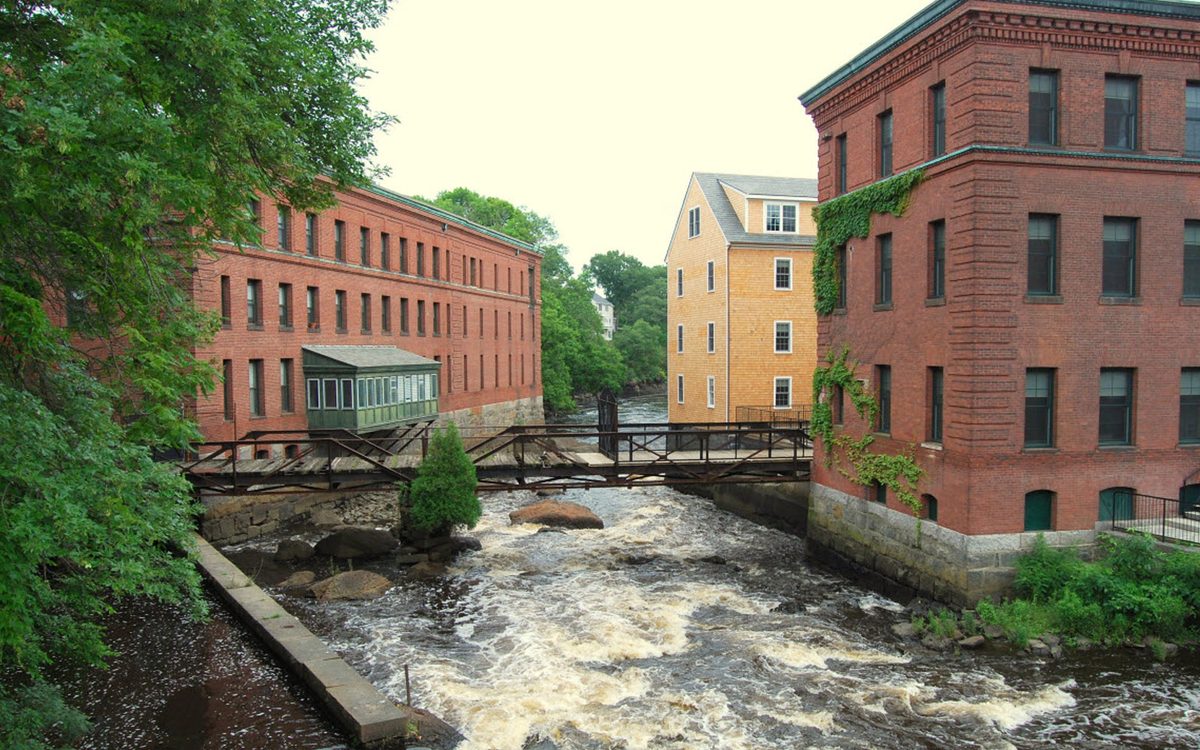
Former factory buildings were subsequently adapted for housing. The Commonwealth Museum’s chocolate history notes both that conversion and the aroma that lingered over the area during its working years. The buildings are a surviving industrial complex, not a working chocolate factory with samples at the end of a tour.
For a look at the area, head to the Adams Street crossing between Dorchester and Milton. The river and mill buildings make the geography of the business easier to understand than a chocolate wrapper does.
You can make a meal of the visit at Lower Mills Tavern, at 2269 Dorchester Avenue, or The Bowery Bar, at 2261 Dorchester Avenue. Both are nearby options for food and a drink. The former mills themselves are now somebody’s home. Admire the brickwork; don’t expect a factory tour.
