


Jamaica Plain’s name may owe something to Jamaican rum, but nobody has established who chose it or why. Other theories credit a Massachusett leader or England’s capture of Jamaica from Spain. The rum explanation has enjoyed a long career without producing a receipt.
The rum story has company
The Caribbean explanation comes in more than one version. One credits Jamaica’s rum and its popularity among local drinkers. Another connects the name to England’s capture of the island from Spain in 1655.
In a 2019 GBH interview about the name, historical society president Gretchen Grozier described the rum story against the setting of rural Roxbury, with inns and taverns along the road to Dedham, now Centre Street. The suggestion is that the drink’s association with the area became a nickname.
The conquest explanation proposes a different motive: commemorating an English victory. Grozier identified it as a possibility, while emphasizing the weak connection between the military event and the neighborhood’s name.
Neither explanation establishes that local sugar refineries named Jamaica Plain. A connection to Caribbean trade and a documented naming decision are different things.
The trade itself also deserves more than a cheerful tavern anecdote. Boston College’s Global Boston history of Jamaica Plain connects the wealth of early estate-owning families to international commerce involving enslaved people, rum and other commodities. That economic history is substantial even where the etymology remains uncertain.
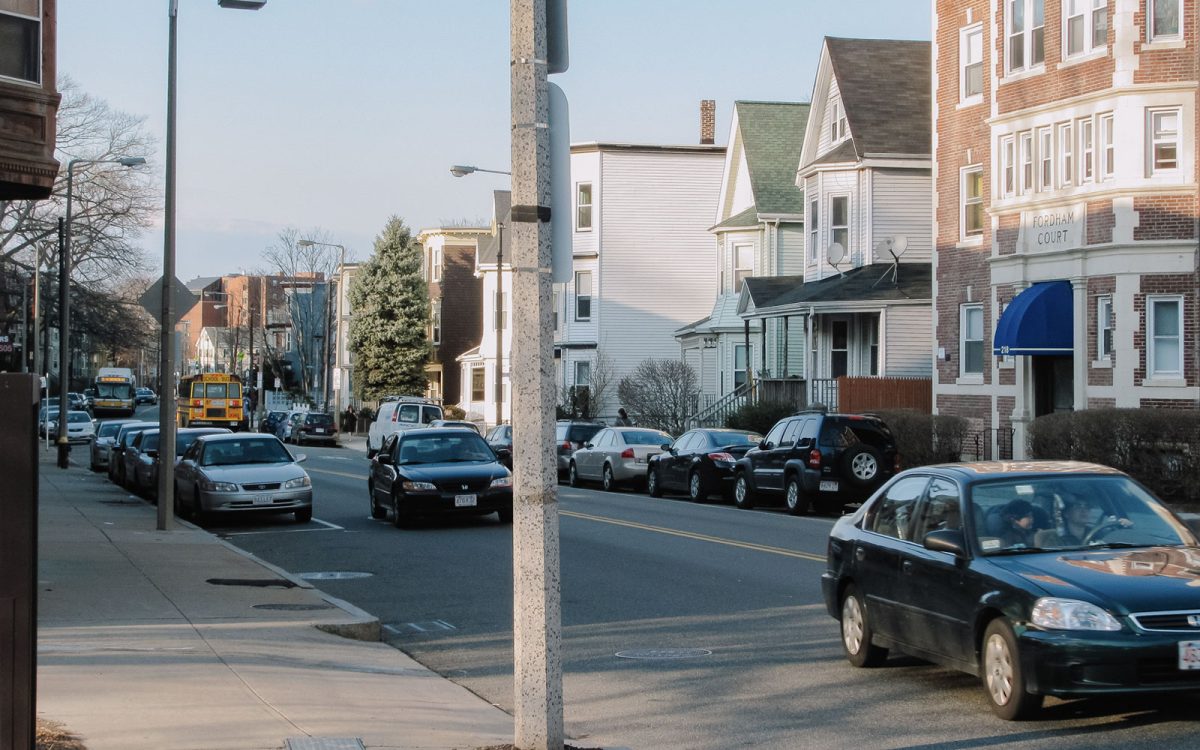
The “plain” in Jamaica Plain’s name
Before Jamaica Plain, there was Pond Plain. The Jamaica Plain Historical Society’s neighborhood guide identifies that earlier name with Jamaica Pond and the surrounding land. At the time, the area belonged to Roxbury.
“Plain” described the relatively level ground around the pond and village, rather than promising that every future resident would have a flat walk home. The larger neighborhood includes hills. Boston University’s architectural and community history project describes an agricultural district of hills, farms and orchards in 1800, with wealthy Bostonians establishing estates beside the pond and Stony Brook.
The older geographical label helps explain half the name. The difficulty is establishing how “Jamaica” became attached to it.
A Massachusett leader is one possible namesake
One longstanding explanation connects the name to Kuchamakin, a Massachusett sachem, or leader, whose name appears in several English spellings, including Cutshamekin.
In Walter H. Marx’s account of the naming question, published in the Jamaica Plain Gazette in 1992 and preserved by the historical society, Kuchamakin’s association with the pond provides a possible route from a person’s name to a place-name. Under this explanation, English speakers altered his name into “Jamaica.”
The different spellings reflect attempts to represent an Indigenous name in English. The explanation concerns a person associated with the area, rather than a literal translation of the modern neighborhood name.
Marx also records a story about an Indigenous basket maker named Jamaco who lived beside the pond. Her story belongs among the accounts people have passed down, but the article does not establish it as the naming event.
Why Jamaica Plain’s name still has competing explanations
The sources do not give us a single person announcing a name and explaining the choice. Instead, they preserve different attempts to make sense of one that was already in use. A historian describing a tradition is useful evidence that the story circulated. It is not the same thing as a record of the original naming.
The place itself has also changed. The neighborhood’s pond, farmland and country estates belong to an earlier version of an area now connected to the rest of Boston by city streets and transit. Reading an old geographical label against the modern neighborhood can make it sound stranger than it did to the people using it.
You can still start with the most visible piece of the explanation: Jamaica Pond. The earlier name Pond Plain located the community beside an actual body of water. Take the gardens and neighborhood walks at their own pace rather than treating the name as a puzzle that has to be solved before you get there.
The rum story remains a possibility, and an unusually durable one. Nobody has produced the naming decision that would turn it into the answer. Jamaica Plain has managed to keep the name without agreeing on who deserves the credit.
Members
Join to keep reading
- Members-only perks, like free and discounted tickets
- Access to members hub
- Priority guest list
- Every guide and article, in full
- Save places, events and guides
- Unlimited searches on The MoveA discovery tool that recommends our favorite spots in Boston.
- 15% off Secret Boston merch
$9.99 a month or $99 a year. Cancel anytime.
Already a member? Sign in
Always free