

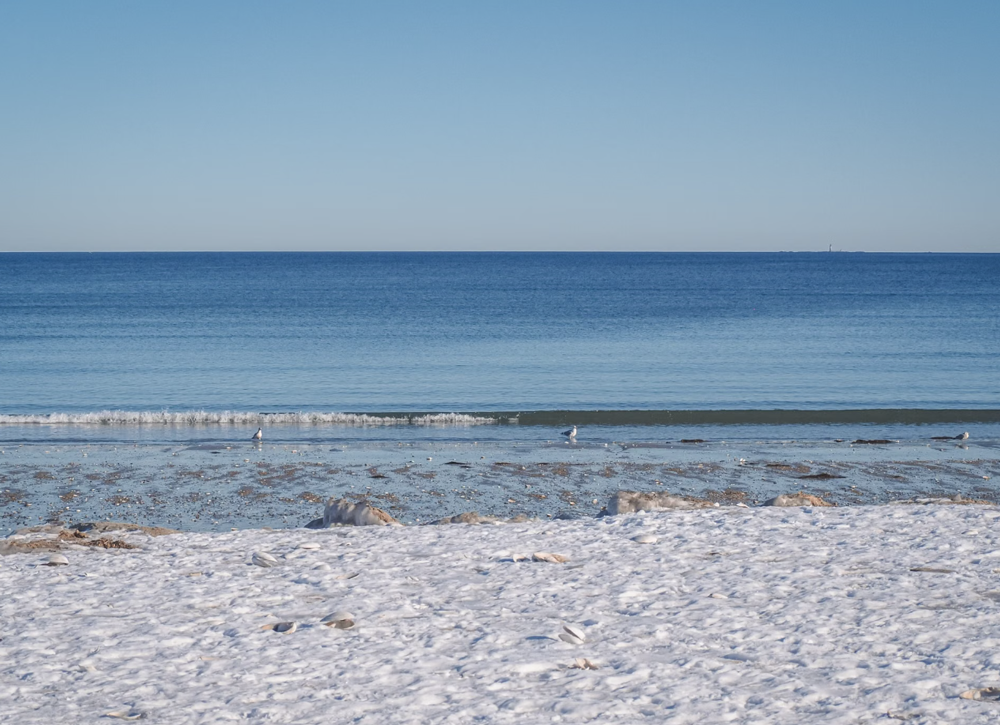
Revere Beach became America’s first public beach in 1896. You can still get there from Boston on the Blue Line, spread out a towel and spend an afternoon by the ocean without arranging an entire vacation around it.
The beach has outlasted roller coasters, dance halls and generations of people who came here to cool off. Its most important feature is also its least complicated: a long stretch of shore that belongs to the public. Keeping the ocean visible was part of the plan from the beginning.

Revere Beach was designed to keep the view open
Landscape architect Charles Eliot, who trained with Frederick Law Olmsted, helped turn an already popular waterfront into a public reservation. That required more than declaring the sand available. Rail tracks and buildings stood between visitors and the view he wanted to protect.
The National Park Service’s history describes how Eliot’s design restored the beach’s natural contours and removed obstructions along the shore. A boulevard became part of the new arrangement. The objective was to let people see the sweep of the beach, rather than squeeze the water into whatever gaps development left behind.
Public ownership also changed the terms of a visit. The distinction behind the “first public beach” claim is land acquired specifically for public recreation. Nobody is claiming Americans had never gone swimming before Revere made the arrangements official.

Before the quiet walks came the roller coasters
Revere’s old amusement strip gave visitors plenty of reasons to stay out of the water. Dance halls, carousels, movie theaters and roller coasters lined the waterfront. Going to the beach could involve an evening of dancing as readily as a swim.
The local history collected by RevereBeach.com recalls rides such as the Virginia Reel and Wild Mouse, along with the Oceanview and Wonderland ballrooms. The Cyclone roller coaster opened in 1925 and stopped operating in 1969. The Hippodrome carousel lasted until 1973.
Those names describe a different waterfront from the one you visit today. There is no operating Cyclone waiting beyond the sand. Looking at old photographs before you go makes the change easier to grasp: a beach day once came with a considerable amount of machinery.

A beach day on the Blue Line
The city’s visitor information identifies both Revere Beach and Wonderland stations as ways to reach the shore. Choose the stop closest to the part of the waterfront you want to visit. You don’t need to build the day around finding a parking space.
If you drive, read the signs on the exact stretch where you park. Some spaces have a four-hour limit; other sections require resident permits or have restrictions at particular times. A free space and an unrestricted space are different things.
You can make this a short walk along the boulevard or an afternoon on the sand. Bring a layer if you plan to stay after sitting still starts to feel different from walking. The water is still the Atlantic, however warm it was on the train.
What to check before putting down your towel
The Department of Conservation and Recreation’s beach page lists paved walkways, accessible restrooms, a beach mat and beach wheelchairs among the facilities. Contact the reservation ahead of a visit if you need a wheelchair or information about the route onto the sand.
Swimming conditions and staffed hours need a separate check from whether the beach itself is open. Read the posted notices when you arrive, and don’t assume lifeguards are on duty outside the summer season. DCR prohibits alcohol and fires at the reservation.
Some sections are fenced off for nesting piping plovers. Leave those areas alone, even when the empty patch looks like an appealing place to settle. A shorebird’s nest is a good reason to move your towel a little farther down the beach.
