

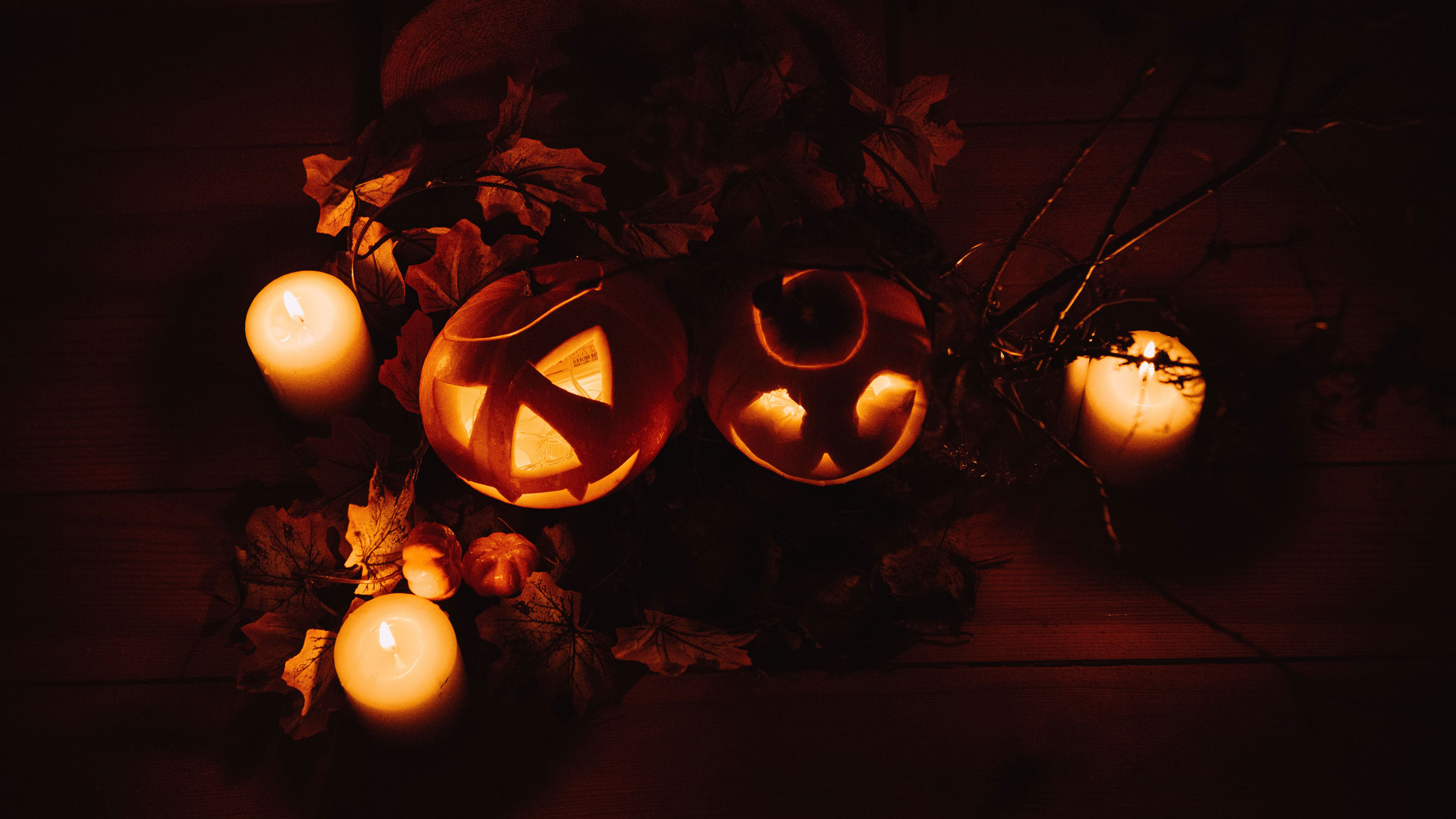
Samhain (pronounced SAH-win or SOW-in) is an ancient Gaelic festival that marks the end of the harvest season and the beginning of winter
Halloween customs turned up in other American colonies. Massachusetts sat them out. Anglican and Lutheran churches kept All Saints’ Day. Maryland’s Catholics did too. In the South, Scotch-Irish settlers, Scots who had lived in northern Ireland, sometimes went out in costume and called it guising. The Puritans who settled here took a dim view of all of it.
The Commonwealth Museum’s history of the holiday traces the night to Samhain, the Celtic new year on November 1, when the dead of the past year were thought to come back for a verdict. Disguises, and a candle in a hollowed turnip, were supposed to keep the spirits away. In the eighth century, the museum says, Pope Gregory III set All Saints’ Day on November 1. The eve became All Hallows Eve. Halloween is that name, worn down. The church would rather you dressed as a saint. What people actually did on October 31 still changed from one place to the next.
Pope Night was a different riot
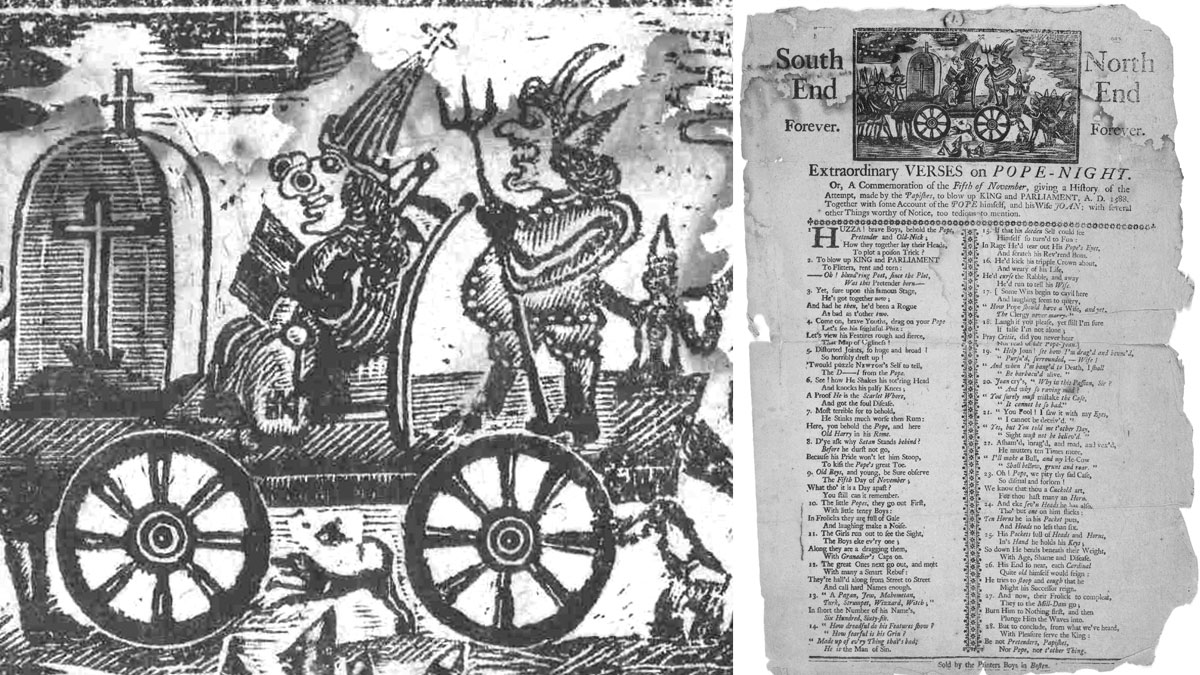
Boston already knew how to wreck an evening in early November. The occasion was Pope Night, November 5.
Old North Church traces it to Guy Fawkes Day, the anniversary of the 1605 plot to blow up Parliament. The North End and the South End each built an effigy, the pope and often the devil, and hauled it through the streets. The crowds met and fought for the figures. North End winners burned them on Copp’s Hill. South End winners burned them on the Common. Isaiah Thomas, who was in the fights, wrote that broken heads were not infrequent. In 1764 a boy was run over by a cart and killed.
Houses along the way were expected to hand over money. Skip the payment and the windows could go. That is still not Halloween. The Commonwealth Museum says the connection to later Halloween pranks is not clear, and that Guy Fawkes Day is a stretch as an origin. Pope Night was an anti-Catholic riot with its own date. In 1775 George Washington ordered the army to stop burning the pope in effigy. The colonies wanted Catholic allies in Canada. Old North treats that order as the end of the holiday in Boston.
County Cork, then a pumpkin
The customs Bostonians now recognize arrived with Irish immigrants in the nineteenth century, after the Great Famine began in 1845.
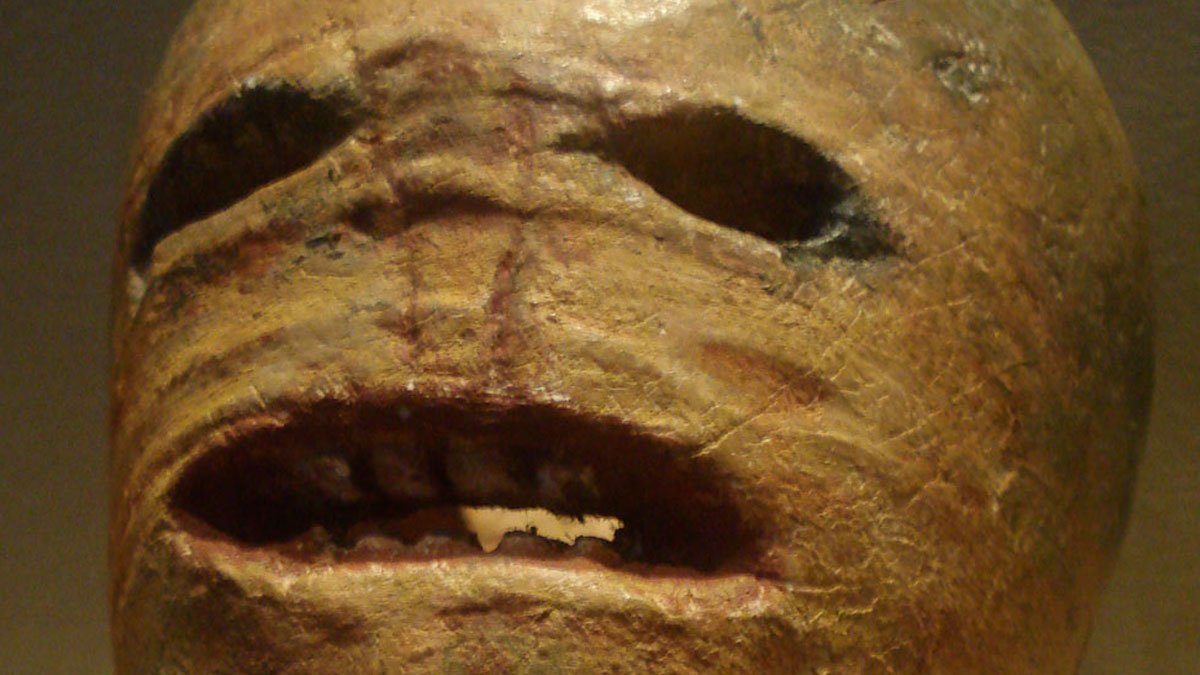
In County Cork, the museum says, people wore costumes on Halloween and announced themselves at a house with cow’s horns. Food or a drink from the household was supposed to bring prosperity. The lantern was a turnip with a candle in it. Once those immigrants were here, a pumpkin did the job better. There is more face on a pumpkin than on a turnip, and less of a fight.
They did not invent trick-or-treating. One older thread, also in the museum’s account, is the medieval soul cake: bread for the poor, prayers for the dead in exchange. The pillowcase version came later. Costumes, a stop at the door, and a lantern were the Irish Halloween traditions that Boston actually got.
The Globe caught on in 1884
On October 31, 1884, the Boston Daily Globe ran “Why Thousands Will Think of Erin Tonight.” The Commonwealth Museum cites the headline. Halloween historian Lesley Bannatyne quotes the article. It describes Ireland, not a candy route through Boston: a church fast that fell apart when the party started, colcannon sent from the country, and “parties of young men and their sweethearts” going house to house among relatives and friends.
The candy holiday was still ahead of that. Newspapers, magazines, and clubs from the Scouts to the Rotary spread Halloween in the twentieth century, the museum says. Trick-or-treaters were being spotted in Wellesley by the 1920s. After the Second World War, the baby boom made it a product. Manufactured costumes and decorations arrived then.
Members
Join to keep reading
- Members-only perks, like free and discounted tickets
- Access to members hub
- Priority guest list
- Every guide and article, in full
- Save places, events and guides
- Unlimited searches on The MoveA discovery tool that recommends our favorite spots in Boston.
- 15% off Secret Boston merch
$9.99 a month or $99 a year. Cancel anytime.
Already a member? Sign in
Always free