


Boston put a gas-company logo, a milk bottle and a former candy factory into its collection of familiar landmarks. None began as a monument to the city. They were there to sell something or identify a business, and people became attached to them anyway.
The history gets more interesting when you separate the original object from the version you see now. The rainbow gas tank is not the original painted tank. The first Dunkin’ has been remodeled. And the CITGO sign’s preservation story is more complicated than calling it a protected city landmark.

Boston signs people fought to keep
The CITGO triangle has become shorthand for Kenmore Square and nearby Fenway Park. Its survival has involved a building owner, the sign’s owner, preservation advocates and city government.
The Boston Preservation Alliance’s record explains an easily missed distinction. The Landmarks Commission voted to designate the sign in 2018, but Mayor Marty Walsh vetoed that designation in favor of a private preservation arrangement.
The Alliance reported in May 2026 that Related Beal had begun work to dismantle the sign and relocate it onto a safe foundation atop the same building. The work was expected to take at least six months. That is a dated construction update, not a promise that an old photograph matches the view on your visit.
A familiar skyline object still needs a roof to stand on and people willing to pay for its upkeep. The argument over keeping it is part of its history now.
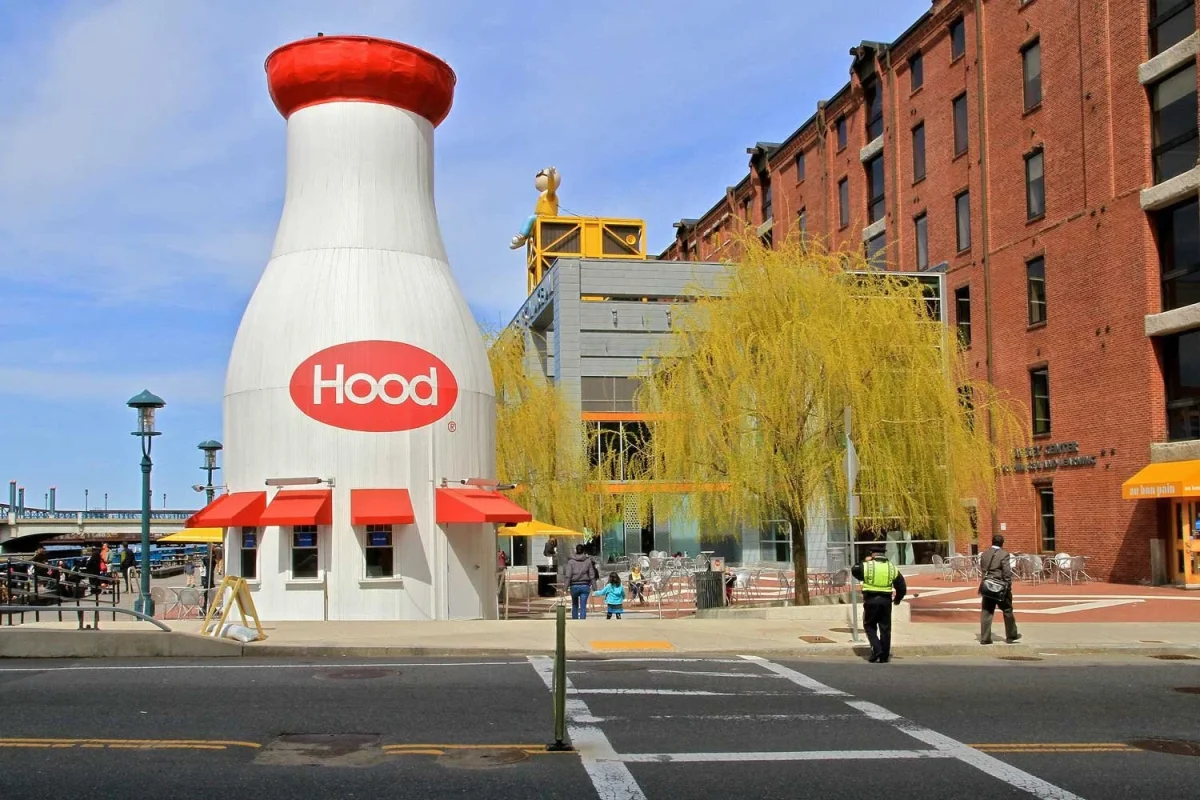
The milk bottle came by boat
The 40-foot Hood Milk Bottle outside Boston Children’s Museum began as an ice-cream stand in Taunton in the 1930s. Arthur Gagner built it to sell his homemade ice cream. Its exaggerated shape did the advertising without requiring anyone to read a menu.
The museum’s account of the bottle follows it through later owners and a period of abandonment before Hood helped restore it. On April 20, 1977, it arrived at the museum’s waterfront site by barge, accompanied by fireboats.
The trip was called the Great Bottle Sail. That is a considerably better name than “delivery,” and in this case the object really was a building shaped like a milk bottle traveling through the harbor.

Quincy kept the Dunkin’ Donuts sign
The original Dunkin’ is in Quincy, not Boston proper. Bill Rosenberg opened Open Kettle in 1948 and changed the name to Dunkin’ Donuts in 1950.
At 543 Southern Artery, the older name remains part of the appearance even though the chain shortened its branding to Dunkin’. The company’s account of the original store’s remodeling specifically identifies the exterior sign among the features retained.
You are looking at a business that has been updated, not a shop frozen untouched in 1950. Our Dunkin’ history follows how that one Quincy address became the beginning of a much larger company.
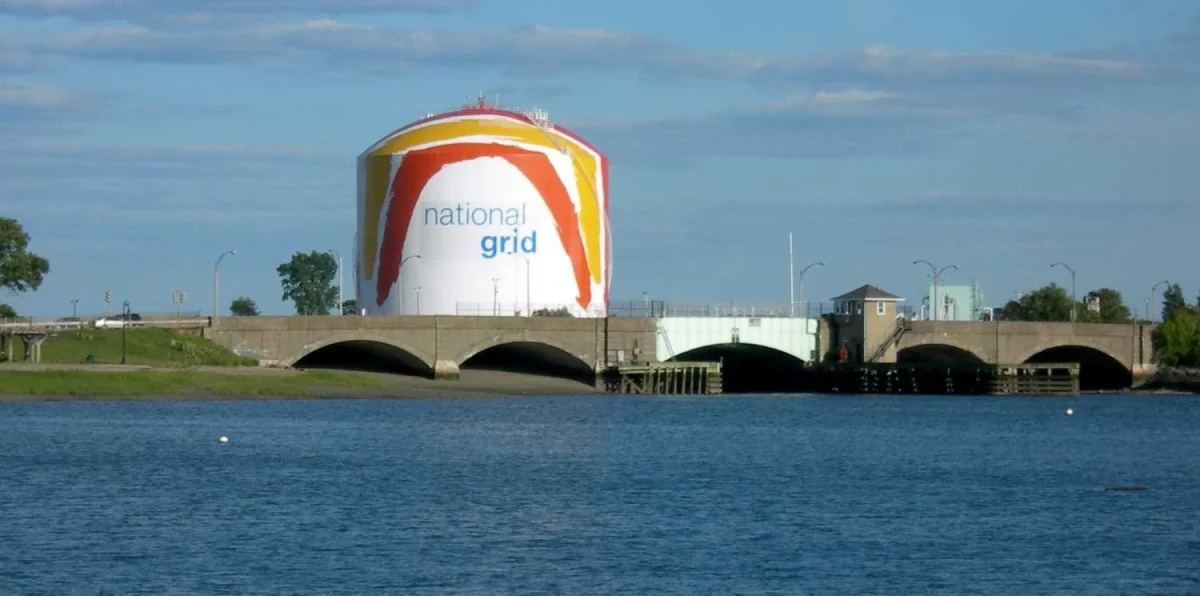
The Dorchester rainbow changed tanks
Corita Kent designed the Rainbow Swash for Boston Gas in 1971. The color across the tank made a piece of industrial infrastructure recognizable well beyond its practical purpose.
The Corita Art Center’s history records the public demand to preserve the design when the original tank was replaced in 1992. The rainbow was repainted on the remaining tank. The work survived even though its first enormous support did not.
It is worth separating this one from the logos. Corita’s swash is an artist’s commissioned work, not simply the gas company’s name enlarged for passing traffic.
Schrafft’s kept its name above the factory
The Schrafft’s name in Charlestown recalls a candy-making business rather than the offices that later occupied the property. The building owner identifies 529 Main Street as the former Schrafft’s Candy Factory.
A business can leave the manufacturing floor while its name stays attached to the building. For anyone who knows the sign before the history, the letters are a clue to what once happened inside.
Polcari’s works at street level
Polcari’s Coffee on Salem Street belongs in the same conversation without needing a tower. Its storefront name identifies a continuing North End business. The shop’s own history dates Anthony Polcari’s opening to 1932, after he saved money while working for a tailor.
The business passed to his son Ralph and later to longtime employee Bobby. That history supports the age of the shop; it does not prove every part of the present sign has hung there unchanged since opening day. Read the name, then look through the window. The business it points to is still there.