


Boston lost a hospital ship to fire, a famous tree to a storm and much of a neighborhood to a redevelopment plan its residents fought to stop. Some losses left an empty space. Others were built over so thoroughly that an old photograph is the only way to understand what stood there.
These seven lost Boston landmarks include places people shopped, watched shows, received medical care and called home. They did not all disappear for the same reason, and they should not all be remembered as quaint bits of local history.
Lost Boston landmarks on the Common and downtown
The Great Elm

The Great Elm was a gathering place on Boston Common long before the park looked as it does now. Early maps show it standing prominently in an open area used for grazing and public activity. A powerful storm brought the tree down in 1876.
Boston’s archaeological account of the Common puts that loss in a much longer history. Excavations have uncovered Indigenous tools and pottery, military objects, toys and even a bone die found near the elm’s former site. The tree is gone; the ground around it still holds evidence of the people who gathered there.
The Old Howard
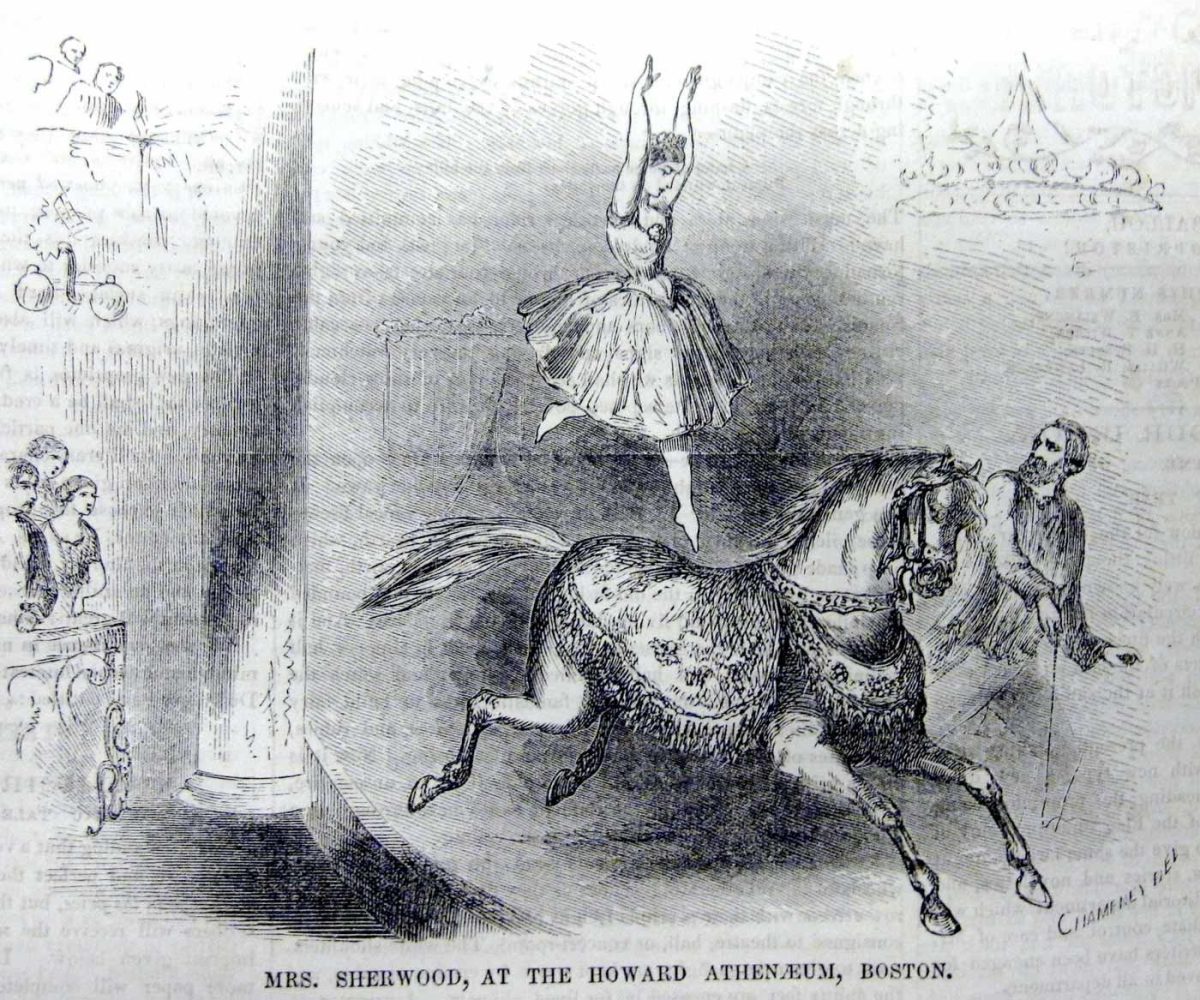
The Howard Athenaeum opened as a theater in 1845 in a former Millerite church. Over its long history, its stages accommodated opera, plays and burlesque. By the 20th century, the Old Howard had become closely associated with Scollay Square’s nightlife.
A preservation committee hoped to save the building, but fires in 1961 preceded its demolition as Government Center replaced the old district. The West End Museum preserves its story and an original sign. Looking at today’s plaza, it takes an old street photograph to picture the theater district that was cleared away.
Court Street station
Boston’s subway is still operating, but parts of its early arrangement are not. Court Street was the downtown terminus of the East Boston Tunnel when it opened to streetcars in December 1904. That is a different chapter from the Tremont Street Subway’s 1897 opening.
Court Street station closed in 1914. Service later extended through Scollay Under, now part of Government Center station. It is a reminder that the T’s map was repeatedly revised as routes and vehicles changed. The old station is not a public attraction, so plan to learn about it through photographs and transit histories rather than a visit underground.
Filene’s Basement in Downtown Crossing
The original Filene’s Basement closed on September 3, 2007. For shoppers who knew its racks and markdowns, losing the store meant losing an entire way of shopping downtown. The bargain hunt was the reason to go.
Historic New England holds a circa-1929 history of the Automatic Bargain Basement. For memories from the people who worked and shopped there, Michael Bavaro’s documentary Voices From the Basement records the store’s human side. Coverage of the documentary confirms the downtown closing date, which is often confused with the department store’s earlier closure.
The hospital that went to sea
The Floating Hospital’s name was literal. It began taking sick children onto Boston Harbor in 1894, at a time when sea air was considered beneficial to their health. Tufts records that 1,100 children received care during that first year.
A fire destroyed the hospital ship in 1927. Its trustees then moved all clinical care ashore, according to Tufts’ history of the institution. The maritime name endured for decades after the boat was gone. An old photograph of patients aboard the ship makes clear that this was a working hospital, not a harbor excursion with a medical name.
The homes cleared from the West End
The West End’s destruction was not an accident. Residents organized against the city’s plan to raze roughly 50 acres for redevelopment, forming the Committee to Save the West End. They attended hearings, published objections and challenged the project in court.
The demolition went ahead in the late 1950s, displacing the people whose streets and homes officials had labeled blighted. The neighborhood still exists, but much of that older community was physically erased. Its museum’s photographs and residents’ accounts show what a phrase like urban renewal leaves out.
The Cocoanut Grove
The Cocoanut Grove at 17 Piedmont Street was packed on November 28, 1942, when fire spread through the club. The accepted death toll is 492. A jammed revolving entrance and other failures of escape turned a night out into one of the country’s deadliest fires.
The Boston Fire Historical Society’s account includes records, photographs and lists of those killed and injured. The site has changed substantially since then. The names in those records are the most important part of what remains.