

Edgar Allan Poe was born in Boston, returned as a young man and did not spend his career being polite about its literary establishment. The city eventually gave him a statue anyway. A few miles beyond Boston, Concord preserves a different literary world: the homes and landscape associated with Emerson, Thoreau and Louisa May Alcott.
These four writers offer a useful starting point for a reading list and a day out. Their connections to Boston are different, and the Concord stops deserve their own trip. Choose the book that interests you first. The house tour means more when you know whose desk you are looking at.
Edgar Allan Poe
Poe was born in Boston on January 19, 1809, to parents who worked as actors. He grew up elsewhere, then returned to Boston and published his first book, Tamerlane and Other Poems, in 1827. The National Park Service’s biography also records his enlistment in the Army that year and his assignment to Fort Independence in Boston Harbor. His local history includes military service as well as publishing.
Stefanie Rocknak’s Poe Returning to Boston stands at Edgar Allan Poe Square, by Boylston Street and Charles Street South. Installed in 2014, it places the writer near the Common rather than behind a museum admission desk. Read “The Tell-Tale Heart” before you go if you want a short introduction to his work. There is nothing relaxing about that narrator, which is rather the point.
Henry David Thoreau
Thoreau was born in Concord in 1817. He spent two years, two months and two days living in a small house near Walden Pond, an experience that became the basis of Walden. Reducing him to a man who liked being outdoors misses a considerable part of his work: he was also an abolitionist, a social critic and a careful observer of the natural world.
The Walden Woods Project provides biographical material and access to resources on his writing, including the essay commonly known as “Civil Disobedience.” Read that alongside Walden for the political arguments as well as the pond. If you plan to visit the area, allow a separate Concord outing; this is not a stop you can add to a downtown Boston walking route.
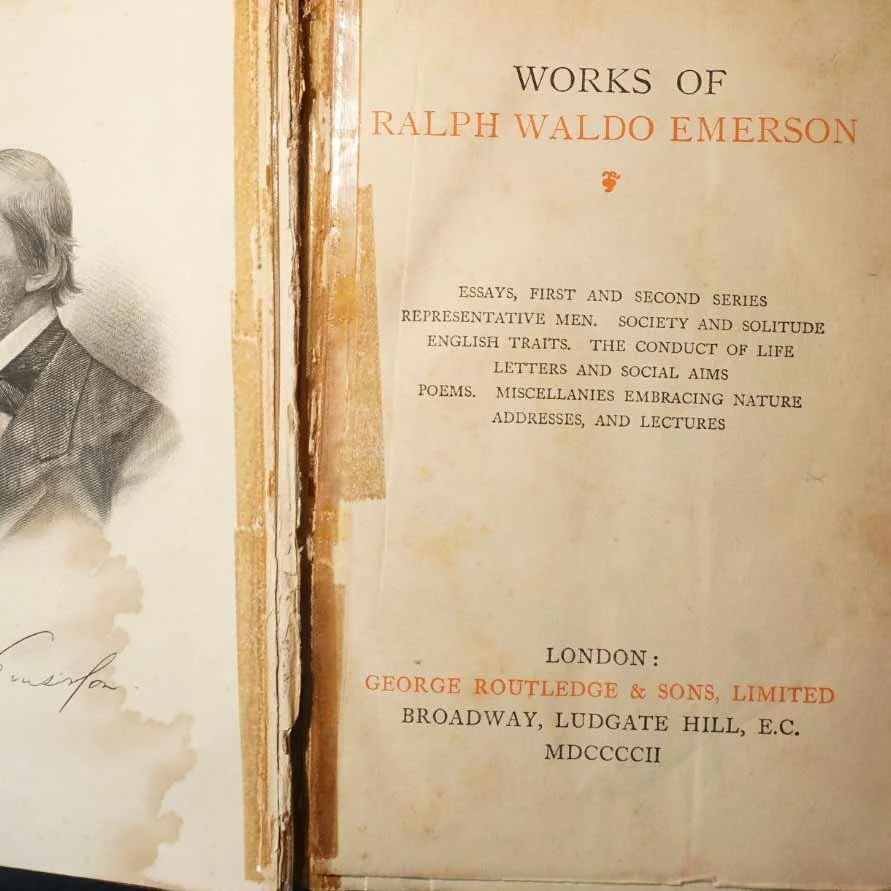
Ralph Waldo Emerson
Emerson’s Concord home gives a physical setting to ideas that can feel rather abstract on the page. He and his wife Lidian moved there in 1835. According to the National Park Service, he completed the final draft of Nature there in 1836 and wrote “Self-Reliance” in 1841. I’m a fan of “Self-Reliance” myself.
The Ralph Waldo Emerson House offers guided tours seasonally, from late April through October. The house was also a meeting place for writers and thinkers including Thoreau, Margaret Fuller and the Alcotts. One useful detail before you visit: the original contents of Emerson’s study were moved to the Concord Museum, with duplicate pieces taking their place in the house.
Louisa May Alcott
At Orchard House in Concord, Alcott wrote Little Women in 1868 at a shelf desk her father built for her. The house connects the fictional March family with the real Alcott household. It also offers something more specific than a reconstructed room: the museum says about eighty percent of the furnishings on display belonged to the family.
Book timed admission through Orchard House if the tour is central to your plans. Its gardens and grounds are free to visit, while entering the house is a separate experience. Reading even a few chapters before arriving gives you more to notice, particularly the way family life, work and creative ambition share the same rooms.
If you only have an afternoon in Boston, begin with Poe Square rather than trying to squeeze Concord into the same walk. For Concord, choose a house tour time first and leave room between stops. A literary outing should allow enough time to read the exhibit labels without checking your watch after every sentence.
Members
Join to keep reading
- Members-only perks, like free and discounted tickets
- Access to members hub
- Priority guest list
- Every guide and article, in full
- Save places, events and guides
- Unlimited searches on The MoveA discovery tool that recommends our favorite spots in Boston.
- 15% off Secret Boston merch
$9.99 a month or $99 a year. Cancel anytime.
Already a member? Sign in
Always free