

Boston had a subway before New York, a public school before the United States existed and a public park that once accommodated cows. Across the Charles, Cambridge got a college in 1636. Boston and Cambridge have had a considerable head start on a few things.
Some of these firsts survive in buildings you can visit. Others belong to institutions that have moved or changed beyond recognition. Boston Latin’s original schoolhouse is gone, for example, and the Boston Public Library began in much smaller quarters than the building on Copley Square.
Here are five claims worth knowing, including the details that tend to disappear when history gets shortened to a plaque.
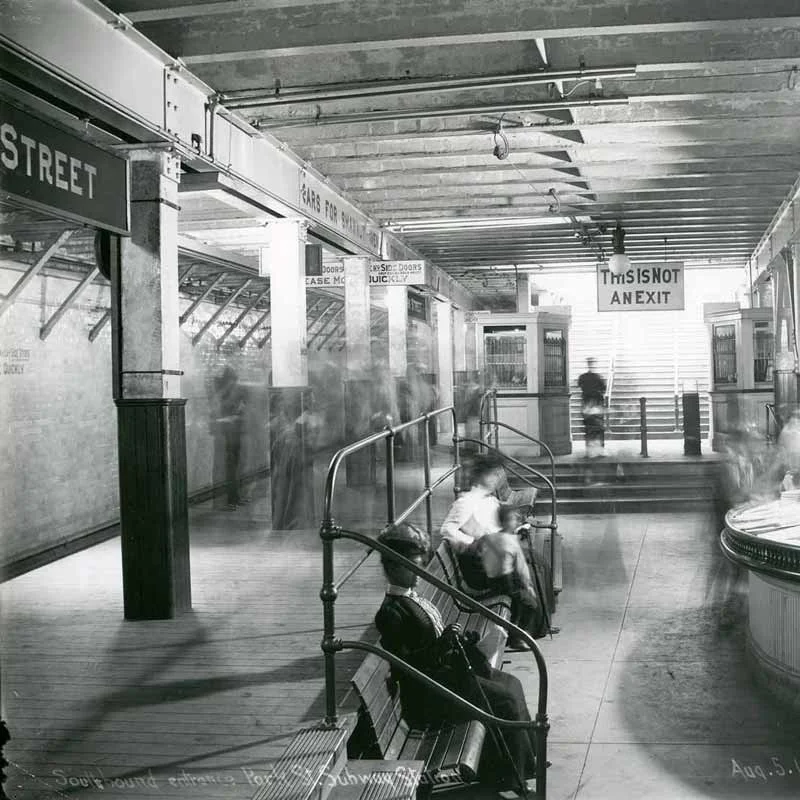
Boston’s subway opened in 1897
The Tremont Street Subway began carrying passengers on September 1, 1897. It was the first subway in the United States, built to get streetcars out of the congestion above. The historic tunnel remains part of the Green Line, with Boylston and Park Street stations still serving passengers.
According to Mass Humanities’ account of opening day, more than 100,000 people rode the new line that day. The trip took about three and a half minutes. It was a substantial audience for something that had recently required persuading people to travel underground.
The original rules charged five cents to enter. Dogs were prohibited, as were long or bulky objects such as pipes. A passenger who wanted to stay aboard for the return trip had to pay again.
Boston Latin began in a schoolmaster’s home
Founded on April 23, 1635, Boston Latin School is the oldest public school in the country. Its first pupils studied in headmaster Philemon Pormont’s home. A schoolhouse followed in 1645.
The early school offered free education to boys. Girls were not admitted until 1972, so its long public history should not be confused with a history of equal access.
For the original site, go to School Street, where a mosaic and a statue of Benjamin Franklin mark the connection. The school itself is now in Fenway. Franklin attended but did not graduate, which has not prevented him from becoming the face of the place.
Harvard predates its namesake’s gift
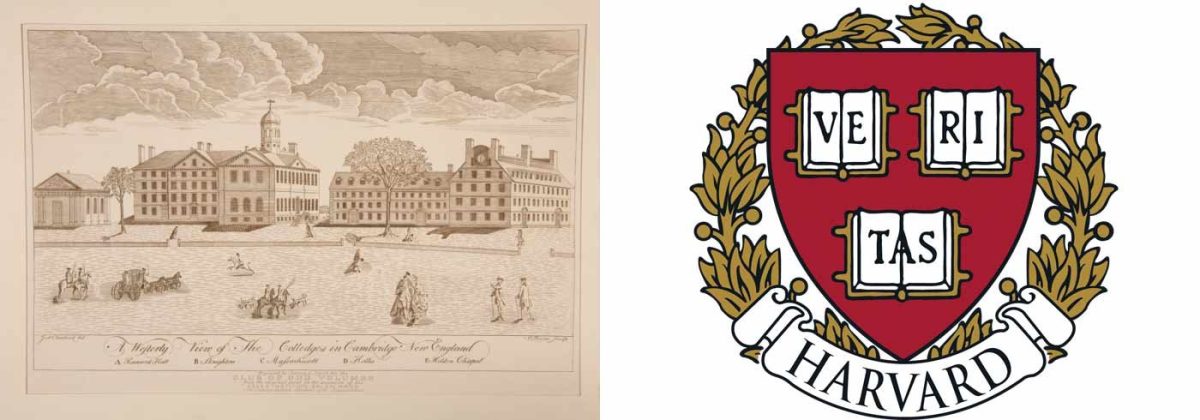
Cambridge gets this one. Harvard was founded in 1636 by a vote of the Massachusetts Bay Colony’s legislature, making it the oldest institution of higher education in the United States.
John Harvard was its first major benefactor, rather than its founder. As the university explains in its own history, he left half his estate and his library to the college. The institution was already in existence when that gift arrived.
Harvard Yard is in Cambridge, even though the university also has substantial campuses in Boston. Keep that distinction when planning a visit: the Longwood medical campus and the college’s historic center are different destinations.
Boston Common wasn’t always a place for a picnic
Established in 1634, Boston Common is America’s oldest public park. Its early uses were considerably less leisurely than a stroll past the Frog Pond: livestock grazed here, militia trained here and public hangings took place here.
British troops began an encampment on the Common in 1768. Later generations used the grounds for anti-slavery meetings, military recruitment and political demonstrations. Martin Luther King Jr. led a civil rights rally here.
The park’s trees, fountains and monuments were added over time. Even this familiar piece of downtown has been repeatedly rearranged. Frederick Law Olmsted’s sons supervised work here in the early twentieth century, including moving enormous trees.
The library’s first home was a former schoolhouse
The Boston Public Library, established in 1848, describes itself as the country’s first large free municipal library. That more precise claim matters: it was not the first library of any kind.
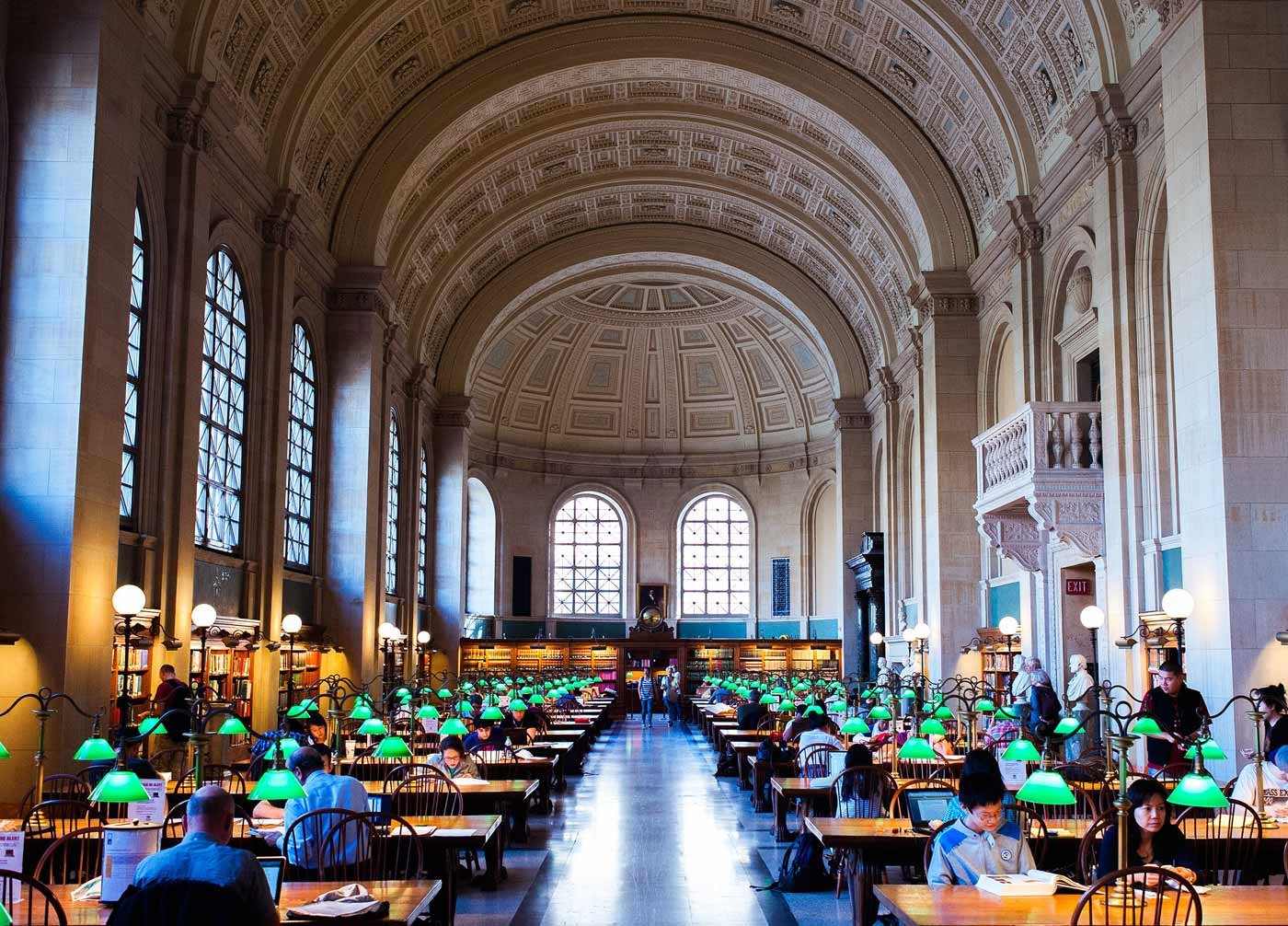
It opened to readers on Mason Street in 1854 with roughly 16,000 volumes. The former schoolhouse was already too small. A Boylston Street building followed in 1858, and the library finally moved into its present Copley Square headquarters in 1895.
Inside the McKim Building, the long reading room is named for Joshua Bates, an early donor who insisted on free access. Boston’s attachment to books has never depended entirely on buying them. For other places to read and browse, our Boston literary haunts include the Athenæum and several independent shops.
