


When Jim Davis bought New Balance in 1972, the company had six employees making about thirty pairs of shoes a day. Its Boston presence now includes a headquarters, a sports complex and a development where you can watch a track meet or go to a concert without leaving Guest Street.
The shoes still matter, of course. But New Balance’s relationship with Boston is visible in factories, training facilities and the blocks around Boston Landing. You don’t have to own a pair to have spent time somewhere connected to the company.
New Balance before the big N
The business dates to 1906, when William J. Riley began making arch supports and prescription footwear for people whose work kept them on their feet. Running shoes came later. The company’s historical timeline identifies a spiked shoe made for the Boston Brown Bag Harriers in 1938.
By 1960, New Balance had introduced the Trackster in multiple widths. That attention to fit is a useful thread through the history: the company started by addressing uncomfortable feet, then applied its work to runners.
Davis took over a small operation. The familiar N arrived on shoes in 1976, and the 990 followed in 1982 with a $100 price tag. Expensive sneakers are hardly surprising now. That price was part of the 990’s statement when it first appeared.
What Made in USA actually means
New Balance continues to manufacture footwear in New England, alongside its international production. The distinction matters when you are buying a pair: a Boston company name does not mean every shoe was made in Massachusetts.
On its manufacturing page, New Balance says its Made in USA footwear has a domestic value of at least 70 percent. It also states that this range represents a limited portion of its U.S. sales.
That is more specific than saying all its shoes are American-made, and more useful if country of manufacture affects your purchase. Check the individual model rather than relying on the logo. The company also has a Made in UK line associated with its Flimby factory in England.
The factory work includes cutting and shaping materials, sewing, pressing and assembly. Keeping that production close to Boston makes manufacturing part of the local story, alongside the office jobs and the advertising.
A headquarters with some unusually athletic neighbors
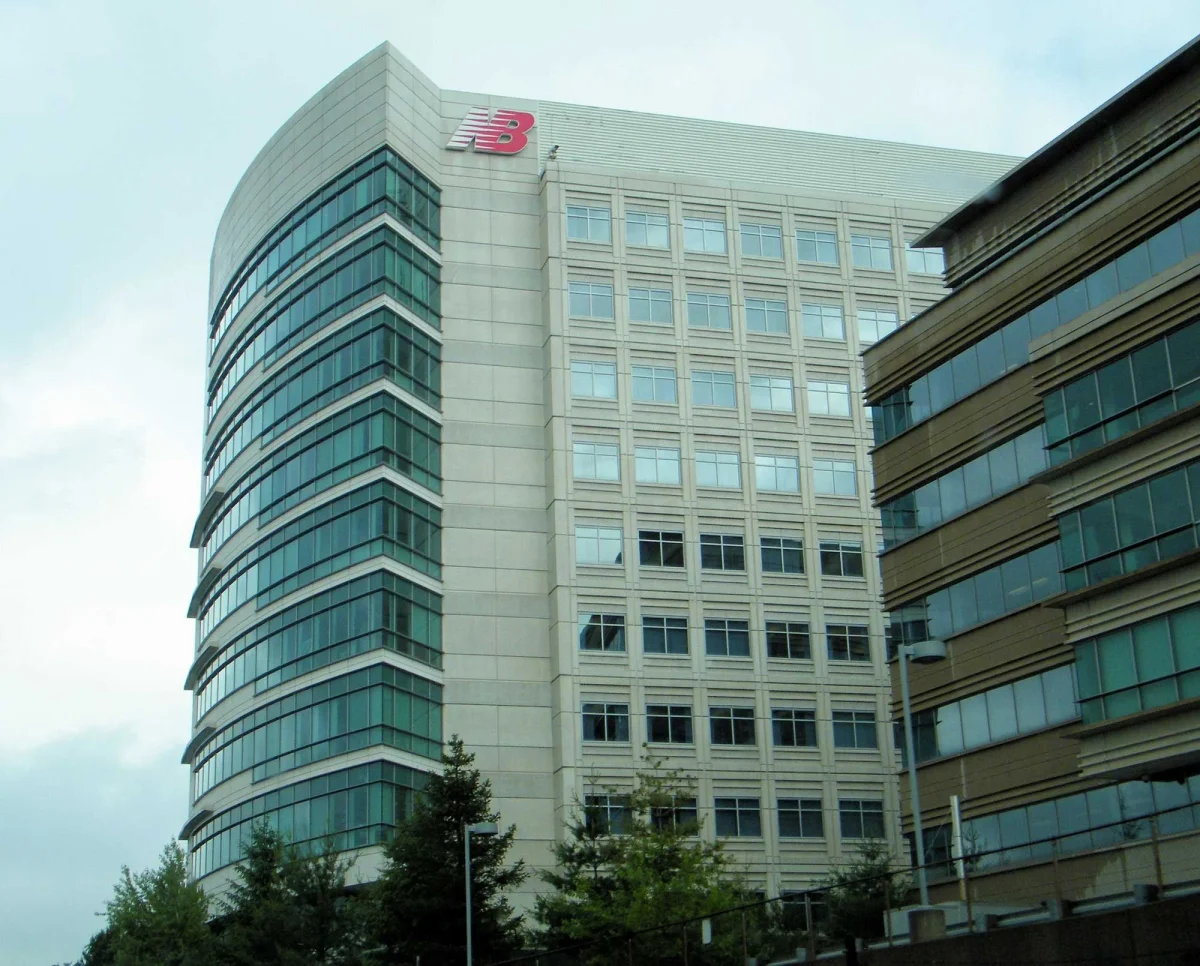
New Balance opened its Boston Landing headquarters in 2015. Its current office directory lists the global headquarters at 100 Guest Street in Brighton, with other Massachusetts locations in Lawrence and Methuen.
The surrounding development brings several sports uses together. The Bruins practice at Warrior Ice Arena; the Celtics have the Auerbach Center. The TRACK at New Balance adds a competition venue, while shops, restaurants and housing fill out the area.
For visitors, that means there are reasons to go besides looking at a corporate building. The TRACK’s visitor information points to public skating sessions at Warrior Ice Arena, nearby bowling and concerts at Roadrunner. Check the relevant venue’s schedule before going; a professional practice facility is not an invitation to walk into a team workout.
The runners are part of the business too
New Balance’s Boston running connections include an elite training team, not just recreational runners wearing its shoes. Coach Mark Coogan’s group has included athletes such as Elle St. Pierre, Heather MacLean and Emily Mackay.
Parker Valby joined in the fall of 2024, after competing at the Paris Olympics. In an October 2024 interview, Coogan discussed her move to Boston and the team’s training space at the TRACK. It is one concrete example of the company bringing athletes to the city as well as selling to them.
If you are heading to Boston Landing yourself, the development has its own commuter-rail stop beside the site. The neighborhood directory shows the station, venues and shops together. You can arrive for a concert, pass two teams’ practice facilities and pick up sneakers on the same visit.
