Skip to content

The Move

What do you feel like doing?

Choose your filters and we’ll suggest up to three of our favorite places in Boston.

Featured guide

8 Boston hot pot spots, from a $23.95 buffet to all-you-can-eat wagyu

Hot pot is dinner you cook at the table, one thin slice of meat or piece of tofu at a time. Around Boston, you can try Chongqing broth made with 32 spices, order all-you-can-eat wagyu in Chinatown or build a bowl at a $23.95 buffet in Brighton. Bring people who like to share food and take their time over dinner. If your table can’t agree on spice, several restaurants offer divided pots so you can keep a mild broth on one side and a fiery one on the other. First, choose your broth. At Qiao Lin, for example, you can order a single pot, split it between two flavors or try three at once. Then come the plates of thinly sliced meat, seafood, vegetables, tofu and noodles, ready to cook in the simmering broth. Many restaurants also have a sauce bar where you can mix your own dip. Ask your server how long to cook anything you’re unfamiliar with, especially meat and seafood. Cook a few pieces at a time so nothing gets lost or overcooked. Where to go Mikiya is the Chinatown pick for a wagyu dinner. The restaurant serves all-you-can-eat Japanese A5 and Australian wagyu, sliced to order, in your choice of sukiyaki, house, spicy miso or Japanese tomato broth. There are three sets: Silver for $55, Gold for $78 and Diamond for $98 per person, and members pay $48, $68 and $88. Beyond the beef, the menu includes wagyu tartare and nigiri, bone marrow and seafood platters with oysters, abalone, scallops and snow crab. If your group likes spice, Qiao Lin in Allston is a good place to start. The restaurant brought its Chongqing-style hot pot from Chicago to Cambridge Street and says its broth is made with 32 spices and six varieties of chili peppers. Order a divided pot if you want to try more than one broth, or choose the three-flavor version if nobody can agree. Resy’s Boston Hit List points to the Japanese A5 wagyu and New Zealand lamb shoulder. Qiao Lin has different reservation and waitlist rules depending on the day, so check those before heading over with a group. The Q on Washington Street has a long broth list, including black bone chicken, Guizhou spicy tomato and Crazy Mala. A divided yin yang pot lets you try two. The black bone chicken broth is listed at $7 for half a pot or $14 for a full pot. If you’re in the mood for wagyu, the menu also offers a Miyazaki A5 rib eye combo. The restaurant started in Quincy as Little Q Hot Pot before opening its Chinatown location. Happy Lamb’s Inner Mongolian hot pot puts the broth first. The restaurant describes its bone broth as seasoned enough to enjoy without dipping sauce, though you can still make a sauce if you want one. Lamb is the main attraction, with other meats, seafood and vegetables available for the pot. The Chinatown restaurant is on Washington Street. Happy Lamb also has locations on Massachusetts Avenue in Cambridge and Brighton Avenue in Allston. Spring Shabu-Shabu in Brighton has a $23.95 daily buffet for building your pot. Meat and seafood platters cost extra, so factor those in when deciding what to order. Spring doesn’t take reservations: seating is first come, first served. It opens at 5 PM Monday through Thursday, 4:30 PM Friday and 11:30 AM on weekends and holidays. Kids 3 and under eat free, and kids 4 to 10 pay $1.25 for each year of age. At Blue Sakura in Allston, each person gets an individual pot, so everyone can choose their own broth. The menu also includes dim sum. The Essential option starts at $18.95 for weekday lunch and is $23.95 at dinner and on weekends. The $29.95 Regular option adds dishes including fried snacks, ramen and rice bowls. Premium adds unlimited meat and seafood, starting at $32.95 Monday through Thursday. There’s a 90-minute ordering limit, and Blue Sakura is closed on Tuesdays. Da Long Yi is the one to remember when dinner starts late. The Allston restaurant lists closing time as 1 AM every day, opening at 5 PM on weekdays and noon on weekends. It serves Chengdu-style Sichuan hot pot, including spicy broth for people who want the heat. Its Brighton Avenue location has a regular menu and a buffet menu, so check the current options when you arrive. Shu Da Xia brought its Sichuan hot pot to Kenmore Square, across Commonwealth Avenue from Boston University’s Questrom School of Business. When it was on the way, the Daily Free Press reported that Boston would be the Chengdu chain’s first US location. This is a place to order beyond the usual thin-sliced beef. The menu lists hand-torn beef tripe, beef aorta and duck intestine.

Read the guide

Events

Things to do in Boston this weekend

November 20–22

TJ Klune talks Murmuration at the Museum of Science on Friday, with a book and signing included, Julia Jacklin plays Royale that night, Faneuil Hall Marketplace lights its holiday tree on Saturday, and Action Bronson is at Roadrunner on Sunday.

See weekend picksSee weekend picks

Meetups

Screenings, watch parties and nights out with Secret Boston.

See all meetups →

Boston gifts under $50. Beanies, tees, ornaments and wrapping paper. Shop now

Holiday gifts →

Upcoming events in Boston

622 events

Sat, Nov 21

Ballet BC

8:00–11:00 PM

Emerson Cutler Majestic Theatre · Boston

Fri, Dec 4

Mexodus

7:30–10:30 PM

American Repertory Theater · Cambridge

Full calendar →

Get more out of Secret Boston

Become a member

Members-only perks, free and discounted tickets, priority guest lists, access to giveaways 24-hours before anyone else. $9.99 a month or $99 a year. Cancel anytime.

See what members get

Places to go

Explore places →

Guides

Mariah Carey’s Christmas bar and 6 more Boston holiday pop-ups

Mariah Carey is bringing her holiday bar to Boston for the first time, taking over Tuscan Kitchen in the Seaport with Christmas cocktails, photo ops and plenty of sparkle. Across the river, Miracle is returning to Cambridge with a fresh lineup of drinks served in collectible mugs. Those are just the start. One Boston hotel has two holiday bars with very different moods, while a pop-up in East Boston is making room for kids at its family sessions. Here are seven Christmas pop-up bars to know about this season. Mariah Carey’s Holiday Bar makes its Boston debut at Tuscan Kitchen, running Wednesday, November 25 through Sunday, December 27. Expect wall-to-wall Mariah décor and holiday cocktails made with Black Irish, Carey’s own Irish cream liqueur. The pop-up’s website also promises a life-size Christmas window for photos, a place to send your wish list to Mariah and a merch shop. General admission starts at $24.65 with fees and gets you 90 minutes and a welcome cocktail, but it’s standing room, with limited seats on a first-come basis. Weekend brunch tickets start at $30.03 and come with a seated 90-minute reservation and a welcome mimosa. It’s 21+, and every sale is final, so pick your time slot carefully. Miracle is back at the Kimpton Marlowe from Friday, November 20 through Thursday, December 31, with a menu of Christmas cocktails and mugs you can take home. New drinks include the Sugarplum Stampede, Christmas Cricket, Sleigh-Saurus and Merry Mouse-Tail. Returning favorites include the Christmapolitan, Snowball Old-Fashioned and Jingle Balls Nog. Not drinking? Ginger Bell Rock and Tinsel & Tart are on the zero-proof menu. Food comes from the hotel’s Bambara Kitchen and Bar, and collectible mugs include Santa’s Head, SanTaRex, a unicorn and a mouse. Miracle is walk-in only and 21+. Hours are 5 to 10 PM Sunday through Wednesday, 5 to 11 PM Thursday and Friday, and 4 to 11 PM Saturday. It’s closed on Thanksgiving. The Omni Parker House is giving you two reasons to stop in for a holiday drink. The first is Blitzen’s at The Last Hurrah, which opens Friday, November 27 and runs daily from 4 PM to midnight through Monday, January 11. Ornaments, twinkle lights and tinsel fill the bar. The cocktails come from Julie Reiner, who co-founded Clover Club, Milady’s and Leyenda in New York and is a judge on Netflix’s Drink Masters. It’s one of two holiday bars at the hotel this season, so you can visit both without going back outside. For a darker take on Christmas, head to Parker’s Bar, the hotel’s mahogany-paneled lounge with stained glass and a fireplace. Ebenezer’s Bar is the Dickens-inspired pop-up there, serving festive cocktails and bites all season. Its own dates and hours weren’t posted when we checked, but Parker’s Bar opens at 2 PM Tuesday through Sunday and is closed Mondays. The Dickens theme has real roots here. He made the Parker House his Boston home for five months on his 1867 to 1868 tour, the visit when he gave his first American reading of A Christmas Carol at Tremont Temple. This December, actor Johnny Kinsman reads the story with live music in the hotel’s Press Room, with performances on Saturday, December 19 at 7 PM and Sunday, December 20 at 2 and 5:30 PM. The readings are ticketed separately from the bars and are for ages 6 and up. If your Christmas plans could use a tropical drink, keep an eye on Shore Leave. The South End bar is on the 2026 Sippin’ Santa locations list, bringing the Christmas cocktail pop-up back to Boston from Tuesday, November 24 through Thursday, December 31. The local menu wasn’t posted when we checked, and the hours on the list contradict each other, so check the Sippin’ Santa website before heading over for the latest details. The Greatest Bar’s holiday pop-up is the Greatest Winter Wonderland, with The Nutcracker Suite inside it. It’s also the starting point for the Boston Holiday Passport Experience on Saturday, November 21, from noon to 4 PM. A $40 pass gets you a holiday tote and a passport at check-in, along with a Back Door Donut and a Downeast Cider. The route continues through the West End, Boston Public Market and the North End, finishing with a celebration at West End Johnnie’s, and returned passports are entered in a gift basket drawing. The passport is a separate ticketed event. The bar hadn’t posted the pop-up’s own dates and hours when we checked, so call ahead before going on another day. The Jingle Bar takes over Pazza on Porter from Thursday, December 3 through Wednesday, December 23, filling it with Christmas trees, tinsel, presents, holiday cocktails and games. The ticket page also lists prizes for best dressed, so ugly sweaters, Santa suits and Grinch fits all have somewhere to go. Wednesdays are Cocktails & Carols nights with singalongs. Regular sessions are strictly 21+, but Saturdays December 5, 12 and 19 each include an all-ages family session with card-making, kids’ karaoke and games like Reindeer Ring Toss and Elf Bingo, plus hot cocoa for the kids. Brunch with Santa is Sunday, December 20 at 1 PM, and the ticket includes a main dish and a beverage. Tickets are non-refundable, though you can transfer to another available session for a fee, and a premium seat add-on guarantees you a reserved seat. Prices show once you pick a session.

Boston’s 200-year-old oyster house is being sold, plus 7 more old-timers

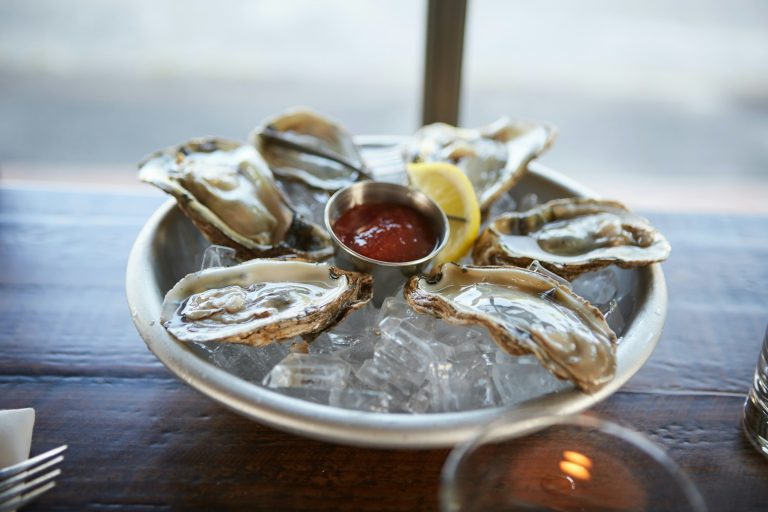
Union Oyster House turned 200 this year, and in August the Boston Globe reported that it was being sold to the family of Houston billionaire Tilman Fertitta, who owns Landry’s. The sale still needs a liquor license transfer, and the buyers say the name, the staff and the traditions are staying put. Here are the oldest restaurants and bars in Boston that are still open, in order of age, from a 1780 tavern to a 1974 pizza counter, plus one famous pub that isn’t as old as it looks. Warren Tavern on Pleasant Street opened in 1780, five years after the British burned most of Charlestown during the Battle of Bunker Hill. It’s named for Dr. Joseph Warren, the Patriot leader who was killed in that battle. Paul Revere came here for Masonic lodge meetings in the 1780s. Fans of Robert B. Parker will also recognize it, since Spenser eats here in the 1982 novel Ceremony. The Freedom Trail ends nearby at the Bunker Hill Monument, so it’s an easy stop at the end of the walk. The Bell in Hand takes its name from Jimmy Wilson, Boston’s town crier, who carried a hand bell on the job and, by tradition, opened the bar in 1795. It calls itself America’s oldest continuously operating tavern. A 2025 Globe story found its current building dates to about 1844, and that the bar moved in much later. It’s still a fun, loud spot for oysters and a beer, a few doors down Union Street from the oyster house. Union Oyster House opened on October 7, 1826, as the Atwood & Bacon Oyster House, in a building that went up around 1716. It’s a National Historic Landmark and is widely called the oldest restaurant in America still serving. Daniel Webster was a regular at the raw bar. Upstairs, booth 18 was John F. Kennedy’s, and a plaque has marked it since 1977. Every November 22, the anniversary of his death, the staff put a single white rose on the table. Sit at the curved oyster bar downstairs and order a dozen and a cup of chowder. The Parker House hotel opened on School Street in 1855, and its kitchen gave the world two things Boston still eats. Parker House rolls came from here, and so did Boston cream pie, now the official state dessert. The hotel says JFK proposed to Jacqueline Bouvier at table 40, a plaque marks the spot, and Boston.com reports couples still book it for their own proposals. Get the pie. It would be rude not to. Amrheins on West Broadway has served Southie since 1890. The Boston Preservation Alliance counts it as the neighborhood’s oldest restaurant and bar. Go for brunch, served every day until 2, and enjoy the free parking, which is rare in Southie. J.J. Foley’s Cafe on East Berkeley Street opened in 1909, and the Foley family has run it ever since. Its biggest night came in 1919, when Boston police officers met in Fay Hall, the room upstairs, and voted to form a union. On September 8 they met there again and voted 1,134 to 2 to strike. That vote led to the Boston police strike and made Governor Calvin Coolidge a national name. The J.J. Foley’s downtown on Kingston Street is a separate bar run by another branch of the family. Make sure your friends go to the right Foley’s. Kelly’s opened on Revere Beach, just north of Boston, in 1951 as a hot dog stand. The roast beef sandwich came later, and the company story says it was born from beef left over after a cancelled wedding. New owners bought the business in 2025, but the stand on the beach is the original, so eat your sandwich on the seawall facing the water. Umberto Deuterio opened Galleria Umberto on Hanover Street in 1974, and it won a James Beard America’s Classics award in 2018. The menu is short: square slices of Sicilian pizza, arancini and calzones. It takes cash only, serves lunch only and closes when the food runs out, so get there early. One famous pub isn’t as old as its sign. The Green Dragon Tavern at 11 Marshall Street puts 1657, 1773 and 1776 on its sign. The real Green Dragon, where the Sons of Liberty met, stood on Union Street and was torn down in the 1800s. The Globe found the current pub opened in 1993 in a building from around 1850. So the Sons of Liberty never met in this building.

All guides →

Featured place

Sofra

Cambridge · Bakery

Ana Sortun and pastry chef Maura Kilpatrick opened it in 2008 as the Oleana group's bakery, cafe, and small market.

View Sofra

Get to know Boston

Candlepin bowling gives you three chances to miss

Candlepin bowling gives you a small ball, ten thin pins and three chances to discover that this is harder than it looks. The ball fits in your hand without finger holes. The pins seem obligingly narrow until you realize how much space there is to miss them. The biggest surprise comes after the first roll. Fallen pins generally stay on the lane, where they can help knock down the ones still standing. The mess is part of the game. Learn to use it before asking someone to clear it away. How candlepin bowling works A game has ten frames, with up to three balls in each. Knock down all ten pins with your first ball and you have a strike. Do it with the first two and you have a spare. Clear them with all three and you have ten for the frame, without a strike or spare bonus. That third ball is not a free spare attempt. It lets you finish the frame and collect more pins, but it does not turn three throws into two. People arriving from tenpin bowling sometimes need a moment with that distinction. The International Candlepin Bowling Association’s rules explain which fallen pins remain playable and which must be removed. You also have to wait for the wood to stop moving before rolling again. Let the last pin finish its argument with gravity. For a first visit, you do not need to memorize every official ruling. Ask the desk to explain the reset button and scoring before starting. Knowing when to leave the pins alone saves confusion and preserves the next player’s turn. The fallen pins change your next shot A standing pin may look isolated, but a fallen one can give you another way to reach it. Instead of aiming only at the upright target, look at what lies around it. A useful piece of wood can turn a difficult leave into a manageable shot. The reverse happens too. A pin lying across the lane can interfere with the path you wanted. Each roll changes the arrangement, so your next attempt is not necessarily a repeat of the last one. The light ball makes the game approachable for a new bowler. It does not guarantee an easy score. You are sending a small object a long way toward a set of slender targets, then working with whatever remains. Bringing friends supplies witnesses, who will probably remember the misses. Worcester gets the origin story Candlepin belongs to the wider New England bowling tradition rather than to Boston alone. The Museum of Worcester credits Justin “Pop” White, who owned a pool hall on Pearl Street, with inventing the game in Worcester in 1880. The museum’s account places the sport in a neighborhood business, not a professional stadium. That scale still suits a game you can learn during an evening out. You can take the score seriously, or spend the next frame trying to explain the last one. Where to try it around Boston Sacco’s Bowl Haven in Davis Square combines candlepin lanes with American Flatbread’s wood-fired pizza. The operator dates the bowling alley to 1939, and the old name remains part of the business. It is a useful choice when the plan needs to accommodate both bowling and dinner. Sacco’s bowling reservation page explains how its lanes are booked. Treat a bowling reservation and a dining plan as separate arrangements unless your confirmation says otherwise. A table does not automatically give your group a lane. Boston Bowl on Morrissey Boulevard in Dorchester offers both candlepin and tenpin bowling. Specify candlepin when making plans so you get the smaller balls and the rules described here. The venue’s bowling information distinguishes the two formats. Wear the required bowling shoes, keep food and drinks away from the approach, and ask staff about anything that has stopped working. Then give the fallen pins a second look. One of them may be more useful on its side.

If you think Bostonians are unfriendly, just ask them for directions

You can walk past the same person three mornings in a row and get nothing, not a nod, not a howaya, and then that same person will stand on a corner walking you from Boylston to Park Street like their train can wait. The unfriendly reputation is not a myth. Lonely Planet tells visitors we will not greet them on the street or start a conversation on the bus, and then says most of us are more than happy to give directions if they ask. Condé Nast Traveler said the same thing years ago: nobody is looking to make friends on the commute, but if you need to get somewhere, almost any stranger will help. Dan Ruben, who ran Boston Green Tourism, told the Daily Free Press that if you ask people here for directions they are as helpful as people anywhere else, they just will not smile at you first. What looks like a cold city is a city that waits to be asked. Howdies are for people you already know. Directions are for anybody who needs them. Nobody says hi first Boston.com asked readers if this is a rude city and a lot of them said yes, then explained that the problem is what other places call friendly. A Chelmsford reader told Boston.com that people here mind their own business and can sound like curt Yankees when you ask a question, while other parts of the country talk louder and stay polite even when they despise you. A Somerville reader called it brusque and then listed airport rides, surgery pickups, and meals when you are sick. An Allston reader used the line a lot of Northeasterners already know, kind but not nice. Newcomers stand there waiting for someone to volunteer a hello and decide the city is closed when it does not arrive. Standing on Boylston looking lost does not count as asking, and hovering over your phone at Arlington does not count either. We assume you know what you are doing, which is the same system as the round: you start, they answer. If you want in, ask a real question. They will talk you all the way there The directions go on so long because the city does. A right turn here does not mean what it means in a grid town. Geoff Boeing mapped street bearings across U.S. cities and found Boston does not organize around one or two compass grids. The Back Bay and South Boston have grids that do not even line up with each other, and everywhere else the streets run in enough directions that a right turn tells you where you are facing for one block and almost nothing about where you are actually going. Boston Magazine already killed the cow-path story Emerson repeated in 1860. The likelier reasons are that the original peninsula was small and hilly, later neighborhoods were filled in as separate grids, and the city annexed whole towns that already had their own street systems: Roxbury in 1868, Dorchester in 1870, Charlestown, West Roxbury, and Brighton in 1873. You are not lost because you are bad at cities. You just walked from one village into another without a sign. That is why a Bostonian will not point and say two blocks west. They will send you toward the Common, the harbor, the Pru, or a Dunkin' they have used as a landmark since before the app, and they will tell you which T, which exit, and which side of the station puts you on the wrong street. They will use the name locals say and then the name on the sign, because those are not always the same thing. Boeing, borrowing from Kevin Lynch, called Boston hard to read as a pattern and easier to hold as landmarks, which is already how people here keep the city in their head. When you ask, you are not interrupting so much as opening that map. Just ask Do not apologize for three sentences and do not tell your life story, and do not grab someone mid-crosswalk. Step out of the flow, pick one person, and ask something specific: how do I get to South Station from here, where is the Green Line, is this the way to the North End. Then let them finish, because they will talk longer than the question requires, not to show off but to keep you off Tremont when you wanted Beacon. If they offer a second route, take the first one they trusted enough to say out loud. This is the icebreaker people look for when they are new and tired of the silent sidewalk. It is one of the few times a Bostonian wants to be stopped. You think you are bothering them. They think you finally asked for something they know how to do, and in a town that treats unsolicited chat like a violation, a real question is almost a favor. If you walk off while they are still talking you were not asking, you were testing whether we are nice, and we will still get you to Park Street either way.

Order a milkshake in Boston and you might be missing the ice cream

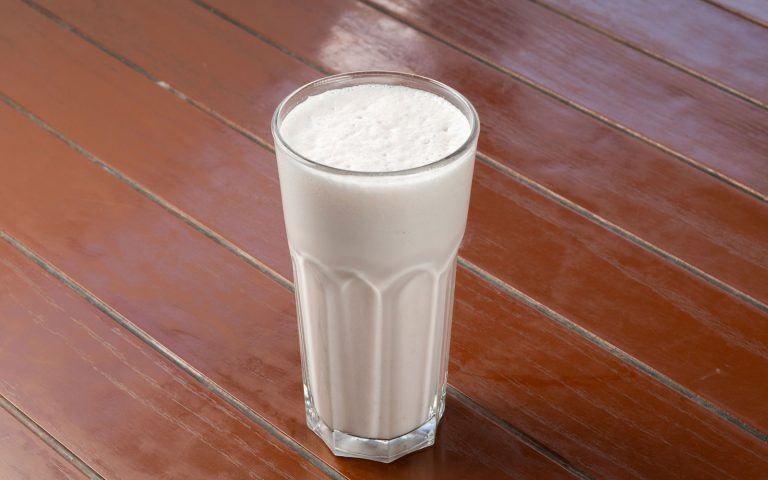
Order a milkshake in Boston at a shop that still keeps the old distinction and you can get exactly what you asked for: milk and flavoring, beaten until it foams. No ice cream. The thicker drink, the one visitors usually mean, is a frappe. Not every counter still bothers. Plenty of menus now use milkshake the way the rest of the country does. The shops that list both drinks are not offering two sizes of the same thing. Those are the last places where a milkshake in Boston and a frappe are different orders. What goes into a milkshake in Boston The traditional local milkshake is milk plus a flavoring, often chocolate syrup, shaken or blended until air gets into it. A frappe adds ice cream. Yankee’s account of the two drinks is useful on a point people skip: the milkshake is not a glass of chocolate milk. Stirring syrup into milk mixes the ingredients. Blending them is what makes it a fountain order. If a menu lists both, look at the prices before treating the cheaper one as a deal. You may be comparing a milk drink with one that has scoops in it. Say “frap” The regional drink is one syllable, rhyming with map. The American Heritage Dictionary records that pronunciation and treats the noun as regional usage, mapping it to Rhode Island and southeastern Massachusetts. Shops in Boston still put it on the board. That entry is a different word from “frappé,” two syllables, which the same dictionary defines as a frozen fruit dessert or a drink poured over shaved ice. The spelling overlap is how visitors end up performing French at a Jamaica Plain counter. A shop owner paid for the lesson Vincent Petryk, who later opened JP Licks, learned the difference as a newcomer from Philadelphia. Boston.com reported that he ordered a milkshake at Bailey’s in the 1970s, saw that it cost half as much as the frappe, and then asked where the ice cream was. Bailey’s is gone. The mix-up is not. The same report found “frappe” in late-nineteenth-century Boston Globe pages attached to chilled and partly frozen drinks, including alcoholic ones, long before it settled on the ice-cream version. Recipes a few years later included cafe frappes and pineapple frappes, sometimes with a scoop of ice cream already in the mix. Boston University food scholars told the paper that regional names for ordinary foods were common before national food media flattened the vocabulary. Megan Elias, who directs BU’s gastronomy program, pointed to a 1920s overlap: Prohibition pushed people toward new places to sit, and electric equipment made ice cream cheaper to produce in volume. Soda fountains did well in that gap. The scholars also said the exact reason this particular word stuck here is not established. There is no inventor to toast and no afternoon when Boston renamed the milkshake. The term showed up in more than one drink, attached itself to the ice-cream one, and stayed. The word is still on the menu JP Licks still lists a regular frappe, an extra-thick frappe, and an espresso frappe, separate from smoothies, frozen coffee, ice-cream sodas, and floats. Extra-thick is a texture, not a citizenship test. In 2023, Mark Parrish, president of Crescent Ridge Dairy in Sharon, told Boston.com his shop still served the ice-cream-free milkshake next to the frappe and asked customers which they wanted. He also said tourists, students, and younger customers increasingly ask for a milkshake. Other counters have given up and will put ice cream in whatever you called it. Rhode Island complicates the map again. In parts of that state, and into southeastern Massachusetts, the ice-cream drink is a cabinet. Same general idea. Different word. This is the same class of local vocabulary as why Bostonians say “wicked.” Get the word wrong and you can still have a conversation. Get this one wrong and you may drink a glass of flavored milk. If the menu says milkshake and you want ice cream in it, ask. You do not need to win the regional argument first.

Boston Explained →

Event reviews

What members are saying

Depths of Wikipedia at The Wilbur

Depths of Wikipedia was unlike any comedy show I’ve been to. Really fun, and the guest performances were clearly well thought out too.

Adam Carolla at The Wilbur

Adam was hilarious. Such a fun night. Thank you Secret Boston!

Save to list

Create a free account to save places, events, articles, and guides.

Create accountSign in