

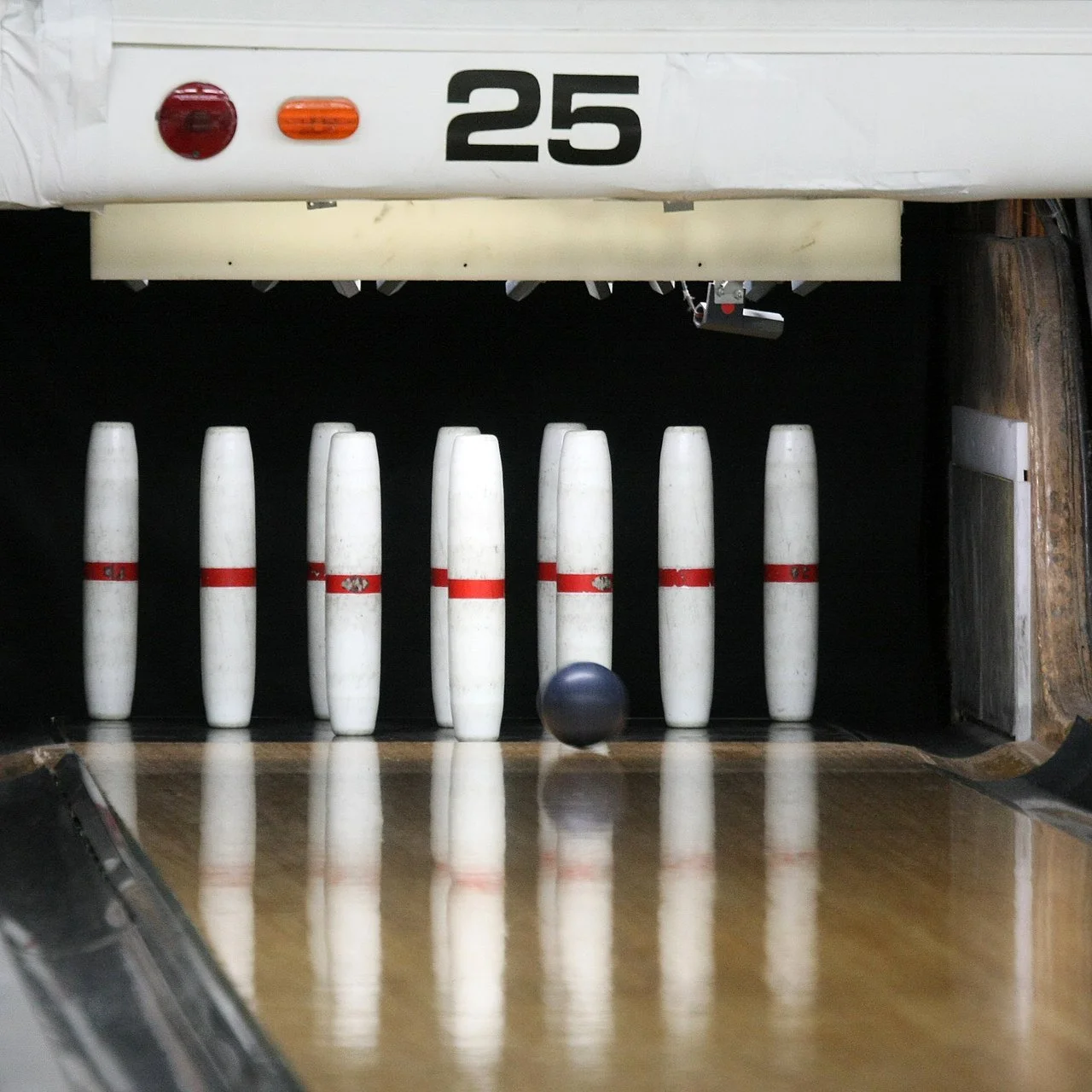
Candlepin bowling gives you a small ball, ten thin pins and three chances to discover that this is harder than it looks. The ball fits in your hand without finger holes. The pins seem obligingly narrow until you realize how much space there is to miss them.
The biggest surprise comes after the first roll. Fallen pins generally stay on the lane, where they can help knock down the ones still standing. The mess is part of the game. Learn to use it before asking someone to clear it away.

How candlepin bowling works
A game has ten frames, with up to three balls in each. Knock down all ten pins with your first ball and you have a strike. Do it with the first two and you have a spare. Clear them with all three and you have ten for the frame, without a strike or spare bonus.
That third ball is not a free spare attempt. It lets you finish the frame and collect more pins, but it does not turn three throws into two. People arriving from tenpin bowling sometimes need a moment with that distinction.
The International Candlepin Bowling Association’s rules explain which fallen pins remain playable and which must be removed. You also have to wait for the wood to stop moving before rolling again. Let the last pin finish its argument with gravity.
For a first visit, you do not need to memorize every official ruling. Ask the desk to explain the reset button and scoring before starting. Knowing when to leave the pins alone saves confusion and preserves the next player’s turn.
The fallen pins change your next shot
A standing pin may look isolated, but a fallen one can give you another way to reach it. Instead of aiming only at the upright target, look at what lies around it. A useful piece of wood can turn a difficult leave into a manageable shot.
The reverse happens too. A pin lying across the lane can interfere with the path you wanted. Each roll changes the arrangement, so your next attempt is not necessarily a repeat of the last one.
The light ball makes the game approachable for a new bowler. It does not guarantee an easy score. You are sending a small object a long way toward a set of slender targets, then working with whatever remains. Bringing friends supplies witnesses, who will probably remember the misses.
Worcester gets the origin story
Candlepin belongs to the wider New England bowling tradition rather than to Boston alone. The Museum of Worcester credits Justin “Pop” White, who owned a pool hall on Pearl Street, with inventing the game in Worcester in 1880.
The museum’s account places the sport in a neighborhood business, not a professional stadium. That scale still suits a game you can learn during an evening out. You can take the score seriously, or spend the next frame trying to explain the last one.
Where to try it around Boston
Sacco’s Bowl Haven in Davis Square combines candlepin lanes with American Flatbread’s wood-fired pizza. The operator dates the bowling alley to 1939, and the old name remains part of the business. It is a useful choice when the plan needs to accommodate both bowling and dinner.
Sacco’s bowling reservation page explains how its lanes are booked. Treat a bowling reservation and a dining plan as separate arrangements unless your confirmation says otherwise. A table does not automatically give your group a lane.
Boston Bowl on Morrissey Boulevard in Dorchester offers both candlepin and tenpin bowling. Specify candlepin when making plans so you get the smaller balls and the rules described here. The venue’s bowling information distinguishes the two formats.
Wear the required bowling shoes, keep food and drinks away from the approach, and ask staff about anything that has stopped working. Then give the fallen pins a second look. One of them may be more useful on its side.
Members
Join to keep reading
- Members-only perks, like free and discounted tickets
- Access to members hub
- Priority guest list
- Every guide and article, in full
- Save places, events and guides
- Unlimited searches on The MoveA discovery tool that recommends our favorite spots in Boston.
- 15% off Secret Boston merch
$9.99 a month or $99 a year. Cancel anytime.
Already a member? Sign in
Always free