


A robot with expressive eyebrows, computers talking across the country, and a tool for editing DNA have something in common: MIT researchers helped make them work. These three MIT breakthroughs concern different problems, but each changed what researchers could ask a machine or a cell to do.
The details are better than the shorthand. MIT did not invent the internet by itself, and CRISPR grew out of decades of international research. Its part in both stories is substantial enough without taking everyone else’s credit.
MIT breakthroughs that helped computers talk

In 1965, researchers connected the TX-2 computer at MIT’s Lincoln Laboratory in Massachusetts with a computer in California over a telephone line. Lawrence Roberts and Thomas Marill’s experiment showed that distant computers could work together. It also exposed the limitations of the telephone system for that job.
The Internet Society’s history, written by people who helped build the network, traces several MIT connections. J.C.R. Licklider had described a globally connected computer system in 1962. Leonard Kleinrock researched the mathematics of computer communication. Roberts went on to lead the development of ARPANET at the federal Advanced Research Projects Agency.
Other researchers and institutions were working on the problem too, including groups at RAND and Britain’s National Physical Laboratory. Cambridge company Bolt Beranek and Newman built the early Interface Message Processors, computers that handled traffic between connected sites.
By the end of 1969, ARPANET linked four host computers, all in the western United States. MIT’s role was in the research and people behind the system, rather than being the sole birthplace of a finished internet. That larger network took years more work.
Kismet gave a robot a readable face
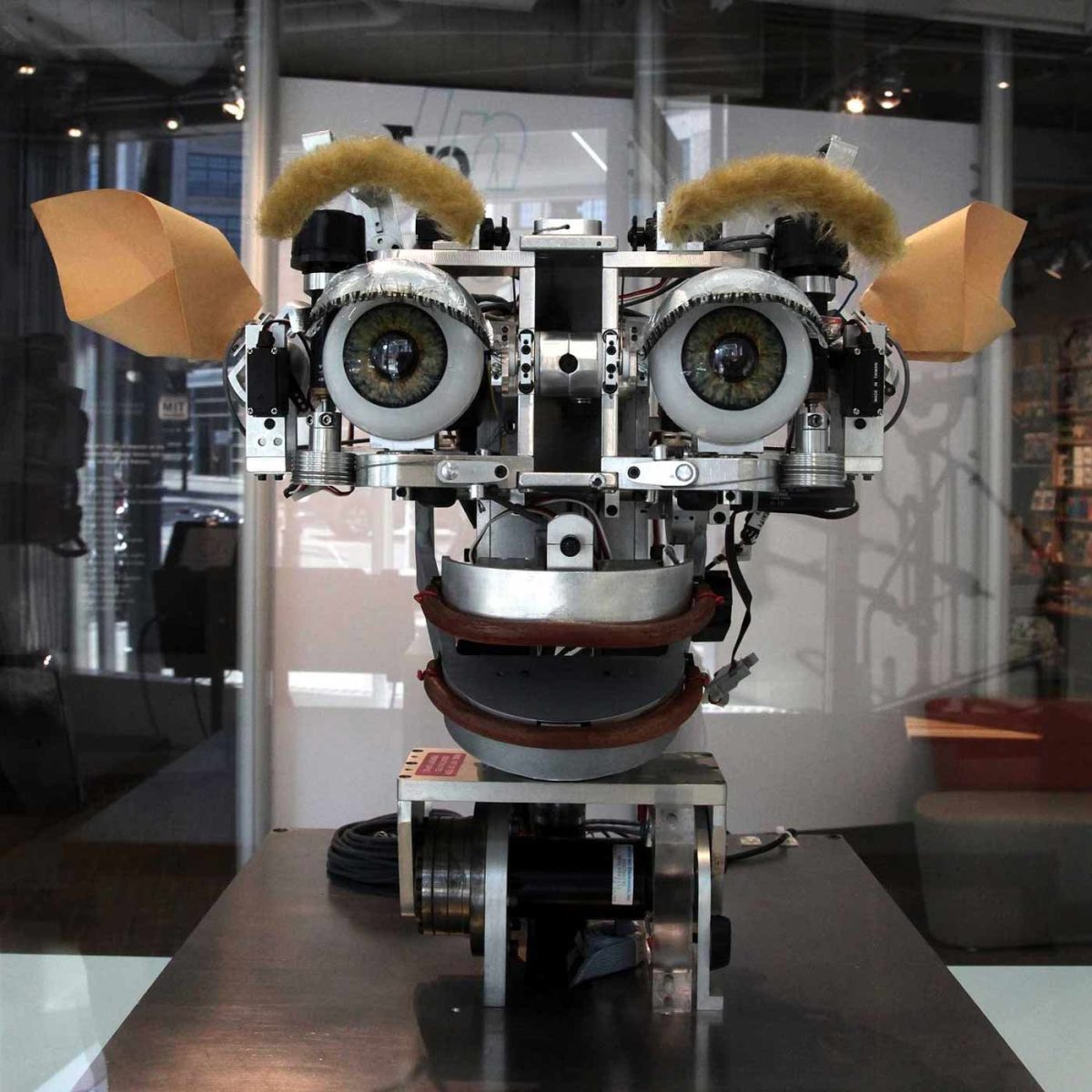
Kismet had large eyes, movable ears, eyebrows, and lips. They gave people something to respond to before the robot could say anything particularly useful.
Cynthia Breazeal’s team began the work in 1997 at MIT’s Artificial Intelligence Laboratory. As MIT reported in 2001, the researchers drew on child development to investigate how a machine might learn through social interaction. Cameras let Kismet detect what was happening nearby; its movements gave the person in front of it feedback.
One small example explains the idea. When an object came too close for its cameras, Kismet pulled back. A person could read that movement as a cue to give it space, helping the robot see better without needing a technical instruction.
Kismet’s expressions were programmed responses, not evidence that the machine felt human emotions. The research question was how those signals could help a person and a robot understand one another. The eyebrows had a job.
CRISPR moved into human cells
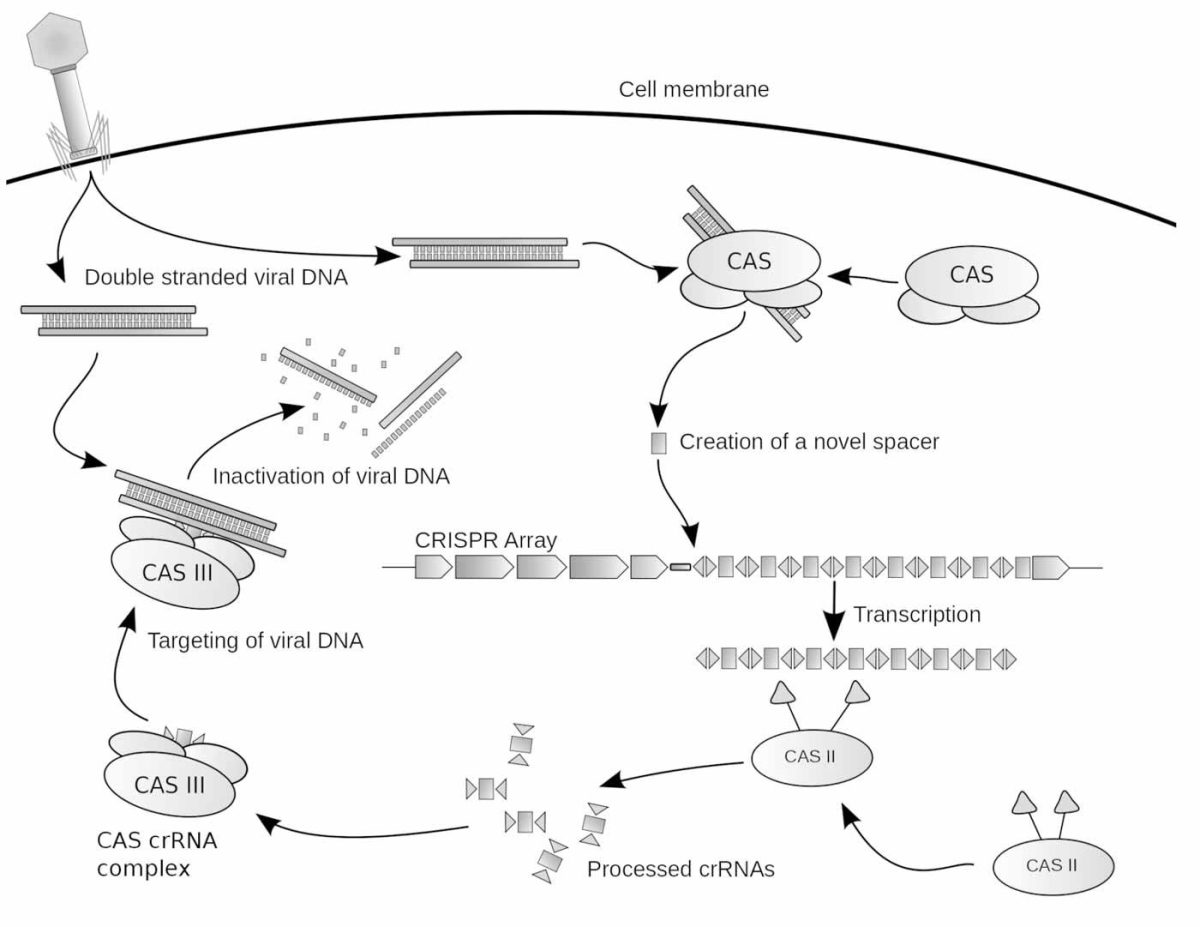
CRISPR began as a subject of basic research into how microbes defend themselves against viruses. Scientists eventually learned to adapt parts of that defense system into tools for cutting DNA at chosen locations.
In 2012, Emmanuelle Charpentier and Jennifer Doudna’s team demonstrated a programmable Cas9 system in laboratory experiments. In January 2013, Feng Zhang and colleagues at the Broad Institute of MIT and Harvard and MIT’s McGovern Institute published work adapting CRISPR-Cas9 to edit human and mouse cells. George Church’s Harvard team reported related results in the same issue of Science.
The Broad Institute’s research timeline lays out those separate contributions. The distinction matters: discovering a natural system, explaining its machinery, and making it work inside another kind of cell are different achievements.
The work eventually reached medical treatment. In December 2023, the FDA approved Casgevy for certain patients with sickle cell disease, the first FDA-approved therapy using CRISPR-Cas9. It modifies a patient’s own blood stem cells. That approval followed further research and clinical trials; it was not a treatment that appeared fully formed in an MIT laboratory.
Where to start if you want to visit
The MIT Museum at 314 Main Street in Cambridge is the public-facing place to start. MIT’s current directory confirms its Kendall Square location. Check its exhibition and event listings for what is on during your visit; the working laboratories mentioned here are not attractions with drop-in visiting hours.
