

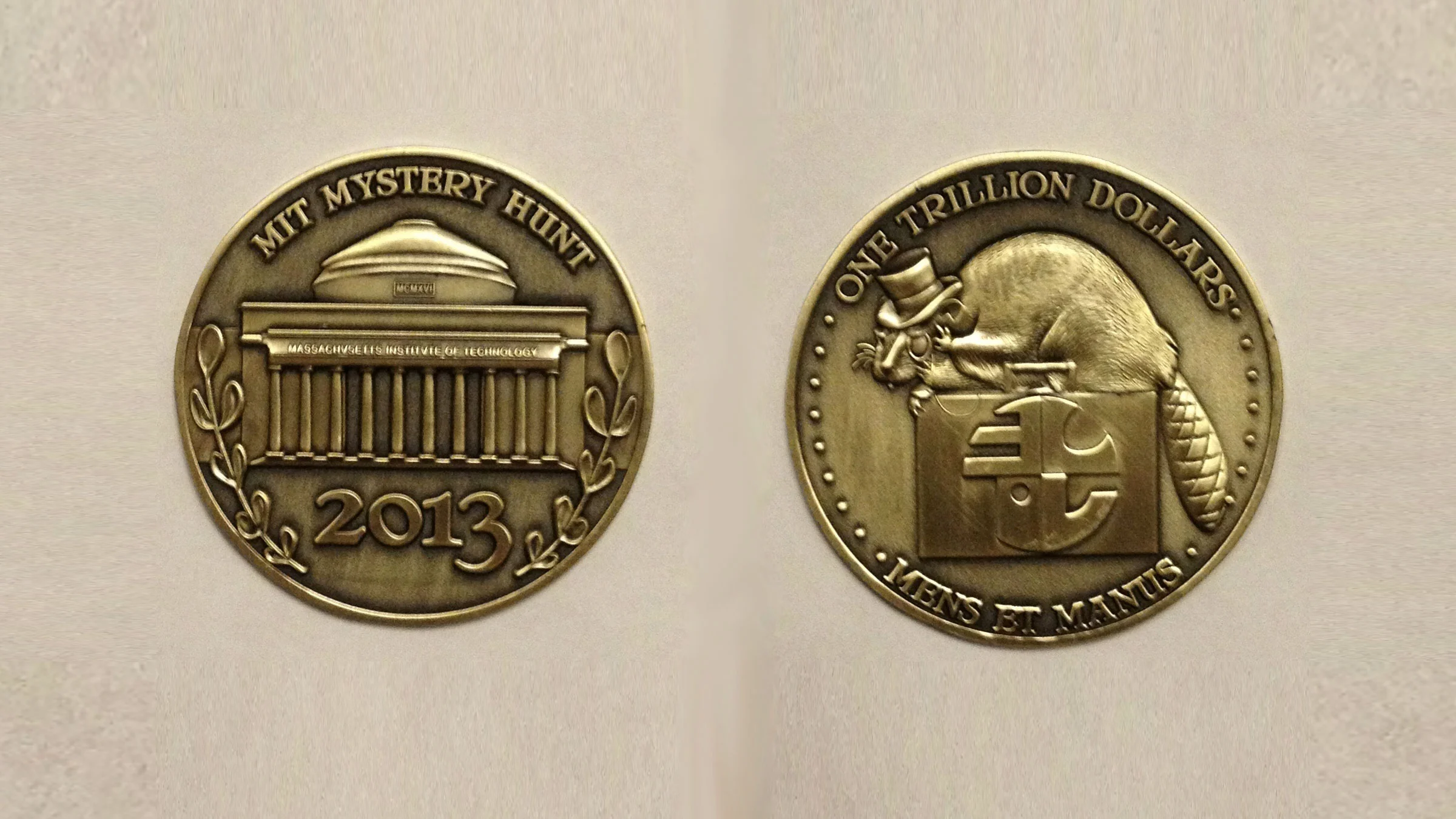
Win the MIT Mystery Hunt and you’ve earned a substantial new project: creating the next hunt for everyone else. The competition happens every January, over Martin Luther King Jr. Day weekend. It starts at noon on the Friday before the holiday, in Kresge Auditorium, where the organizers reveal the theme and hand out the first materials. From there, teams chase a hidden object on MIT’s campus. It’s called the coin, although the object is not necessarily a coin.
What the MIT Mystery Hunt actually involves
The Mystery Hunt is a team puzzle competition with room for much more than crosswords. A puzzle can turn on wordplay, numbers, images, audio, a code, a physical challenge, or a search around campus, and sometimes the first job is figuring out what you are even supposed to do. The Puzzle Club’s history of the hunt describes cryptograms, multimedia puzzles, scavenger hunts, and games between teams, and it says a puzzle may arrive with no instructions at all.
Teams run from about a dozen people to more than a hundred. They work through the puzzles, send answers to the organizers for confirmation, and use those answers to find the route to the finish. Early hunts had 30 to 40 puzzles. Some later hunts have reached about 200, and the 2013 hunt ran more than 75 hours and had over 150 puzzles. A team that finishes usually needs about 48 hours. The winning team is then free to change almost any rule for the following year, which is also why the same people cannot write the hunt two years in a row.

Why everyone is looking for a coin
The name comes from an actual penny. Brad Schaefer, then a PhD student, created the first Mystery Hunt in January 1981 and hid an Indian Head penny. He kept organizing it until he left MIT in 1983. After that, the winning team inherited the job.
The word coin stayed, and the objects did not. The official coin gallery includes a two-sided die from a Dungeons and Dragons hunt, a glass memory from a hunt set inside the movie Inside Out, and a larger coin pressed from a set of pennies after teams saved a fictional amusement park called Penny Park. The hiding place is its own problem. MIT News explains that the spot has to be open at all hours and safe from rain, squirrels, and cleaning crews. In 1981, a mezzanine Schaefer did not know about sent some solvers into a librarian’s office.
You don’t need an MIT degree to take part
You don’t need to be an MIT student. The Puzzle Club says an MIT affiliation is not required, though teams with current students have an edge because many puzzles use the campus and MIT culture. Large teams often split the work, with some people in Cambridge and others joining by phone, video, or a team wiki. Physical challenges and walks around campus are still part of the repertoire, so the instructions for that year are the ones that say who can register and which puzzles need someone on campus. More than 2,000 people take part in a typical year. The Puzzle Club website is where those instructions and the updates live.
Winning means taking the other side
Schaefer ran the first hunts himself. When he left, the prize became the right to make the next one. The winning team invents the theme, builds the puzzles, and decides how the weekend fits together. The people who just spent two days inside someone else’s hunt are the ones who have to make the next hunt make sense to everybody else.
Try a puzzle before committing your weekend
Past hunts are still online in the Mystery Hunt archive, themes and puzzles included. The beginner resources gather introductions to puzzlehunts, solving guides, and workshops on sample puzzles, tools, and metapuzzles. A metapuzzle takes the answers from other puzzles and turns them into one more puzzle. Start with a hunt whose theme you already like, and use the Puzzle Club site when you want the real registration details for January.
Members
Join to keep reading
- Members-only perks, like free and discounted tickets
- Access to members hub
- Priority guest list
- Every guide and article, in full
- Save places, events and guides
- Unlimited searches on The MoveA discovery tool that recommends our favorite spots in Boston.
- 15% off Secret Boston merch
$9.99 a month or $99 a year. Cancel anytime.
Already a member? Sign in
Always free