


Alexander Graham Bell’s first successful telephone message was a request for his assistant to come into the room. No speech, no grand announcement. Thomas Watson heard Bell, understood him and came over. On March 10, 1876, that was enough to make history.
The experiment took place at 5 Exeter Place in Boston. Bell had rooms there, and Watson helped build and test the equipment. The achievement was intelligible speech transmitted electrically, the practical step that turned an idea about sound into something another person could actually use.
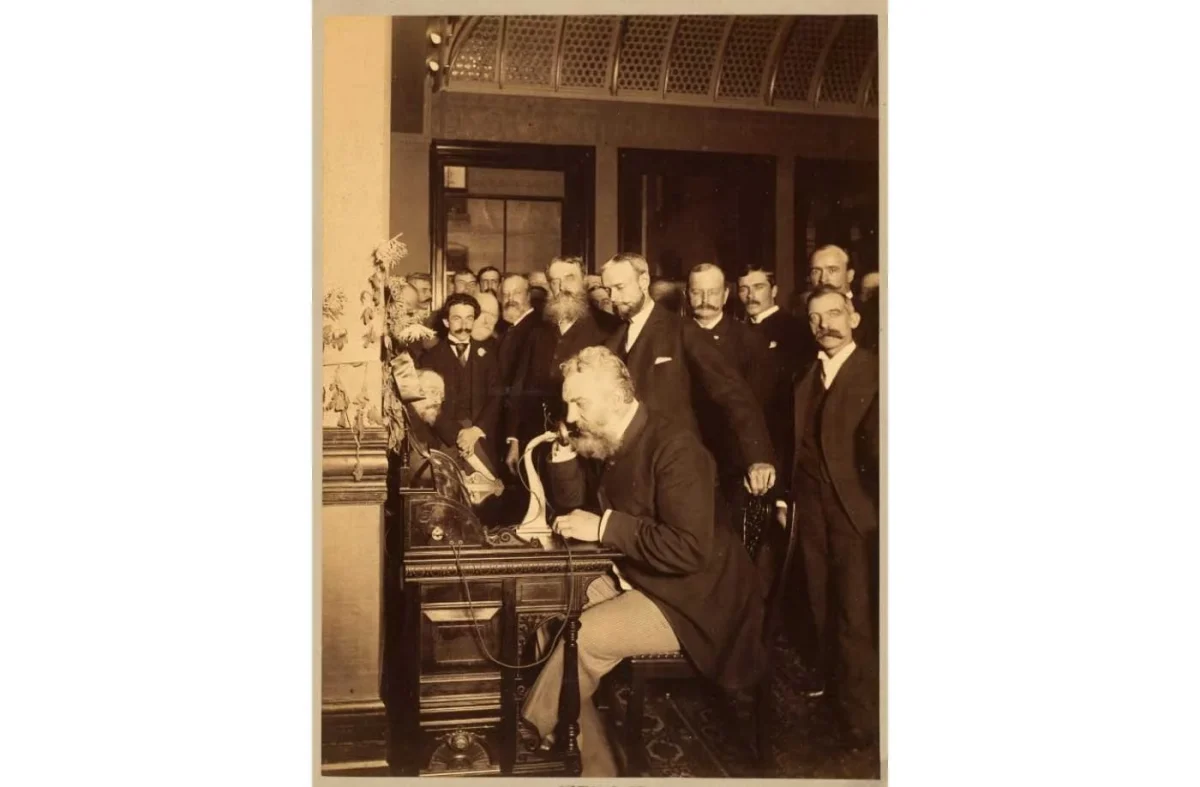
The first phone call in Boston was a very short one
AT&T’s history dates the exchange to March 10, 1876. Watson was listening from another room. The familiar wording has Bell asking Watson to come because he wants to see him.
Watson’s own later recollection gives a slightly shorter version. Rather than force both accounts into one supposedly exact quotation, the essential point is the same: Watson could make out a complete sentence. The telephone had passed beyond an indistinct voice or an electrically reproduced noise.
A call across a room sounds modest when your phone can interrupt someone on another continent. But distance was not the only problem. The device had to reproduce the changing sounds of a voice well enough for words to remain words.
A workshop on Court Street came first
In his account of the telephone’s early development, Watson described meeting Bell through Charles Williams’s electrical workshop at 109 Court Street. Watson made experimental apparatus. Bell needed someone who could turn his ideas into working parts.
Much of their early effort went into a harmonic telegraph, a device intended to send several messages along a wire by using different pitches. Bell’s financial backers saw promise in that project. The telephone was the more speculative idea competing for his time.
Watson recalled that on June 2, 1875, he plucked a metal spring while working on the telegraph apparatus. Bell heard the resulting sound through the connected receiver in another room. He hurried over to find out what Watson had done.
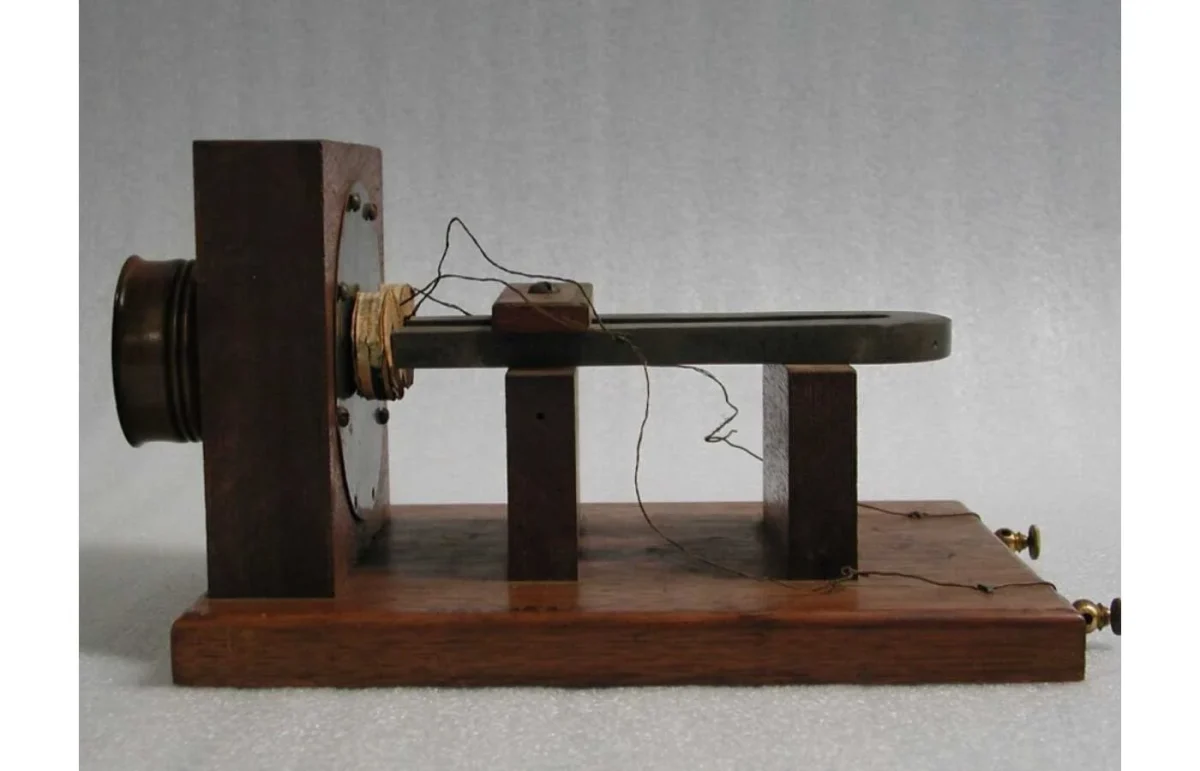
The experiment pointed toward a way of transmitting more complex sounds. It did not immediately produce a convenient household telephone. Watson built another instrument, ran a wire between floors and tested it with Bell. At first he could hear Bell’s voice more readily than Bell could hear his.
The patent arrived before the famous sentence
Bell’s patent for an “Improvement in Telegraphy” was granted on March 7, 1876, three days before the March 10 experiment. The application had been filed on February 14.
The title can seem odd if you expect the document to announce a telephone. Read the specification and the connection becomes clearer: Bell was dealing with electrical currents, vibration and the transmission of sound. His work grew out of experiments in telegraphy rather than appearing as a fully formed consumer product.
A patent date and a successful test date record different milestones. One documents a legal claim to an invention; the other records what the apparatus was demonstrated to do. Keeping both dates makes the story more precise than saying the entire telephone arrived in one afternoon.
Being understood still took work
Watson said Bell rented two rooms at Exeter Place, using one as a bedroom and the other as a laboratory. A wire joined them. That was the setting for the intelligible sentence, but repeated testing continued afterward.
His recollections are refreshingly unpolished. Even as the instruments improved during 1876, conversation could require several repetitions before a simple sentence became clear. They tried different materials, diaphragms, magnets and mouthpieces. Progress involved making another part and trying again.
Bell took instruments to the Centennial Exposition in Philadelphia that summer. Watson remembered preparing unusually well-finished examples for the occasion. Earlier experimental devices had received less attention to appearance because the immediate concern was whether they worked.
Boston’s contribution was not a polished phone waiting on a shop counter. It was a workshop, rented rooms, wire between them and two people testing whether one could understand the other. The first request was answered in person.
