

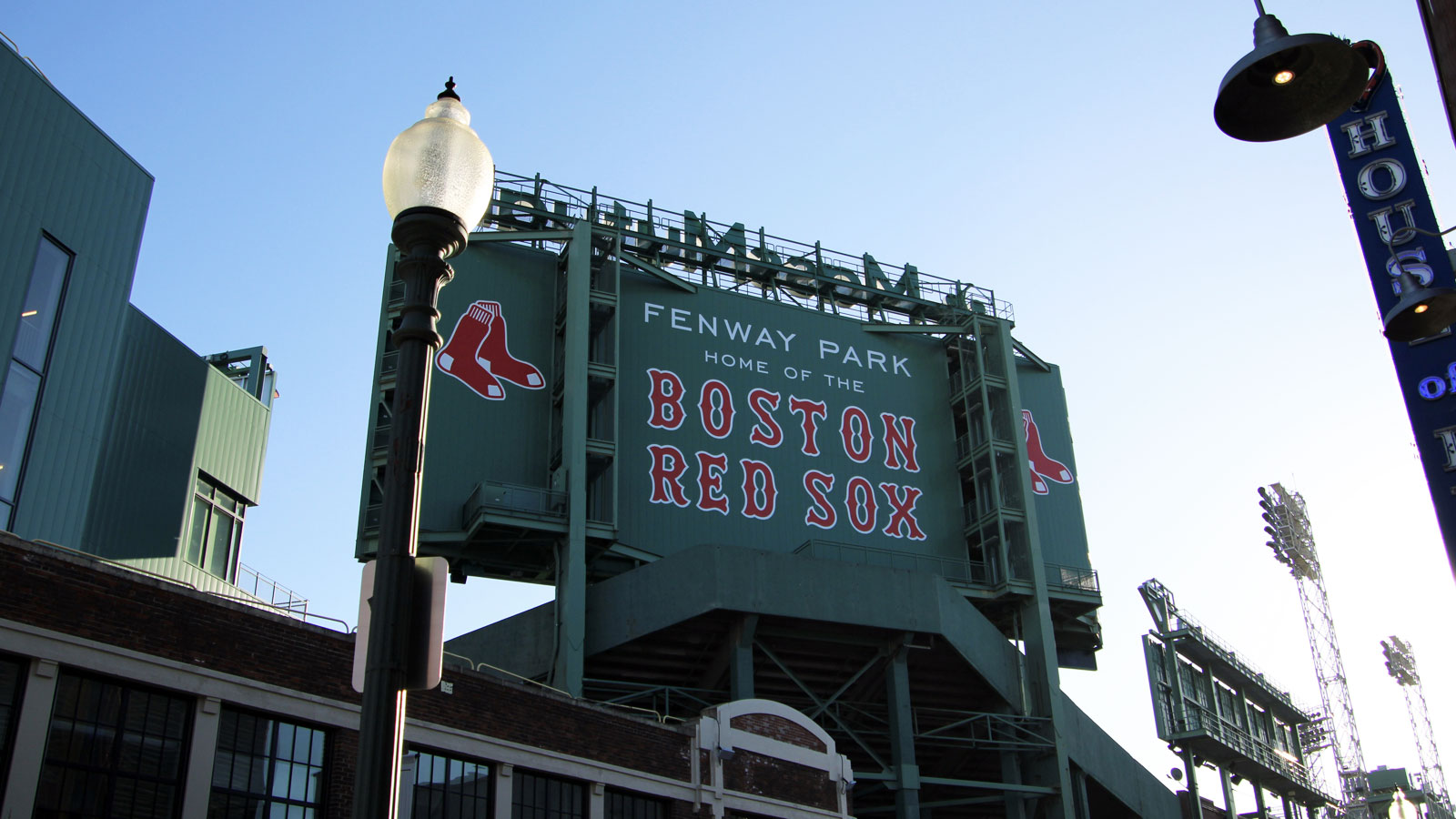
Fenway Park has been the Red Sox’s home since 1912. It remains the oldest active ballpark in Major League Baseball, ahead of Chicago’s Wrigley Field, which opened in 1914. The age shows in the brickwork, the narrow seats and the steel column that can insert itself into your view of the pitcher.
It also shows in how the park fits into Boston. Streets run tight against its walls. Apartments, restaurants and bars surround it. On game days, the crowd starts well outside the gates, spilling through Kenmore Square and along Lansdowne Street.
You are visiting a ballpark built for another era. Fenway makes very little effort to hide that.

Fenway Park’s first game went into extra innings
The first regular-season game took place on April 20, 1912. Boston beat the New York Highlanders, the team now called the Yankees, 7–6 in 11 innings. Tris Speaker drove in the winning run.
The crowd presented its own complications. According to SABR’s account of opening day, spectators stood behind ropes in the outfield, and balls hit into that overflow crowd counted as doubles. Fenway was finding unusual ways to affect a baseball game from the start.
The opening came five days after the Titanic sank, with coverage of the disaster overshadowing the ballpark’s debut. Boston’s season ended on a happier note: 105 regular-season wins and a World Series victory over the New York Giants.
The Red Sox had moved from the Huntington Avenue Grounds, their home since 1901. The new park took its name from the Fenway neighborhood.
The Green Monster wasn’t always green
The left-field wall stands roughly 37 feet high, with the foul line marked at 310 feet from home plate. Its height can turn a potential home run into a ball rattling back toward an outfielder. Its proximity can reward a fly ball that would stay in the park elsewhere.
The wall was once covered in advertising. It received its green paint in 1947, the same year Fenway introduced night baseball. Seats arrived on top in 2003.
Below them, the manually operated scoreboard remains part of the game. Someone still has to change those numbers.
The rest of the outfield refuses to settle into a predictable shape. Right field reaches just 302 feet at Pesky’s Pole, named for longtime Red Sox player and coach Johnny Pesky. The deepest center-field corner stretches to 420 feet. A ball’s destination matters as much as how hard it was hit.

Boston nearly replaced it
Fenway’s survival was a choice. In 1999, Red Sox management announced plans for a replacement ballpark across the street. Preservation advocates organized, and financing the proposal proved difficult.
The ownership group that bought the team in 2002 chose renovation. As SABR’s ballpark history documents, a structural study found the existing park viable, and substantial investment followed.
Fenway had already undergone a major rebuild in 1934. The surviving wooden grandstand seats date to that renovation, rather than opening day. Later improvements expanded concourses and added seating without erasing the park’s recognizable shape.
The result is a working stadium with more than a century of alterations. Some brought better facilities. None made every seat comfortable.
More than a baseball field
Fenway has accommodated football, soccer, hockey, concerts and political speeches. The Boston Patriots played home games here from 1963 through 1968, decades before their Foxborough years became the default association.
Baseball supplies the moments most fans remember, including Carlton Fisk waving his home run fair in Game 6 of the 1975 World Series. Fenway also hosted the first two games of the 2004 World Series, when Boston finally ended its 86-year championship drought. The clinching win happened in St. Louis.
Going to a game or taking a tour
For the full experience, go when the Red Sox are playing. Arrive with time to walk around the neighborhood rather than heading straight from the train to your seat.
Official tours offer another way inside, with access subject to availability. Check the particular tour before booking.
The address is 4 Jersey Street. The MBTA’s Fenway directions identify Kenmore on the Green Line’s B, C and D branches as a nearby stop. Fenway station on the D branch is also within walking distance. Commuter rail passengers can use Lansdowne on the Worcester Line.
Before buying game tickets, check the view from the actual section, row and seat. Grandstand support columns are part of the architecture, but you don’t have to spend nine innings admiring one.
Members
Join to keep reading
- Members-only perks, like free and discounted tickets
- Access to members hub
- Priority guest list
- Every guide and article, in full
- Save places, events and guides
- Unlimited searches on The MoveA discovery tool that recommends our favorite spots in Boston.
- 15% off Secret Boston merch
$9.99 a month or $99 a year. Cancel anytime.
Already a member? Sign in
Always free