George Washington’s hair ended up in an urn made by Paul Revere. The Massachusetts Grand Lodge requested the lock from Martha Washington after her husband’s death, giving Boston’s Masons a presidential keepsake with an unusually good pedigree. Boston University’s account of the lodge describes the relic and the ceremony associated with it.
The secret societies of Boston offer plenty of strange material. Their records reveal fraternal lodges, public lectures about Atlantis, believers in communication with the dead and exclusive social clubs. They also reveal how loosely the word “secret” gets applied.
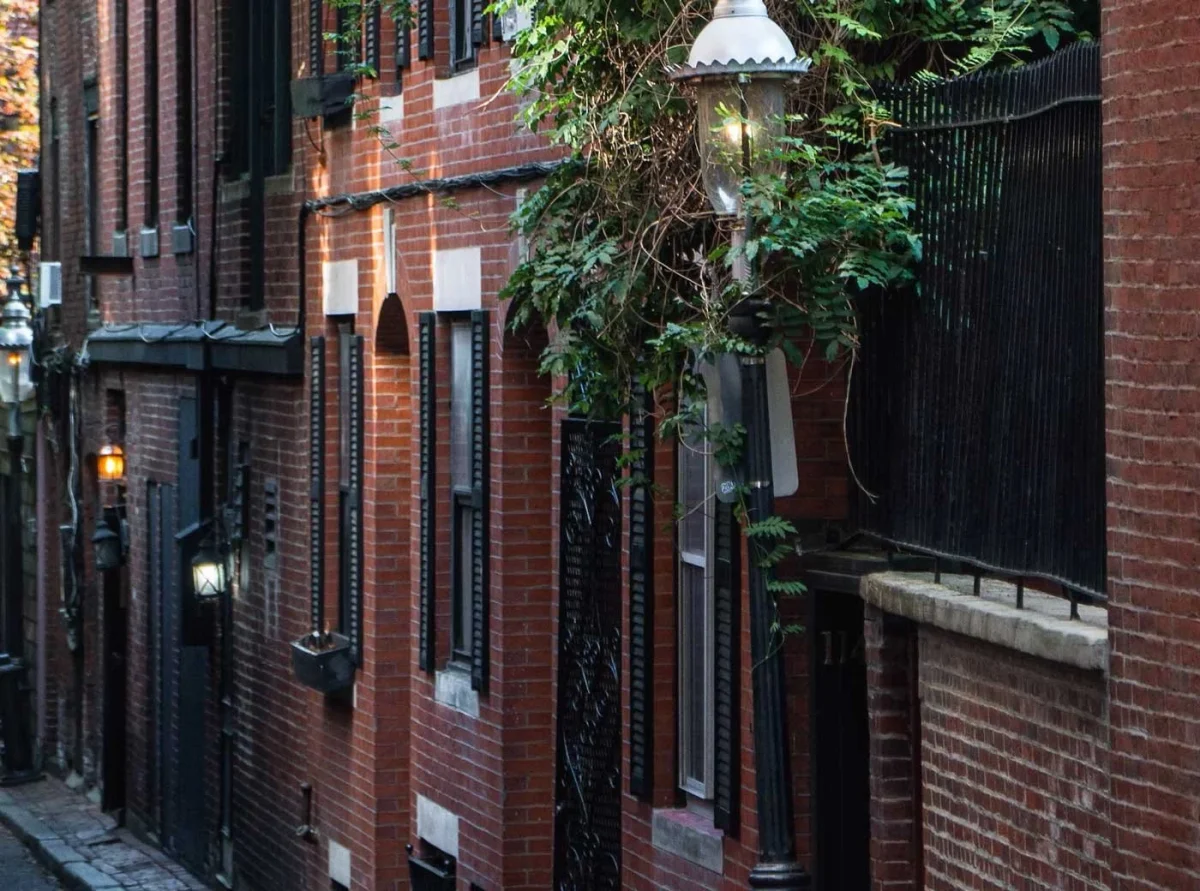
How secret societies of Boston mixed ceremony with community
Boston’s Grand Lodge contains meeting halls furnished with thrones and central altars. During a 2016 visit by BU students, lodge historian Walter Hunt explained that Washington’s hair was brought out when a new grand master was installed. Revere had held that office himself.
Some rituals and artifacts were reserved for members, but the organization’s existence was hardly concealed. The students were there on a tour.
BU scholar William Moore places these organizations within a broader history of belonging, charity and practical support, including insurance. Membership could offer both social connections and material benefits. Ceremonial clothing was only part of the arrangement.
The Freemasons were visible at the State House
Paul Revere’s Masonic role also put him in a very public ceremony. On July 4, 1795, he joined Samuel Adams and William Scollay in the procession that brought the new State House’s cornerstone up Beacon Hill. The Commonwealth’s history of the building describes fifteen white horses, one for each state then in the Union, pulling the stone through Boston.
Coins, a medal bearing Washington’s likeness and a silver plate were placed beneath it. The building was completed in 1798. The ceremony documents a Masonic presence in civic life without requiring a theory about secret control of the government.
Prince Hall built a different Masonic institution
Boston’s Masonic history also belongs to Prince Hall and the Black men who established African Lodge. The Prince Hall Grand Lodge’s history records Hall and fourteen other men entering an Irish military lodge in Boston Harbor in 1775.
After the British regiment left, the men had permission to meet and bury their dead, but not the full authority to admit new members. They petitioned the Grand Lodge of England for a charter, issued in 1784. The distinction mattered: joining a fraternity and obtaining the power to run a lodge were separate steps.
That history complicates the familiar picture of an all-powerful brotherhood. Access to its institutions was unequal, and Black Bostonians built an enduring organization of their own. Prince Hall’s name is still carried by the Grand Lodge in Massachusetts.
The Boston Theosophical Society discussed Atlantis in public
The Boston Theosophical Society held public lectures on Atlantis, reincarnation and karma, according to the February 1891 issue of The Path, a Theosophical magazine. One talk concerned black and white magic associated with the supposed lost civilization. Another report put attendance at roughly 70, enough to fill the society’s rooms. The magazine praised a speaker for providing scientific proof of Atlantis, a claim that tells us more about the publication’s beliefs than the lost civilization’s existence. Newspaper coverage and growing attendance were points of pride. Boston had an organized market for the occult, complete with speakers, a library and attendance reports.
The Spiritualists published their claims, and their officers
The New England Spiritualists’ Association organized in Boston in November 1854. Its officers’ list and address to the public survive in an archival transcription.
Allen Putnam of Roxbury served as president. Officers included people from Boston, Chelsea and other New England communities, with some Boston correspondence addresses printed alongside their names.
The association declared its belief that spirits of the dead could communicate with the living. Its address described supposed phenomena including moving furniture, voices and instruments playing without visible performers. These were the association’s claims, not verified supernatural events.
Its members also asked for investigation and argued that their beliefs offered comfort in bereavement. That gives their activities a human purpose beyond spooky entertainment.
For a supposedly hidden movement, publishing officers’ names and mailing addresses was a fairly generous disclosure.
The Porcellian Club’s exclusivity crossed the Charles
Harvard’s Porcellian Club belongs to Cambridge, though it regularly enters discussions of Boston’s private societies.
Founded in 1791, the club developed an alumni network that included prominent political, business and academic figures. Harvard’s archival description identifies membership as a marker of social distinction and a route into elite professional circles.
That supports a history of exclusivity and useful connections. It does not establish occult activity.
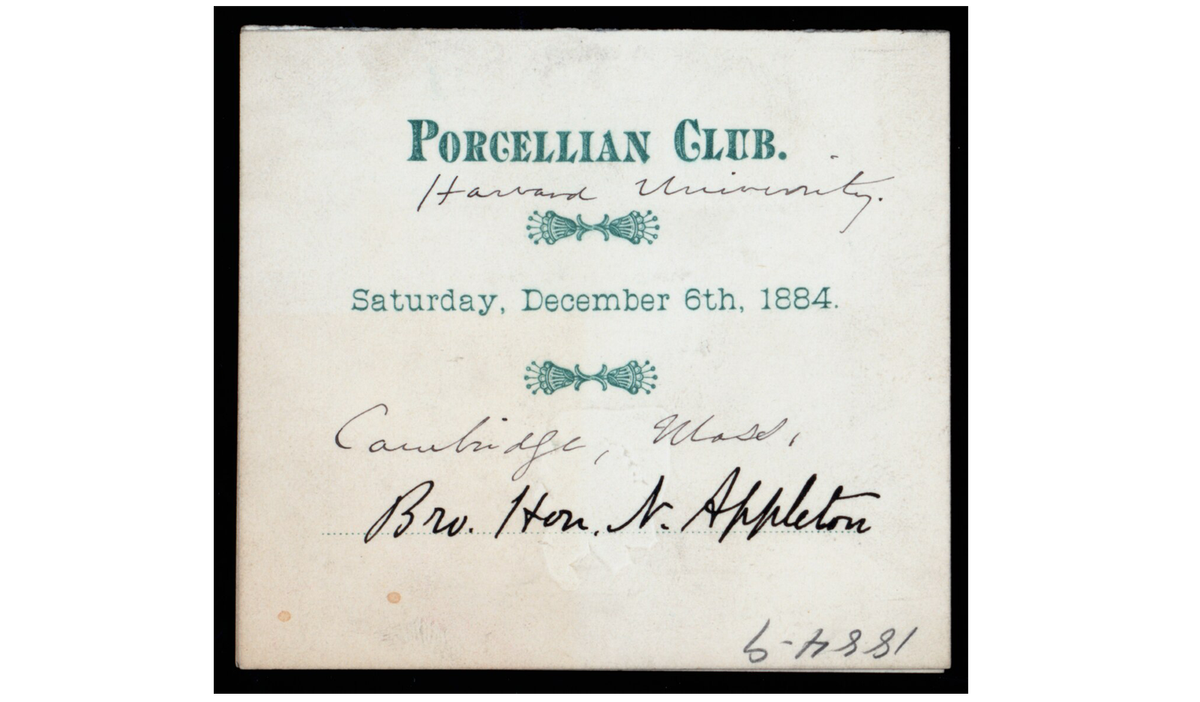
Private membership creates real questions about access and influence. It does not turn a dining club into an occult order. The club’s records belong to the history of Harvard’s social hierarchy, a more useful subject than guessing what happened behind every closed door.
The Odd Fellows left something you can actually see
The Independent Order of Odd Fellows offers a documented combination of symbolism and Boston architecture.
Its emblem features three linked chains, sometimes bearing the letters F, L and T. An Odd Fellows lodge’s explanation of its symbols identifies those letters with friendship, love and truth. A heart held in a hand represents generosity toward people in need. The imagery expressed the organization’s values.
On Boylston Place, the Ancient Landmark Building was constructed in 1887 as an Odd Fellows lodge. Its design combined Queen Anne and Romanesque Revival features, including arched openings and projecting metal bays.
The building’s façade was later preserved and incorporated into Emerson College’s Two Boylston Place residence hall. A piece of Boston’s fraternal history now forms part of a student housing development. Look up from the pedestrian passage and the evidence is right there.
The Knights of Columbus once kept members sworn to secrecy
The Knights of Columbus once kept their initiation ceremonies strictly for members. The Catholic fraternal organization’s first three degrees taught charity, unity and fraternity through separate ceremonies whose proceedings were kept secret. In 2020, the Knights introduced a combined ceremony open to family and friends. Today, the organization even publishes ceremonial scripts and offers an online initiation.
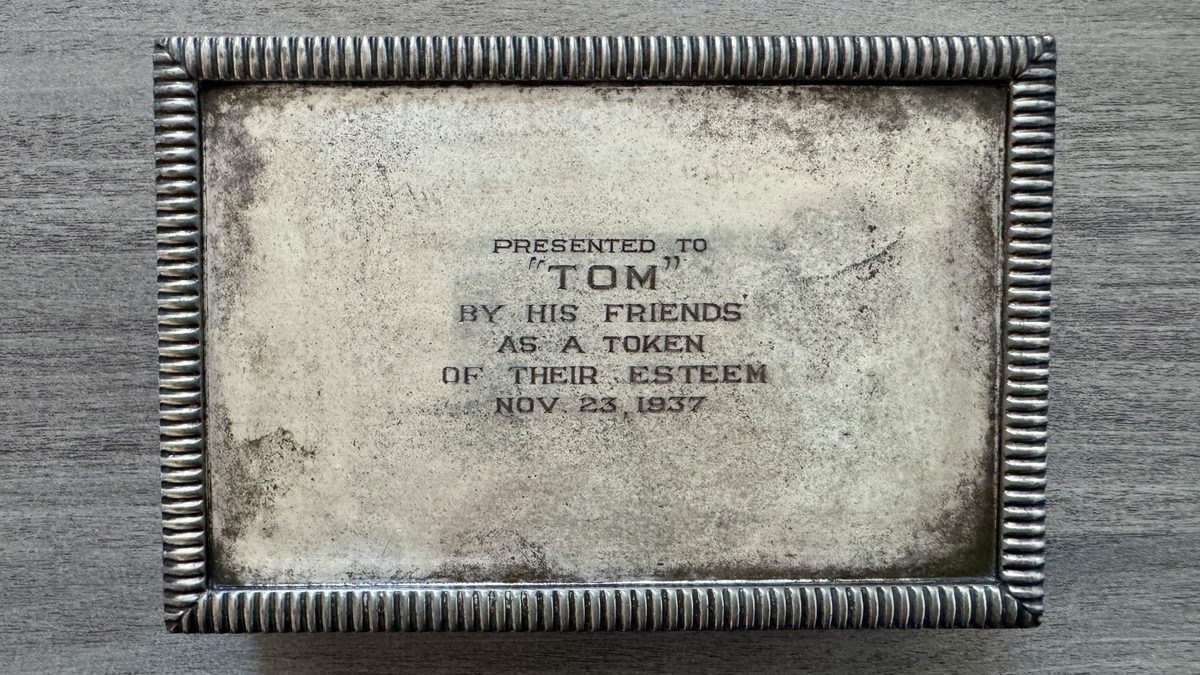
My grandfather, Thomas L. McCormack, an attorney in Jamaica Plain and a city councilor, was a Grand Knight of the Knights of Columbus in Boston. The silver box pictured below was presented to him by his fellow Knights “as a token of their esteem.”