


Harvard’s Porcellian Club has a rumor attached to it that makes ordinary alumni benefits look fairly disappointing: if a member hasn’t earned his first $1 million by 40, the club supposedly supplies the money.
A 2016 Town & Country article repeated the claim, explicitly labeling it a rumor. It remains unverified. An earlier account gives members a different deadline, which is an awkward detail for a supposed financial guarantee.
The private Cambridge club has enough documented history without a guaranteed payout: more than two centuries of membership, a clubhouse across from Harvard Yard, and a selection process that admitted Theodore Roosevelt but passed over Franklin D. Roosevelt. Even the surname had its limits.

The Porcellian Club’s $1 million rumor
By 1999, The Harvard Crimson was reporting a version of the story in which members received $1 million if they hadn’t achieved financial success by 30. The newspaper described it as possibly more legend than tradition.
The birthday changes with the telling, and neither account identifies anyone who received the money. A member planning his retirement around the story would want rather more detail.
The Crimson’s 1999 report did describe an older tradition of graduates meeting undergraduates over meals and helping them find work. It also interviewed people who thought those connections had weakened. Even the ordinary alumni network came with disagreements about how much help it actually provided.
Why the pig?
The club was founded in 1791. It is a social club, and its motto, Dum vivimus vivamus, translates as “while we live, let us live.” Nobody appears to have mistaken it for a study group.
The pig has a more entertaining origin story. An 1887 Crimson account described a student keeping one in his Hollis room and using its squeals to annoy a proctor downstairs. When a room search threatened to expose the animal, the student allegedly cooked it and invited friends to dinner. They enjoyed the gathering enough to establish a club.
Even that nineteenth-century article presented the tale as a popular explanation rather than a proven sequence of events. It connected the name Porcellian to the Latin porcus, meaning pig.
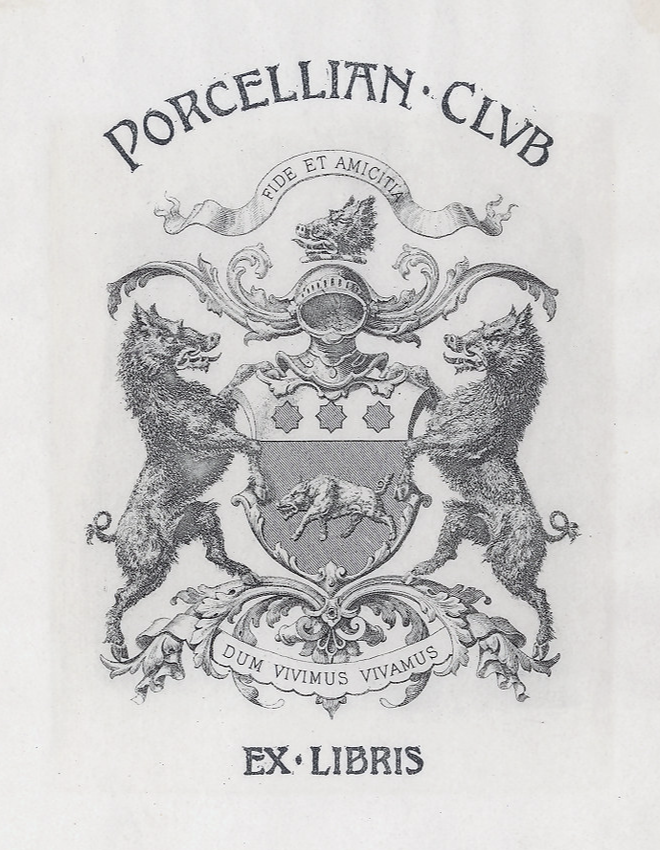
The animal became a lasting emblem, appearing on members’ ties and rings. The Porcellian may keep its activities private, but a pig on a necktie gives an observer something to work with.
Who got in, and who didn’t
Theodore Roosevelt and Supreme Court Justice Oliver Wendell Holmes Jr. belonged to the club. Harvard’s published account also lists architect H. H. Richardson and writer George Plimpton among its members. The Winklevoss twins appear on later published membership lists.
Franklin D. Roosevelt’s exclusion is particularly well documented. According to Harvard Magazine’s account of his undergraduate years, he hoped to follow Theodore into the Porcellian. His father had been an honorary member, and several undergraduate members had attended Groton, Franklin’s own school.
Those connections did not secure an invitation. He was not among the eight sophomores elected and instead joined the Fly Club.
The episode also helps explain what “final club” meant within Harvard’s social hierarchy. Students once worked through a succession of clubs toward these last, selective memberships. Admission was a separate contest from getting into Harvard itself.
The co-ed controversy happened in 2016
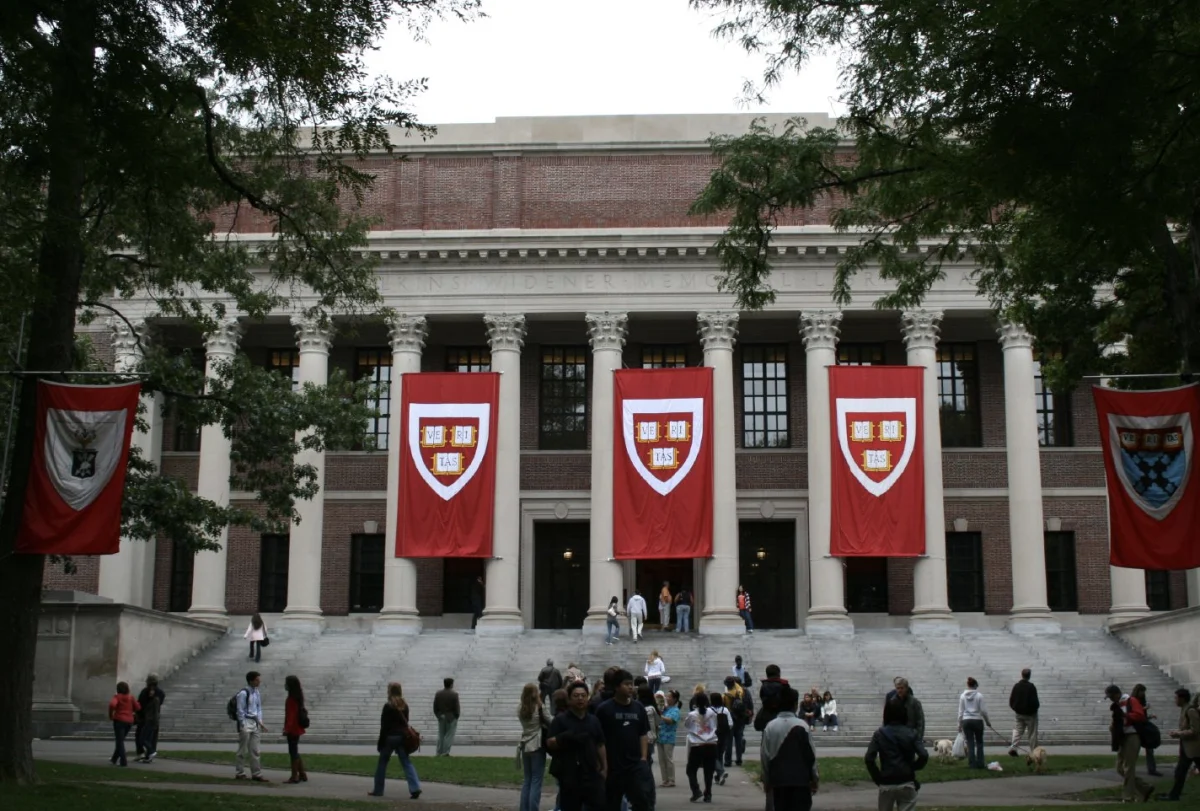
The club’s privacy became national news in April 2016, when Harvard administrators were pressing single-gender final clubs to change their membership policies.
Charles M. Storey, then Porcellian graduate board president and president of Harpoon Brewery, sent a statement to The Crimson arguing that requiring single-gender organizations to admit members of the opposite sex might increase sexual misconduct. He also defended the Porcellian’s independence from Harvard and its members-only access policy.
Following criticism, Storey apologized and resigned as the club’s graduate president. In his subsequent apology, he acknowledged that his statement itself was wrong, rather than merely misunderstood.
Harvard later imposed sanctions that restricted members of unrecognized single-gender social organizations from certain campus leadership roles, athletic captaincies and fellowship endorsements. The university rescinded those rules in 2020 amid legal challenges.
The dispute reached well beyond one clubhouse. It asked whether Harvard could discourage students from joining private organizations by withholding opportunities on campus, even when the organizations themselves operated independently.
What you can see in Harvard Square
The clubhouse, known as the Barn, stands at 1324 Massachusetts Avenue, across from Harvard Yard. Its private rooms are not a public attraction. Plan to look at the exterior, not tour the interior.
The easier detail to spot is across the street. The Porcellian Gate, also called the McKean Gate, has a carved boar’s head above its arch. The club funded the gate, which was completed in 1901.
Like several groups in our guide to the secret societies of Boston, the Porcellian leaves visible evidence of a largely private history. In Harvard Square, you can find its pig carved in stone. The million-dollar check has proved considerably harder to locate.