

In 1982, a compilation called This Is Boston, Not L.A. put the city’s hardcore bands on record with a title that handled its own publicity. Gang Green contributed seven songs. Four were over before a minute had passed.
Boston’s punk rock scene in the ’80s had plenty of bands that never became household names. That compilation put several of them on the same record. The Cars had already broken through. Pixies would arrive later. SSD, Mission of Burma and Jerry’s Kids were making very different kinds of racket, with clubs, small labels and local audiences giving them somewhere to be heard.
The rooms that made Boston’s punk rock scene possible
The Rathskeller, better known as The Rat, gave original bands a foothold in Kenmore Square. Its bills included The Cars, Mission of Burma, Gang Green and, eventually, Pixies. Sharing a club didn’t mean sharing a sound.
For a band trying to get its own songs heard, The Rat offered something specific. In the Music Museum of New England’s history of The Cars, guitarist Elliot Easton recalls how important The Rat was when other rooms expected familiar Top 40 songs. Original songs could fill the whole set.
The Channel opened in 1980 near Fort Point Channel, adding a much larger room to the circuit. Both clubs belong in any account of Boston’s bars in the 1980s, though their audiences and bookings extended beyond punk.
The Cars got there before the ’80s
The Cars formed in 1976 and released their debut album in 1978. Their debut was already a hit before the decade began, and their music put bright pop hooks alongside the guitars and synthesizers.
Their connections to the local underground were real. Drummer David Robinson had played with the Modern Lovers and DMZ, and The Cars played The Rat before their records reached a national audience. Boston radio stations WBCN and WCOZ aired an early recording of “Just What I Needed” before the band’s debut came out.
The combination of guitars, keyboards and sharply written pop songs placed them in new wave. By the time “Drive” appeared on Heartbeat City in 1984, they were well beyond the small-club stage of their career.
SSD, Gang Green and a very short fuse
SSD formed in Boston in 1981 as Society System Decontrol. Guitarist Al Barile released their debut, The Kids Will Have Their Say, through his own X-Claim label in 1982. The band became closely associated with straight-edge hardcore and the group of friends and supporters known as the Boston Crew.
Gang Green came from Braintree, where Chris Doherty formed the band in 1980 while still a teenager. By 1981, they were playing Cantone’s, The Channel and The Rat.
Their contributions to This Is Boston, Not L.A. included the 26-second “Snob” and 33-second “Lie Lie.” The record also featured Jerry’s Kids, The F.U.’s, The Proletariat, The Freeze, Groinoids and Decadence. SSD weren’t on it, a reminder that even a compilation with that title couldn’t contain the whole scene.
The music also contained arguments about the scene itself. In a contemporary Maximum Rocknroll review, Jeff Bale singled out Decadence’s contribution as a criticism of violent slam dancing. Playing aggressively did not require agreeing with everything happening on the floor.
Mission of Burma made room for stranger sounds
Mission of Burma formed in 1979 with guitarist Roger Miller, bassist Clint Conley and drummer Peter Prescott. Martin Swope became a fourth member whose work happened at the sound desk, manipulating tape recordings during performances.
Their records came quickly: “Academy Fight Song” in 1980, Signals, Calls and Marches in 1981 and Vs. in 1982. The songs could be forceful and tuneful, then interrupted by sounds that seemed to arrive from somewhere else entirely.
The original run was short. As Miller recounts, his worsening tinnitus led the band to stop in 1983. They reunited in 2002 and made four more studio albums, substantially extending a recording career that initially consisted of one full-length LP.
Pixies arrived toward the end of the decade
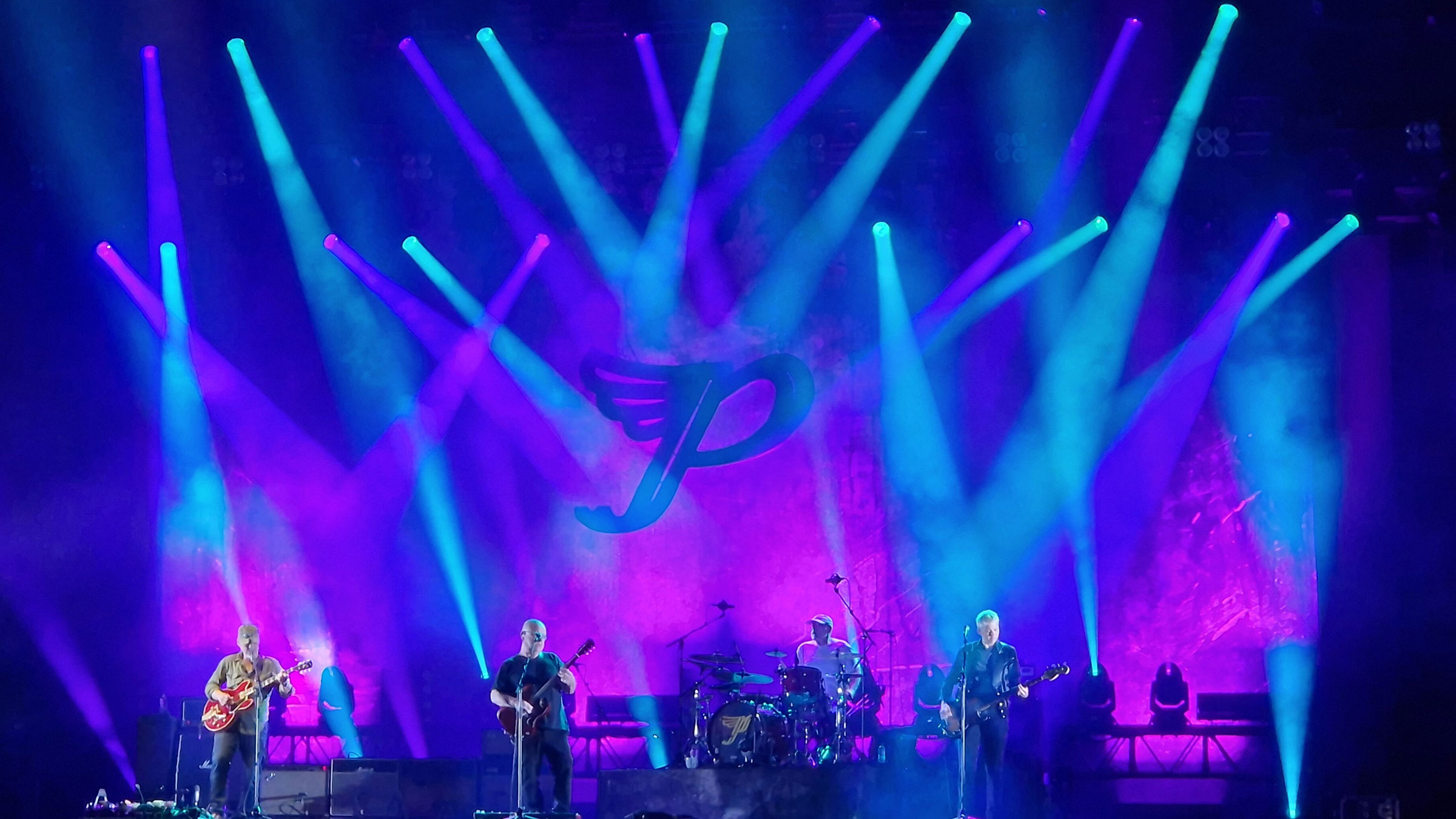
Pixies formed in 1986, with Black Francis, Joey Santiago, Kim Deal and David Lovering. Deal answered an advertisement in the Boston Phoenix. Early shows included The Rat and T.T. the Bear’s Place in Cambridge.
Producer Gary Smith saw them opening for Throwing Muses and recorded a demo at Fort Apache Studios. Material from those sessions became Come On Pilgrim, released by 4AD in 1987. Surfer Rosa followed in 1988 and Doolittle in 1989.
Their abrupt shifts between restraint and screaming, odd lyrical subjects and strong melodies belonged to the developing alternative-rock sound. They carried punk’s willingness to be abrasive into songs that could also be disarmingly catchy.
Play the final track on Vs. and listen to the ending. In the band’s account of recording the album, the tape ran out during the final song. Mission of Burma kept the sudden cutoff, leaving Peter Prescott’s scream at the end of the record. The song was supposed to continue for another 15 seconds. The band liked the accident better.