
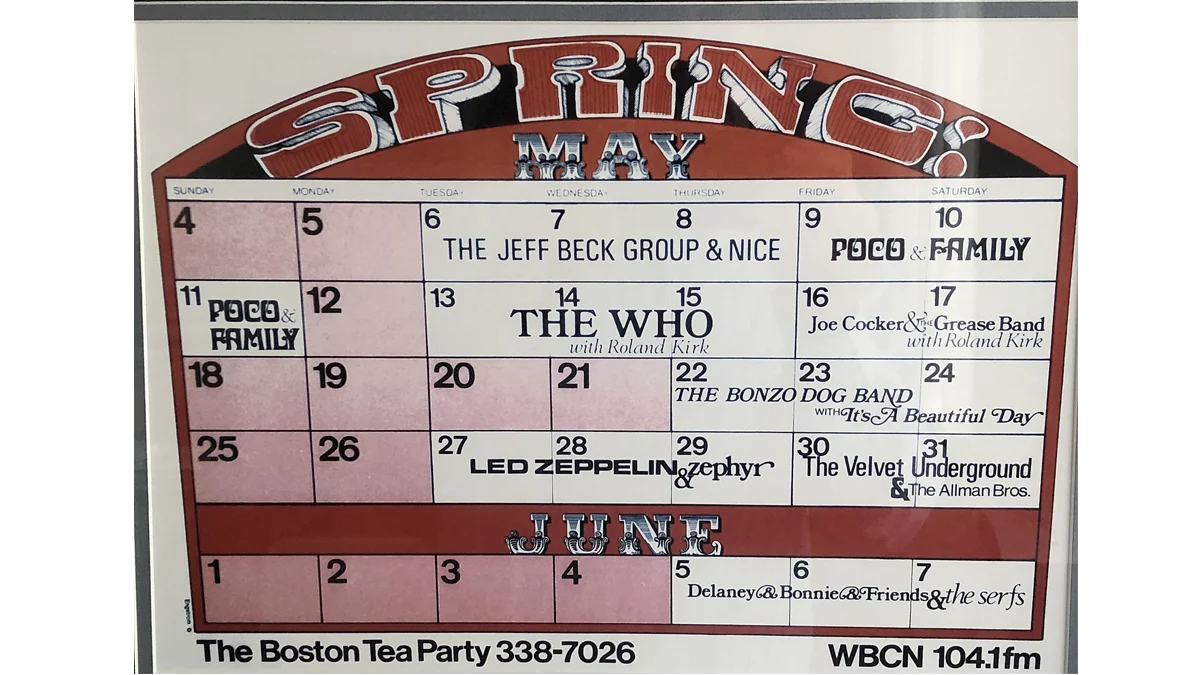
Led Zeppelin played the Boston Tea Party in January 1969. Pixies played the Rat before releasing their first record. Those names look impressive on old concert posters now. At the time, somebody had to buy a ticket without knowing they would eventually get decades of bragging rights.
Boston’s underground music scene grew through those encounters: local bands sharing bills, visiting musicians finding an audience, and people hearing something worth telling their friends about. Its rock history runs through the South End, Kenmore Square, Allston and across the river into Cambridge. Several of the rooms are gone. Their recordings are considerably easier to find.
The Boston Tea Party before the famous records
The Boston Tea Party opened on January 20, 1967, at 53 Berkeley Street in the South End, inside a former Unitarian meeting house. The building had been showing underground films, and dance concerts were introduced to help support that program.
Live music soon took over. Early performers included the Lost, with Willie Alexander, and the Hallucinations, fronted by Peter Wolf. The Velvet Underground became repeat visitors. Led Zeppelin and the original Jeff Beck Group, whose lineup included Rod Stewart and Ronnie Wood, also played there.
That mix put local musicians in the same room as touring acts whose careers were still taking shape. Boston audiences could hear them without an arena between the stage and the back wall.
In July 1969, the Tea Party moved to a larger space at 15 Lansdowne Street. It closed in December 1970, ending a run of less than four years.
Boston’s underground music scene moves downstairs
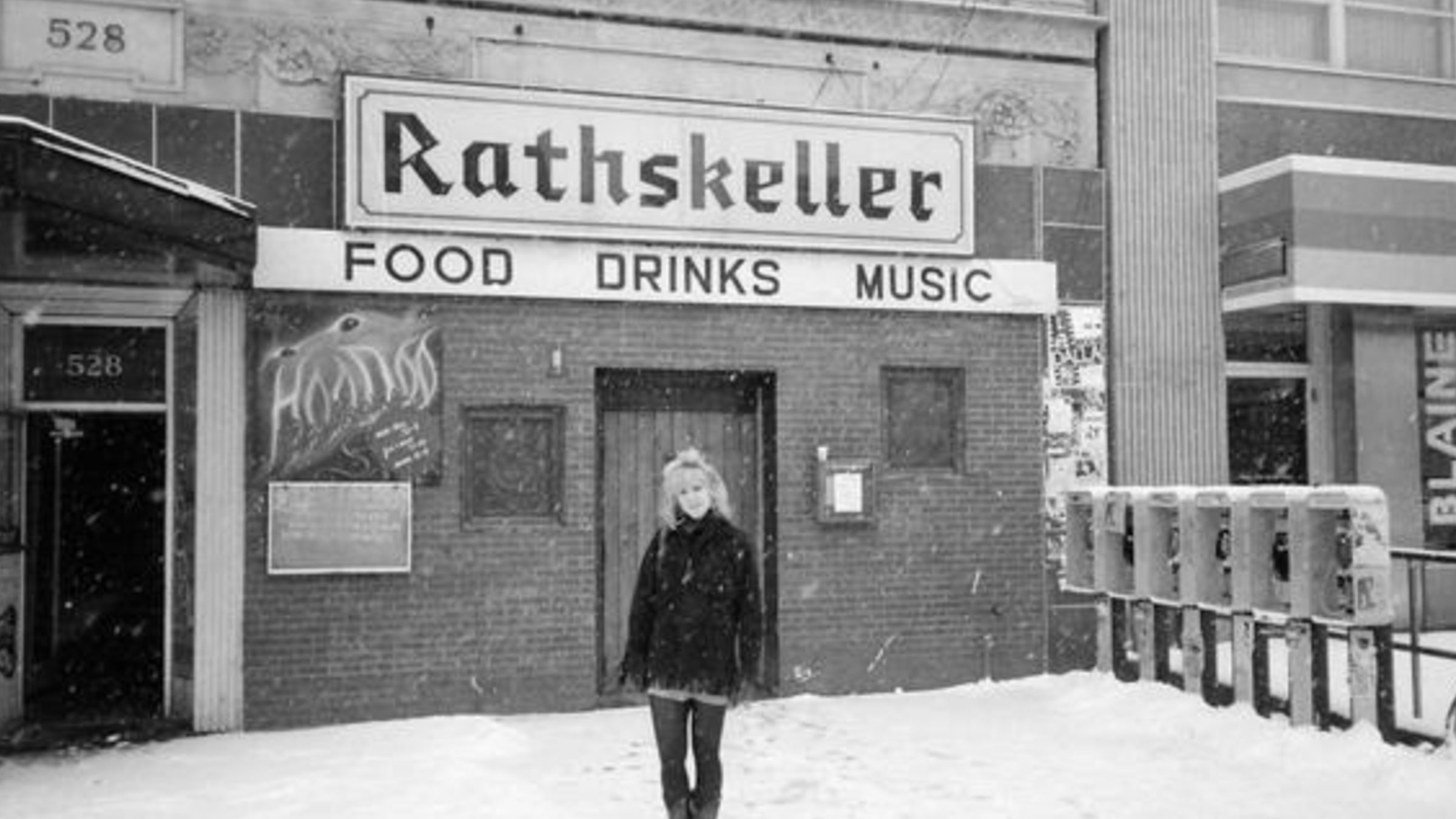
The Rathskeller in Kenmore Square, almost universally called the Rat, became a center of Boston punk after owner Jimmy Harold began booking bands in its downstairs room in 1974.
Over the following decades, its stage hosted the Real Kids, Mission of Burma, Gang Green, Pixies and the Neighborhoods, alongside visiting acts including the Ramones and Talking Heads. The first WBCN-sponsored Rock ’n’ Roll Rumble took place there in 1979.
The Rat closed in 1997. Its importance was in how many bands could get in front of an audience while they were still developing, before a substantial following or a record deal made booking them an obvious choice.
Clubs were only part of the system. Local labels including Ace of Hearts and Modern Method released records; WBCN and WFNX played local music; publications covered it; and shops sold it. Boston music writer Brett Milano’s account connects those pieces. A band needed places to be heard between gigs, too.
The bands did not all sound alike
Mission of Burma’s original run lasted from 1979 to 1983. Their songs combined abrasive guitars with complicated arrangements, pushing beyond straightforward punk. The band reunited in 2002 and went on to make new records, a second chapter documented by Fenway Recordings.
Pixies formed in Boston in 1986. Black Francis and Joey Santiago recruited Kim Deal through an advertisement in the Boston Phoenix, and David Lovering joined on drums. Early shows included the Rat and T.T. the Bear’s Place in Cambridge.
Their recording breakthrough also had a local address. Producer Gary Smith brought them into Fort Apache Studios to make a demo; eight of its tracks became Come On Pilgrim. The Music Museum of New England’s band history follows that progression from local performances to a deal with 4AD.
Hardcore had its own audience and pace. SSD released The Kids Will Have Their Say in 1982, years before alternative rock’s commercial boom. Gang Green belonged to that early hardcore generation as well.
The Lemonheads formed in Boston in 1986 and moved from punk toward more melodic songwriting. Dinosaur Jr. belonged to the wider Massachusetts story, having formed in Amherst in 1984. Boston supplied stages and listeners, but western Massachusetts deserves its own credit.
The schools had room for experiments
Berklee began in 1945 as Schillinger House, teaching contemporary music when that principally meant jazz. Its history of jazz education describes a school built around studying music being made in the present.
New England Conservatory also reaches well beyond classical repertoire. Gunther Schuller and Ran Blake established its Third Stream program in 1972, bringing together classical, jazz and other musical traditions. That program developed into today’s Contemporary Musical Arts department.
The club circuit and the conservatories offered different ways to learn, perform and meet collaborators. Neither tells the whole story on its own.
Where to hear something new
For a night out now, start with O’Brien’s Pub in Allston. Its lineup includes punk, metal, indie rock and experimental music, with multiple bands on many bills. Check the age restriction for the individual show.
Across the river, the Sinclair at 52 Church Street in Harvard Square books touring artists across genres. Read the supporting acts as closely as the headliner, and get there early enough to hear them.
Great Scott’s former Allston location closed in 2020. Its planned return at Harvard Avenue and Cambridge Street remains a project to follow, with the venue seeking support through the permitting process. Check for an opening announcement before planning a night there.
O’Brien’s posts a playlist of bands on its calendar, which makes choosing a show easier when you do not recognize the names. Listen before buying a ticket, then arrive for the opener.