

Healey’s dirty secret: socialism-fueled green heating tax delayed until after the 2026 election
Governor Maura Healey has kicked the Clean Heat Standard down the road by two years, now set to start in 2028 instead of this year. The timing is convenient: it lands well after the 2026 statewide elections.
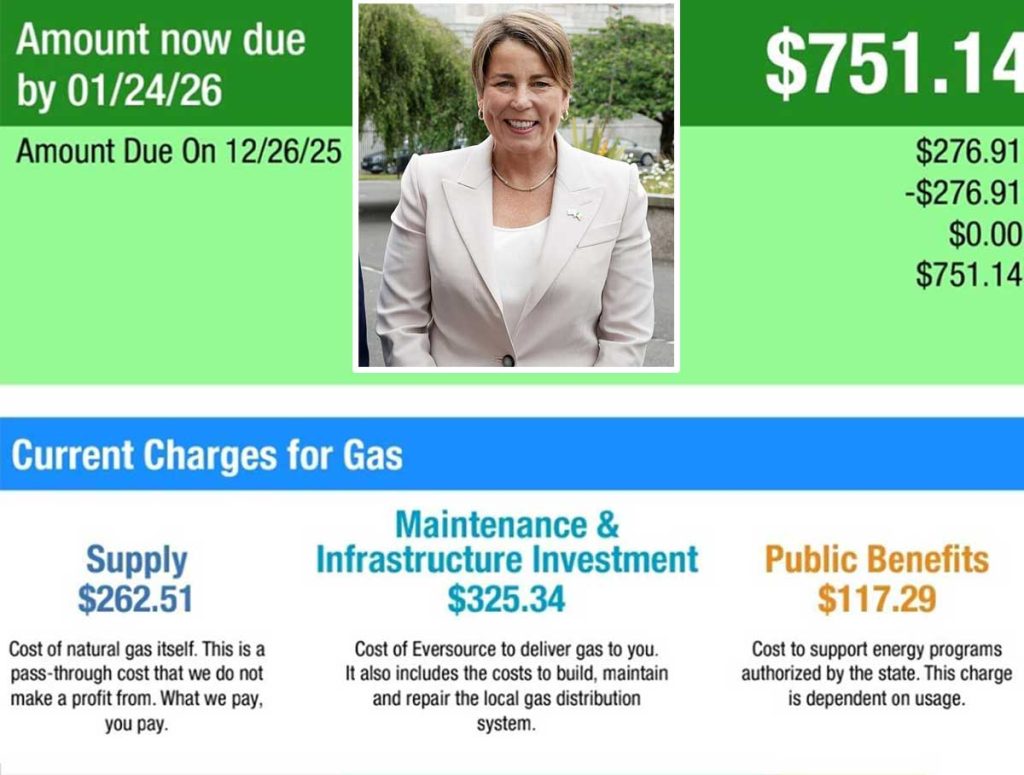
The policy, originally established under former Republican Governor Charlie Baker’s executive order, forces suppliers of natural gas, propane, and heating oil to deliver an increasing share of “clean heat” options. These include heat pumps, weatherization, or other low-carbon alternatives verified by the state. Companies that fall short must buy credits from those who provide such services.
On December 23, the Massachusetts Department of Environmental Protection notified industry stakeholders of the delay. The official reason: more time needed to gather stakeholder input, evaluate new fuel and emissions data, analyze affordability trends, monitor heat pump adoption, and collect additional information.
The Healey administration insists the move prioritizes lower energy costs. They say public feedback showed a clear demand for extra time to let the market develop and keep bills down.
Industry leaders and the three Republican candidates for governor see it differently. They call it a blatant political dodge to shield an unpopular, costly mandate from voters during an election year.
Michael Ferrante, President of the Massachusetts Energy Marketers Association, points out that the state has already been collecting detailed data from heating fuel companies since January 2025. Retailers must register, report quarterly on every gallon of oil, propane, or therm of natural gas sold, and track associated greenhouse gas emissions. He argues the delay claim rings hollow.
A study by Diversified Energy Specialists estimates that households sticking with traditional heating could face annual bill increases of up to $425. The analysis also warns that smaller fuel dealers will suffer far more than larger ones, while companies that install heat pumps or sell biofuels will fare better.
Republican candidate Mike Kennealy says the delay proves the policy is so damaging that it must be hidden from voters. He frames the election as a choice between Healey’s path of higher energy bills and political games, or common-sense governance that keeps the state affordable for working families, not just the elite.
Brian Shortsleeve labels it the latest cynical ploy from Healey, akin to her delays on offshore wind contract negotiations and pushing the Advanced Clean Trucks mandate from 2025 to 2027. He accuses her of knowing the expensive mandates will spike costs for households and businesses, so she kicks the can past the election to avoid accountability. If the policy were truly affordable or well-designed, she would defend it openly instead of concealing its impact.
Mike Minogue, the GOP megadonor in the race, blasts the Clean Heat Standard and the broader Net Zero by 2050 goal as an unfunded ideology. He warns that Healey plans to hike already sky-high energy costs even further after voters go to the polls in 2026. He urges voters to demand cancellation, not delay, of this scheme that could cost taxpayers more than $300 billion and chase away remaining businesses and entrepreneurs.
Ferrante adds that the regulation will ultimately drive up costs for ratepayers while forcing most traditional thermal fuel providers out of business. Heating oil companies can earn credits only by selling or installing electric heat pumps or delivering renewable biofuels. Those that do neither face a significant Alternative Compliance Payment, essentially a tax that many small operators cannot survive.
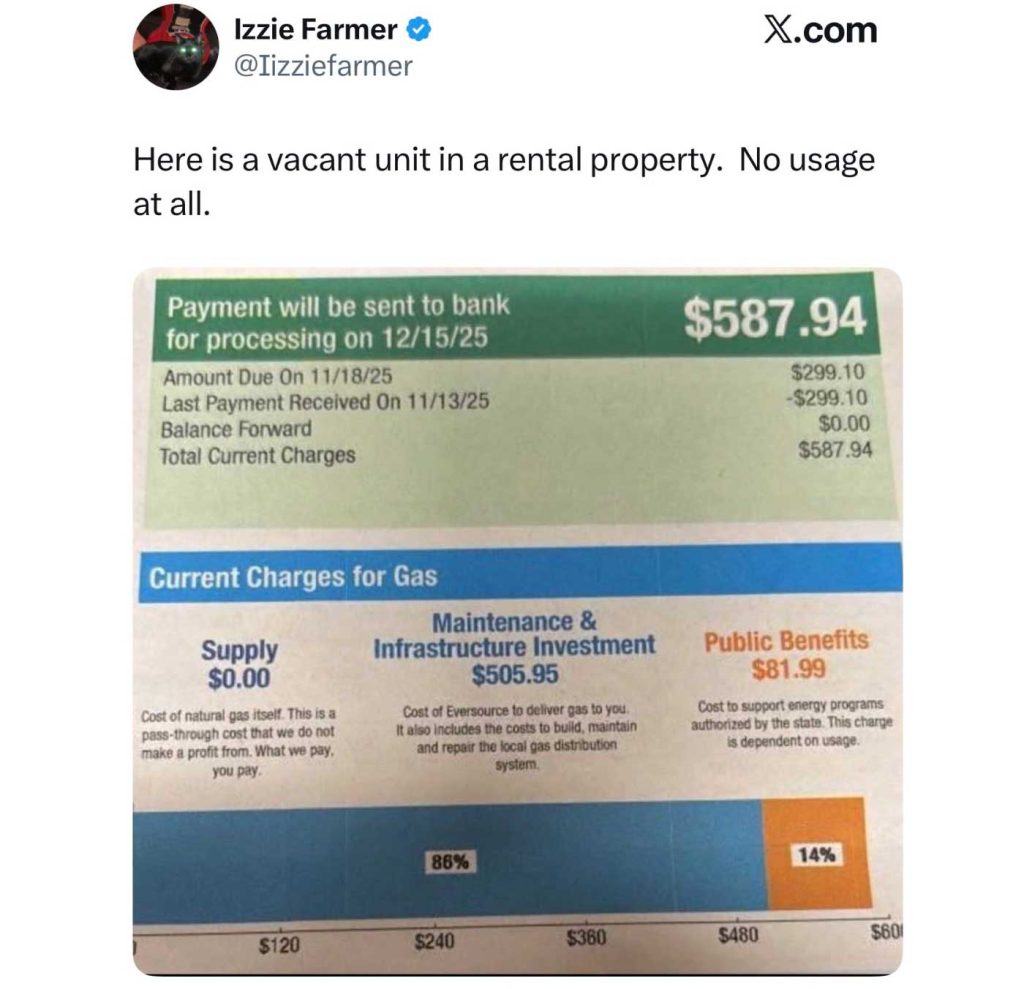
In short, Massachusetts residents already pay some of the nation’s highest energy bills which makes the delay look even more calculated. Recent utility bills show hundreds of dollars charged to homes with little or no actual gas usage, because the bulk of the cost now comes from maintenance, infrastructure investment, and so-called public benefits, not supply. In some cases, supply accounts for a fraction of the bill, while state-approved fees and delivery charges make up the overwhelming majority. Even vacant units are getting slammed. For many households, the shock isn’t how much energy they used, it’s how much they’re forced to pay before a single therm is burned.
This “clean” mandate looks more like a backdoor tax on reliable heating fuels, conveniently postponed until after the next election cycle. Classic Beacon Hill sleight of hand.



2 Comments